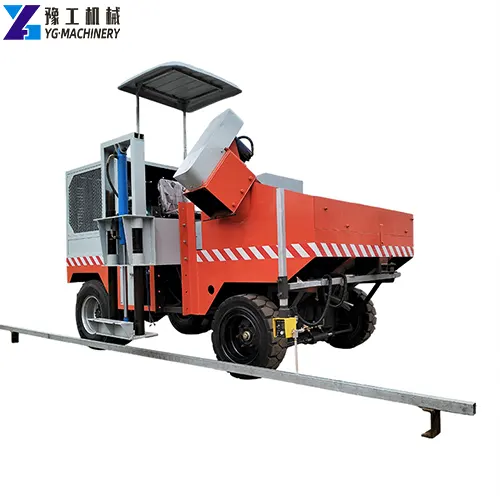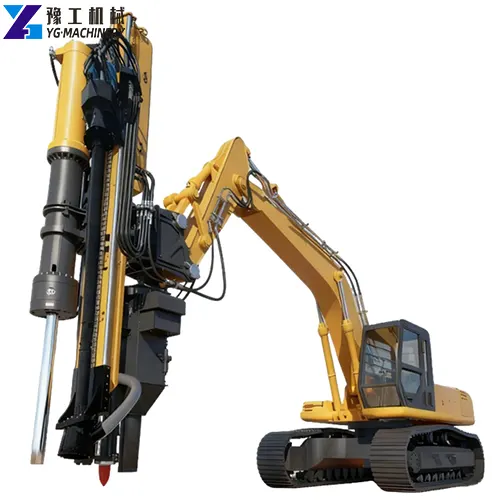
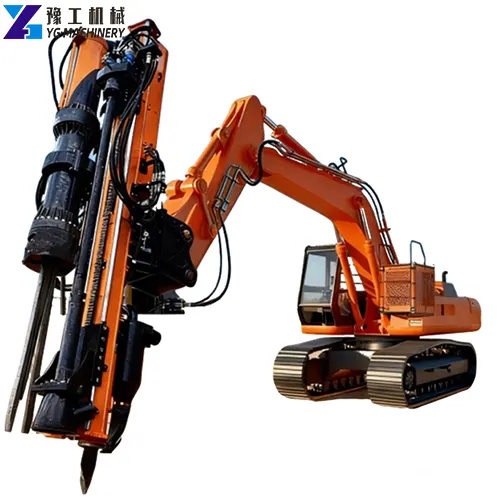
For quarry operators, civil contractors, and infrastructure firms across the Philippines, hard rock excavation often becomes a bottleneck when standard blasting methods are restricted or impractical. A hydraulic rock drilling and splitting machine offers a non-explosive alternative that combines drilling and rock breaking in a single workflow, reducing the need for multiple pieces of equipment on site.
A Philippines Rock Excavation Challenge That Required More Than a Standard Breaker
The contractor operates both quarry production and civil construction projects across multiple sites in the Philippines. On one particular project, the team needed to excavate hard rock for both quarry feedstock and adjacent foundation works, but the site sat close to a public road and established residential areas.
Standard open blasting was subject to strict permitting, time-of-day restrictions, and community vibration and noise concerns. Using a standard hydraulic breaker alone was too slow for the required production volume and produced higher vibration and noise that risked complaints. The contractor also considered using a separate drill rig and standalone hydraulic rock splitter, but this required two machines, two operators, and additional coordination between drilling and splitting crews.
The project team needed a solution that could reduce reliance on blasting, consolidate drilling and breaking work into one workflow, and operate within the site’s strict noise and vibration constraints.
Selecting a Hydraulic Rock Drilling and Splitting Machine for the Site
The contractor evaluated several rock breaking options before selecting an integrated drilling and splitting solution. The selection process focused on matching equipment capability to the site’s rock conditions, required fragment size, daily production target, access constraints, and power availability.
YG’s engineering team reviewed the available site information and confirmed that an integrated hydraulic rock drilling and splitting machine was a technically viable option for the project, subject to final on-site verification of rock properties and free-face conditions. The team also outlined the recommended hole pattern, approximate spacing, and general operating procedure for the site’s conditions.
The contractor opted for a diesel-powered, transportable configuration that could move between their quarry and civil project sites as needed. They also ordered a recommended set of wear parts and tooling to support initial operations.
Request a Quote for Your Project
YG Hot-sale Integrated Rock Drill and Splitter Technical Parameters
| Rock Drilling Machine | |||
| Power | Drilling hole diameter | Drilling depth | Drilling speed |
| 24kw | Middle 120mm | 1600mm | 1m/min |
| Splitting Machine | |||
| Splitting depth | Splitting force | Rotation angle | – |
| 1000MM | 8000T | 120° | – |
| Push Beam | |||
| Rock drilling maximum propulsion | Splitting maximum pullout force | ||
| 25KN | 70KN | ||
| Excavator requirements:>20T | |||
Contact Us for a Detailed Specifications Table (Customization Available)
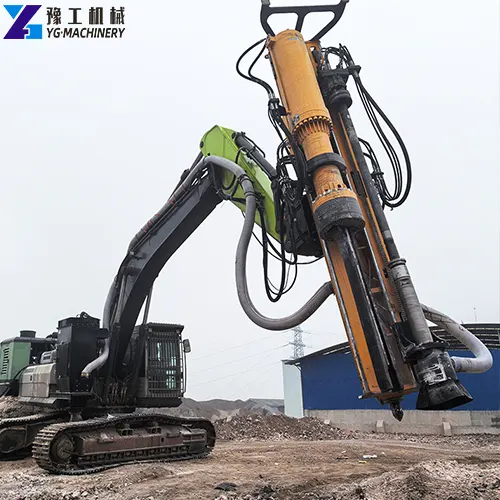
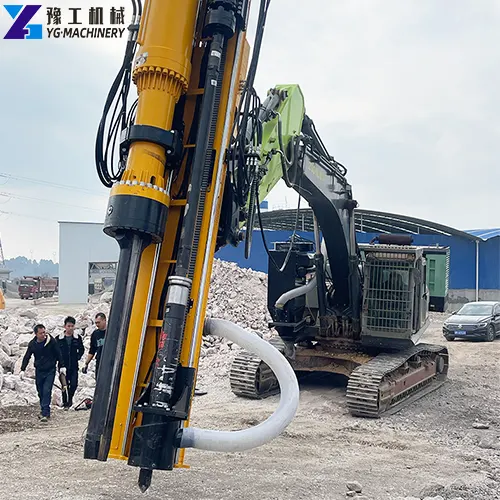
Why the Customer Selected This Solution
The contractor chose this configuration over alternative methods for six key operational and commercial reasons:
- Integrated drilling and splitting workflow → May reduce the need to coordinate separate drilling and rock-splitting equipment on eligible sites, streamlining site logistics and reducing the number of machines and operators required.
- Non-explosive hydraulic splitting method → Offers a non-blasting rock-breaking option for sites where blasting is restricted, undesirable, or subject to strict controls, supporting work near existing structures and roads.
- Site-matched configuration → Helps align equipment selection with rock conditions, target hole pattern, and required fragment size, reducing the risk of ordering an oversized or undersized machine for the project.
- Self-contained diesel power arrangement → Can support operation where grid power is not practical, subject to proper fueling, ventilation, and maintenance planning.
- Transportable machine layout → Supports project mobilization between sites where access and road conditions allow, making the unit flexible for contractors running multiple small-to-medium projects.
- Replaceable drilling and hydraulic wear components → Supports planned maintenance scheduling; actual spare-parts supply and lead times must be confirmed before order.
- Pre-quotation engineering review → Helps reduce the risk of ordering a machine that does not suit the project’s rock conditions or production targets.
How the Drilling and Splitting Process Works on Site
- Review geological observations, project drawings, permitted work boundaries, site restrictions, and the approved excavation method.
- Assess the rock face, natural joints, free-face availability, access conditions, nearby structures, and required excavation profile.
- Select the drill-hole diameter, depth, spacing, and splitting sequence according to the equipment model and approved site plan.
- Position the machine and drill the planned holes to the specified depth and diameter.
- Insert the hydraulic splitter wedge assembly into the prepared hole at the correct orientation.
- Apply controlled splitting force and observe the rock response according to the operating procedure.
- Repeat the hole-and-splitting sequence as necessary to create manageable rock sections of the required fragment size.
- Use approved loading, secondary breaking, removal, or processing equipment for the separated rock material.
- Inspect the work area and continue operations under the site’s safety, environmental, and quality procedures.
This overview is for general equipment-selection and project-planning context only. Actual operation must follow the manufacturer’s manual, trained-operator requirements, site risk assessment, applicable Philippine regulations, and the approved project method statement.
Customize for Your Rock Type (Granite, Basalt, Limestone)
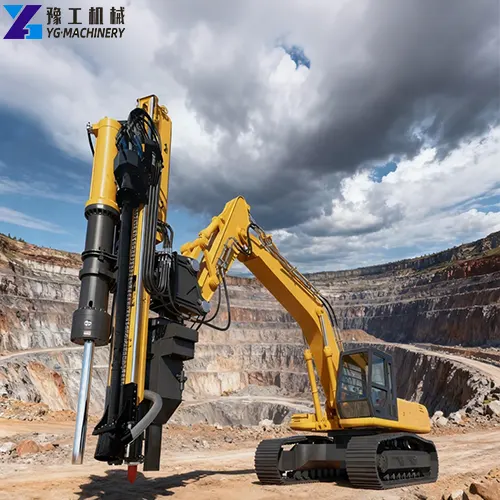
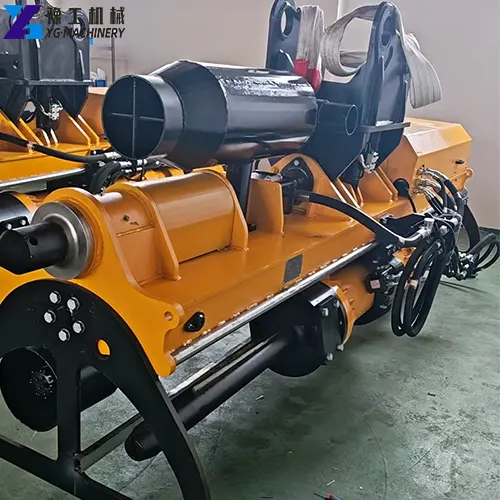
What Philippine Buyers Asked Before Ordering the Hydraulic Rock Drilling and Splitting Machine
Before finalizing the order, the customer raised seven common questions that reflect typical concerns for Philippine quarry and construction buyers.
A1: When applied under suitable rock conditions with a properly designed hole pattern, the machine provides non-explosive rock breaking. Suitability depends on rock strength, natural fractures, free-face availability, and the approved work method. It is not a universal replacement for blasting in all conditions.
A2: We require rock type, estimated compressive strength, natural fracture details, hole depth and diameter requirements, target fragment size, and site access details. Where possible, rock photos and geological observations help improve recommendation accuracy.
A3: Yes, the drilling system can be configured to match project-specific hole diameter and depth requirements within the model’s rated range. Final parameters are confirmed based on your excavation design and rock conditions.
A4: An integrated machine is often more efficient for sites where drilling and splitting happen in sequence on the same work face, and where space or logistics limit multiple machines. For large-scale parallel operations, separate units may be preferable.
A5: Rock type and compressive strength, natural jointing, free-face availability, hole pattern design, hole depth, wedge positioning accuracy, and operator technique all affect splitting results. Performance varies significantly from site to site.
A6: Recommended accessories typically include spare drill bits, additional wedge assemblies, hydraulic wear parts, and tool service kits. The exact set depends on your project scope, expected operating hours, and on-site maintenance capacity.
A7: Transport, commissioning, operator training, and after-sales support can be arranged according to your project location and requirements. Exact scope, terms, and costs are confirmed in the formal quotation.