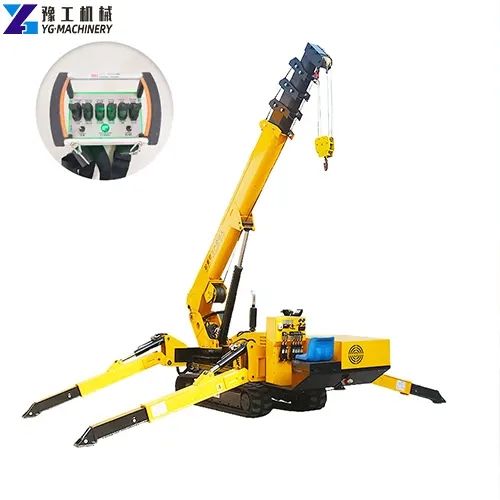
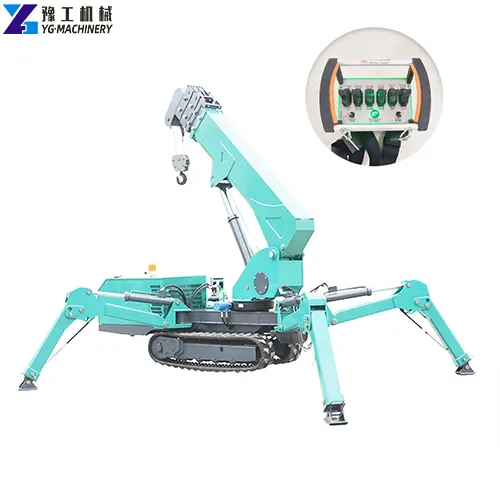
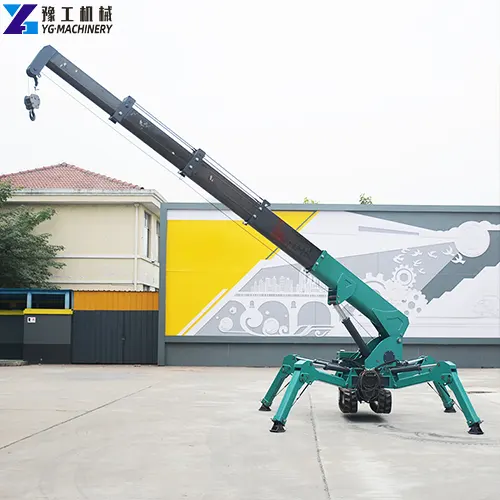
A mini spider crane, as the name suggests, is a small, spider-shaped lifting device. It is also commonly referred to as a “mini crawler crane,” “mini crane,” “compact crane,” or “spider crane.” Its most distinctive feature is its multiple independently extendable and adjustable outriggers. When extended, it resembles a spider, adapting to uneven ground and providing excellent stability and support. When retracted, its compact body can easily pass through standard doorways or narrow passages. With its compact size, powerful lifting capacity, and flexible outrigger system, it demonstrates remarkable operational efficiency in confined spaces. YG, as a professional machinery manufacturer, is committed to providing advanced and reliable mini spider crane products. Currently, its best-selling models include 3-ton, 5-ton, and 8-ton spider cranes. Contact us now to recommend the most suitable product based on your specific needs.
Get Factory Direct Pricing Today
YG Crawler Spider Crane Technical Parameter
| Model | YG-3 | YG-5 | YG-8 | |
| Specification | 3t | 5t | 8t | |
| Maximum working radius | 8.83m×0.15t | 14m×0.5t | 16.5m | |
| Maximum above-ground head | 9.9m×0.7t | 16.8m | 18m | |
| Winch device | Hook Speed | 0-8m/min(4 rope) | 12m/min(4 rope) | 12m/min(4 rope) |
| Rope diameter | φ8mm×45m | Φ11mm×80m | Φ11mm×80m | |
| Telescopic system | Boom Type | 5-section boom, pentagonal structure | 5-section boom, pentagonal structure | 5-section boom, pentagonal structure |
| Boom Length/Time | 3.1m-9.2m/20sec | 12.3m/54sec | 12.3m/54sec | |
| Up and down | Boom Angle/Time | 0°~78°/13sec | 0°~78°/13sec | 0°~78°/13sec |
| Slew system | Slew Angle/Speed | 0-360°continuous/60sec | 0-360°continuous/38sec | 0-360°continuous/38sec |
| Traction system | Walking Way | Hydraulic motor drives | Hydraulic motor drives | Hydraulic motor drives |
| Walking Speed | 0~2.5km/h | 0~2.5km/h | 0~2.5km/h | |
| Grade Ability | (25°)36% | (25°)36% | (25°)36% | |
| Operating system | Operation type (Boom/outrigger) | Manual operation, manual walking(remote control option) | Manual operation, manual walking(remote control option) | Manual operation, manual walking(remote control option) |
| Operating characteristics | Manual operation, remote control | Manual operation, remote control | Manual operation, remote control | |
| Transport parameters | L*W*H(mm) | 2950*980*1560 | 5000*1500*1900 | 5000*1600*2180 |
| Total weight(kg) | 2700 | 6200 | 7200 | |
Get Factory Direct Pricing Today
Working Principle of a Mini Spider Crane
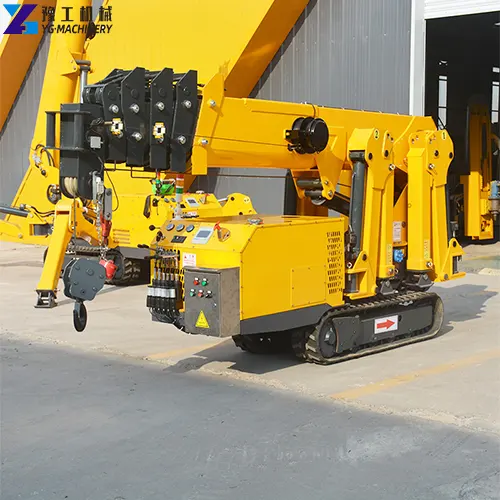
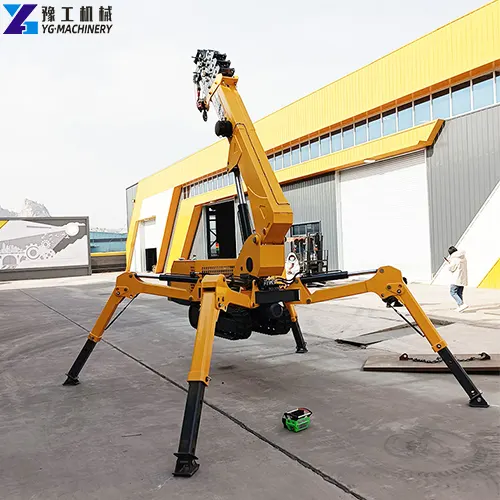
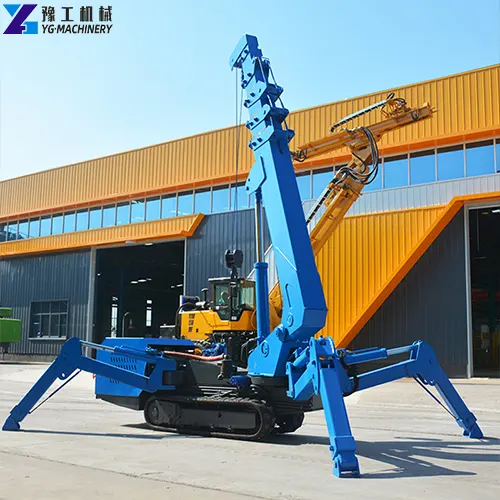
The core working principle of a mini spider crane lies in its unique hydraulic system and the coordinated action of its multi-jointed telescopic boom and outriggers. Upon arrival at the work site, the equipment first moves to the designated location via its tracked or wheeled chassis (such as a tracked mini crane). Then, the operator deploys its multiple hydraulic outriggers. These outriggers are independently controllable and precisely adjusted according to the unevenness of the ground and the lifting requirements, ensuring the equipment forms a stable support platform on any complex terrain, resembling the eight legs of a spider gripping the ground—hence the name “spider crane.”
Once the outriggers are stable, the hydraulic system drives the multi-section telescopic boom to raise, lower, extend, and rotate. Through precise hydraulic valve control, the operator can perform micro-movements on the boom and the load, accurately lifting the object to the designated location. The winch mechanism is responsible for the winding and unwinding of the wire rope, achieving vertical lifting and lowering of the load. Throughout the process, safety devices such as torque limiters monitor the lifting load and boom angle in real time. If the load exceeds the safe range, an alarm will be automatically issued, or power will be cut off to prevent tipping accidents. Some advanced models may also be equipped with a wireless remote control system, allowing operators to work from a safer distance, further improving the convenience and safety of operation.
Get Factory Direct Pricing Today
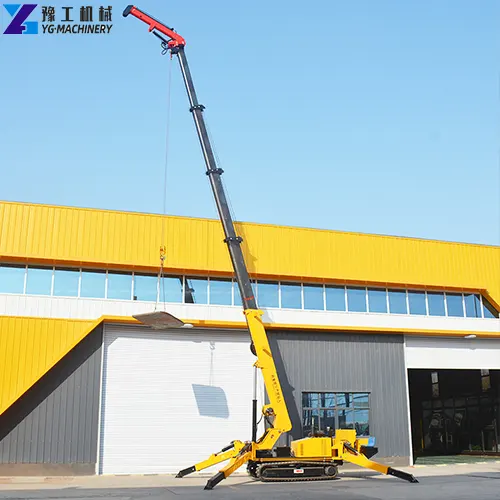
6 Features of the YG Mini Spider Crane
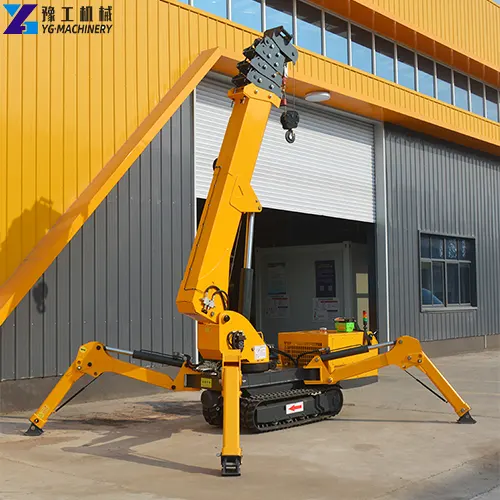
- Superior Confined Space Operation Capability: Its compact body and flexible outrigger system allow it to access areas inaccessible by traditional cranes, such as indoors, rooftops, narrow alleyways, and basements.
- Powerful Lifting Capacity: Despite its small size, the YG mini spider crane boasts impressive lifting capacity. For example, our 3-ton spider crane model can easily lift heavy objects in confined spaces.
- Precise Micro-motion Control: An advanced hydraulic system and precision control handles enable centimetre-level precision control of the boom and load, making it particularly suitable for high-precision installation operations.
- Versatility and Attachment Compatibility: It can be equipped with various attachments such as suction cups, baskets, and grabs, expanding its application range and meeting diverse operational needs.
- Intelligent Safety Features: Equipped with an advanced torque-limiting system, tilt warning system, and remote monitoring function, it monitors equipment status in real time to ensure operational safety.
- Multiple power options: Offers diesel, gasoline, electric, or hybrid power modes to adapt to different indoor and outdoor working environments. For example, the electric mode is suitable for indoor operations with emission and noise requirements.
Get Factory Direct Pricing Today
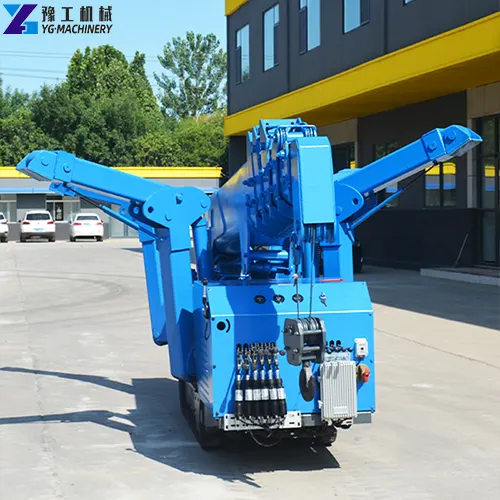
How to Operate a YG Spider Crane for Beginners? A Six-Step Guide
Operating a spider crane isn’t complicated, but incorrect steps can lead to serious problems. The following six steps will help you get started safely:
- Step 1: Pre-operation Inspection. Before starting, ensure the hydraulic oil level is not lower than 3/5 of the gauge. Check that the outriggers are stable when extended and retracted, and that the pins are properly engaged. The boom must be in the reset position before moving the equipment.
- Step 2: Select Power Mode. Spider cranes typically have two power systems—an engine and an electric motor. A diesel engine is used outdoors, and an electric motor is used indoors; switch between them flexibly. When starting, turn the key switch to the right to the “ON” position and wait a few seconds for the electrical system to complete its self-check before starting.
- Step 3: Deploy the Outriggers. This is where the spider crane gets its name—the four outriggers unfold like spider legs. Each outrigger can be independently adjusted in length and angle according to site conditions to ensure the crane is level. Remember: Never lift if the outriggers are not fully deployed.
- Step 4: Select Control Mode. Modern spider cranes have both remote control and manual control modes. For beginners, it is recommended to use remote control mode first and observe from a safe position. After the remote control is successfully connected (you can confirm by pressing the horn), switch the three-speed selector to the “boom” position.
- Step 5: Trial Lift. Before the actual lifting, lift the crane slightly off the ground to test the stability of the outriggers and the braking performance. If there are no problems, continue.
- Step 6: Actual Operation. When operating the remote control, movements should be gentle, especially in windy conditions or when the load is swaying. It is strictly forbidden to operate the manual valves on the equipment simultaneously in remote control mode.
Get Factory Direct Pricing Today
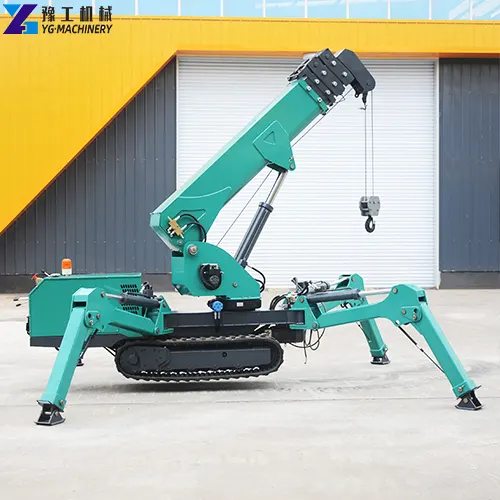
Remote-Controlled Spider Crane Operation: Safety Details
One of the most attractive features of spider cranes is their remote control operation. However, remote control isn’t just about “standing far away.” Several details need attention:
First, confirm the connection. After each power-on, press the horn button on the remote control and wait for the equipment to respond before operating. Operating without confirming the connection may result in loss of control.
Second, prioritise visibility. The biggest advantage of remote control is the ability to observe the suspended load from the best possible angle. However, if the load obstructs your view, it’s better to change positions than to lift blindly.
Third, speed control. Modern spider cranes have proportional control; the deeper the joystick is pushed, the faster the movement. Beginners are advised to start at a slow speed and gradually increase the speed as they become familiar with it.
Fourth, emergency stop location. The remote control has a red emergency stop button; make it a habit always to have it within reach. In case of any abnormal situation, press the button first.
Fifth, turn off the remote control when finished. When the equipment is not in use, remove the batteries from the remote control or turn it off to prevent accidental activation.