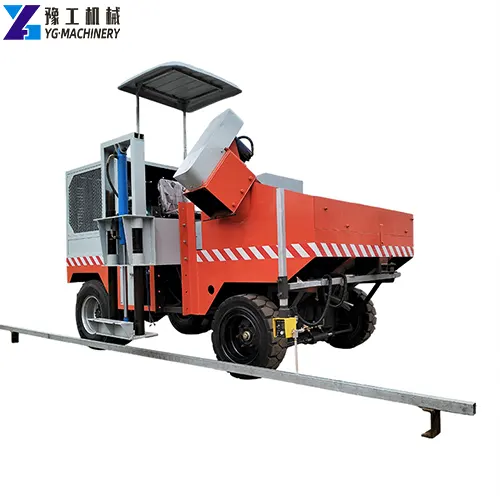
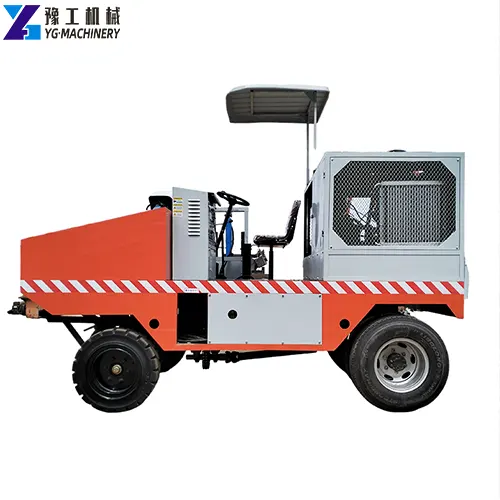
Placing concrete curbs, gutters, road shoulders, and drainage ditches on long infrastructure projects has traditionally been a slow, labor-intensive process. Precast curbs require manufacturing, storage, transport, lifting, alignment, joint treatment, and repeated handling. Conventional cast-in-place forming requires extensive formwork installation, manual finishing, curing wait times, and demolding. Both methods rely on large crews and are susceptible to schedule delays from weather, material supply, and variable workmanship.
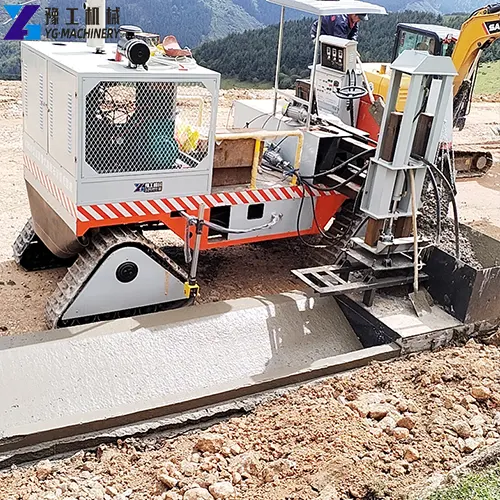
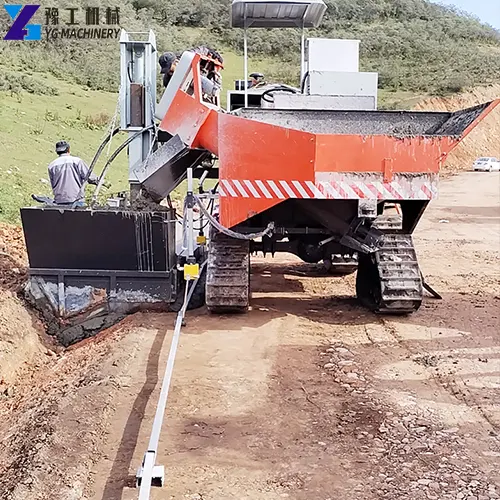
A slipform curb machine offers an alternative. It places, vibrates, compacts, and shapes concrete through a custom mold as the machine travels forward. The result is a continuous, formed concrete profile that is consistent in line, elevation, and surface finish.
The YG large slipform curb machine is designed for highway contractors, municipal road builders, airport developers, drainage contractors, and infrastructure EPC companies. The machine can be configured with different molds for curbs, curb and gutter combinations, road shoulders, median separators, U-shaped or V-shaped drainage ditches, side channels, low concrete barriers, and landscape edges. Final mold suitability depends on the required cross-section, concrete mix, project drawings, and machine model.
Match Model to Your Curb Height
Technical Specifications of YG Concrete Slipform Curb Machine
(Custom configurations available upon request)
| Model | YG-20 | YG-30 |
| Size(mm) | 5200*2400*2800 | 5200*2400*2900 |
| Engine Power (kW) | 65 | 65 |
| Machine Weight (KG) | 6000 | 7000 |
| Cooling method | Water cooling | Water cooling |
| Steering form | Dual automatic steering system | Dual automatic steering system |
| Construction speed | 1M-7M/Min | 1M-10M/Min |
Get Factory Direct Pricing Today
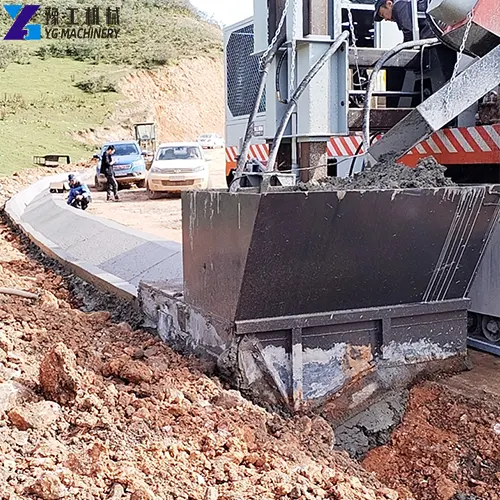
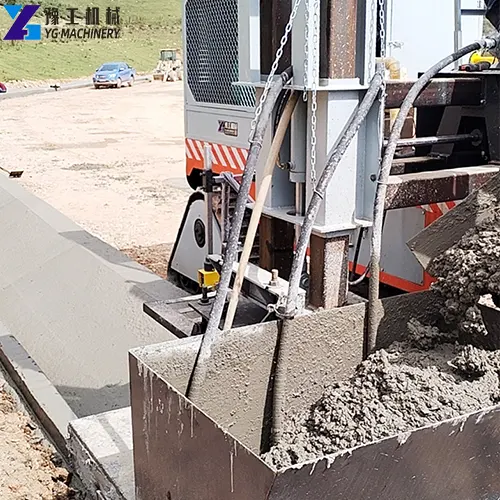
Buyer Pain Points — What Real Buyers Need to Solve
- Precast curb logistics — manufacturing, storage, transport, lifting, alignment, joint treatment, and repeated installation add cost and scheduling friction across every kilometre.
- Formwork labour and time — conventional casting ties up crews in form installation, repositioning, curing, and demolding, and is hard to keep continuous.
- Consistency pressure — long projects demand an even line, elevation, profile, and surface finish over long distances.
- Labour and workmanship risk — variable workmanship, labour shortages, schedule delays, and high logistics costs all threaten margin on repetitive segments.
- Productivity ceiling — highways, airports, municipal roads, industrial parks and drainage works need higher daily output and a more continuous construction process than piece-by-piece methods allow.
- Capability doubt — buyers reasonably ask whether the machine can handle their curb size, road geometry, curves, slopes, local concrete consistency, operator skill, spare-part availability, and transport conditions.
The YG large concrete slipform paver addresses these with continuous on-site molding, screw-fed concrete distribution, vibration-based compaction, self-propelled travel, steering support, adjustable paving speed, and changeable molds — all built around heavy-duty ground equipment sized for infrastructure work.
How a Large Slipform Curb Machine Works
The machine carries concrete from a hopper through a high-torque screw feeder to the mold, where the concrete is distributed, vibrated, and compacted as the machine advances. The formed concrete profile is extruded continuously behind the machine, matching the line and elevation set by the steering and leveling systems.
- Continuous on-site molding — the profile is formed directly in the road line, removing the assembly steps of precast and formwork methods.
- Screw-fed concrete distribution — a hydraulic screw feeder moves concrete from the hopper to the mold more evenly.
- Vibration-based compaction — high-frequency or attached vibrators help consolidate the concrete and support a denser formed profile when the correct mix is used.
- Self-propelled travel — the machine drives itself along the alignment, carrying its forming line with it.
- Steering support — dual automatic steering plus manual hydraulic steering, depending on configuration, supports alignment control while keeping operator adjustment available.
- Adjustable paving speed — the operator can match travel speed to concrete supply, section size, and finish requirements.
- Changeable molds — one machine platform can support multiple continuous concrete profile projects, subject to mold design and project confirmation.
Contact Engineer for Site-Specific Configuration
Applications of YG Concrete Slipform Curb Machine
- Highways and expressways. Continuous curb and shoulder lines on long, repetitive segments where consistent elevation and profile matter.
- Municipal roads and urban renewal. Kerb and gutter renewal projects that need rapid, clean linework with limited lane closure.
- Airport runway and apron edge work. Long straight and labeled edge profiles where a continuous formed line suits the geometry.
- Industrial parks and logistics parks. Roadside curbs, gutters, and edge drainage over large, flat layouts.
- Residential and commercial access roads. Curbs and entrances where a formed profile matches subdivision standards.
- Parking lots and distribution centers. Perimeter curbs and drainage channels built over extensive paved areas.
- Rural road drainage and roadside curbs. Side ditches and edge curbs on roads where precast logistics are expensive.
- Irrigation channels, agricultural drainage and water-conservancy works. U-shaped or V-shaped channels and side waters where a continuous molded section is practical.
Suitability always depends on the project’s concrete section, route length, site preparation, concrete supply, and specification requirements. Confirm each application against your drawings with the YG team.
What We Need to Recommend the Right Slipform Curb Machine
A useful machine and mold recommendation — and a meaningful quotation — depends on the project, not just a list price. Please provide:
- Project location and target delivery port — affects transport method, shipping cost, and delivery planning.
- Project type and estimated total paving length — sets whether a slipform solution is economical and which machine tier fits the volume.
- Required concrete profile drawing or cross-section dimensions — the single most important input for mold design.
- Required width, height, and shape — determine whether YG-20 or YG-30 and which mold is appropriate.
- Structure type (curb, curb and gutter, ditch, shoulder, median, barrier, or other) — drives the mold family and machine configuration.
- Road alignment, curve radius, slope, and base condition — affects steering, leveling, and whether the site supports the machine.
- Concrete mix design, slump/workability, aggregate size and supply method — the mix must be compatible with slipforming and consistent feeding.
- Required working speed or planned schedule — helps assess realistic output against your program.
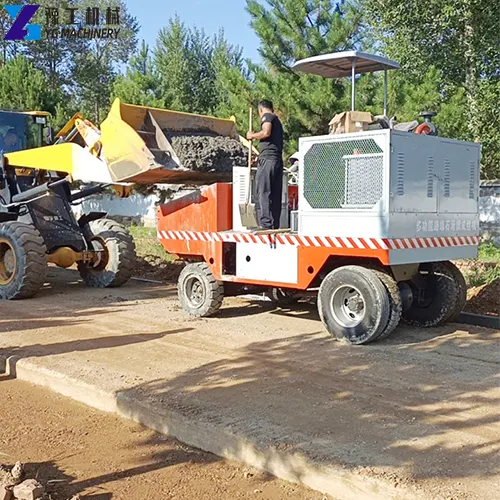
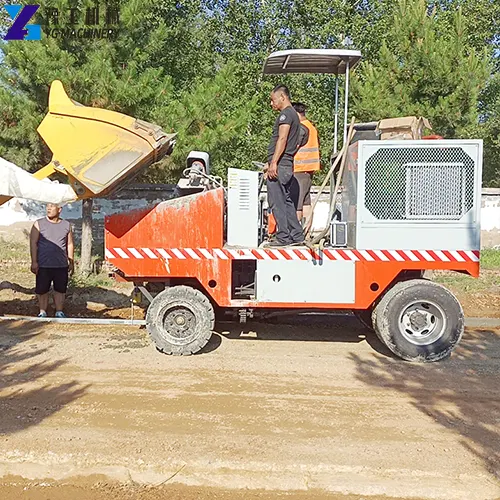
- Preferred machine travel type: wheel or crawler — reflects site movement and stability needs.
- Local power and operating conditions — AC 380 V operation and site logistics should be checked.
- Need for custom molds, leveling system, or other options — extra configurations affect scope and quotation.
- Budget range and expected purchase date — allow a realistic proposal aligned to your planning.
No accurate quote can be given without these details. Send them through, and our engineers will prepare a project-specific recommendation.
Request Shipping Estimate to My Job Site
Frequently Asked Questions about Curbstone Slipform Machines
A1: Highways, expressways, municipal roads, urban renewal, airports, industrial and logistics parks, rural drainage, irrigation, and water-conservancy works — any long or repetitive project where a continuous formed cross-section suits the drawings and site.
A2: The machine accepts different molds, so one platform can support several continuous profile types. Mold feasibility depends on the required cross-section, concrete mix, project drawings, and machine model — confirm each profile with the YG team.
A3: The concrete should be workable enough to flow through the hopper and mold yet stiff enough to hold the formed shape after the machine passes. Slump, workability, and aggregate size must be matched to the cross-section and weather — confirm the mix design and feasibility with the YG team.
A4: Curve and slope geometry, base preparation, steering and leveling settings, feeding continuity, vibration settings, concrete consistency, operator skill, and the curing procedure all influence the final line, level, and finish.
A5: Steering support and manual adjustment allow curve following, and the optional leveling system supports elevation control within its range (±40 mm, optional). Tight radii, steep slopes, and rough bases reduce output and should be assessed against the machine and project plans before purchase.
A6: A profile drawing or cross-section dimensions, required width, height, and shape, the structure type, concrete mix and aggregate details, and the machine model. Mold design depends on these — provide them to get an accurate mold scope.
A7: The machine can form continuous concrete profiles such as drainage channels and water-conservancy ditches beyond road work. Suitability depends on the cross-section, mix, site, and machine model — confirm the specific application with YG.

