
What Is a Full Hydraulic Exploration Drilling Rig?
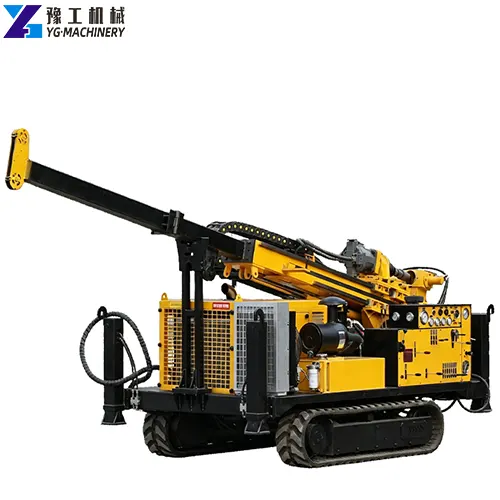
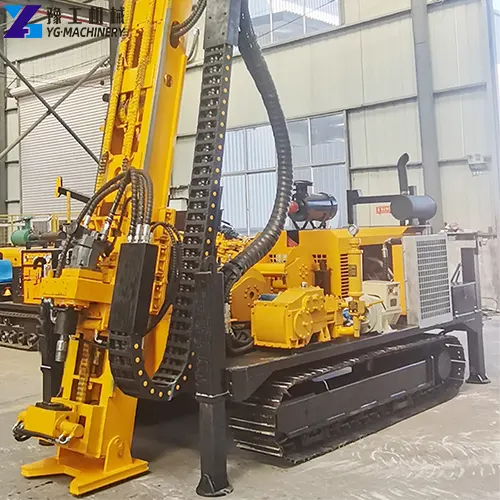
A full hydraulic exploration drilling rig is a drilling machine designed to recover core samples from underground formations. It may also be called a fully hydraulic core drilling rig, hydraulic core drilling rig, diamond core drilling rig, wireline core drilling rig, mineral exploration drilling rig, geological drilling rig, or core sample drilling machine.
The rig is commonly used where the drilling team needs continuous or representative core for:
- Mineral exploration and resource definition
- Geological survey drilling
- Mine-site investigation
- Engineering geology
- Dam foundation studies
- Tunnel-route investigation
- Road and bridge geotechnical investigation
- Hydrogeological projects
- Environmental and scientific drilling
- Infrastructure EPC ground investigation
Unlike a general water well rig, a core drilling rig is selected not only for reaching depth. It is selected for its ability to support the target core size, drill-string system, core-barrel method, drilling-fluid circulation, hole angle, casing requirement, and sample-quality objective.
Submit your requirements to get drilling rig recommendations and receive a technical proposal for the project.
Lock In Today‘s Factory Price – Request Quote Now
How to Choose Between YGX-400, YGX-600, YGX-800, and YGX-1000
Drilling depth varies by core size, drill string, ground conditions, hole angle, drilling method, operator practice, and site support. Final configuration must be confirmed by YG’s technical proposal and the actual project requirements.
| Specification | YGX-400 | YGX-600 | YGX-800 | YGX-1000 |
| Reference drilling depth | 180 / 400 / 500 m | 200 / 600 / 650 m | 400 / 800 / 1,000 m | 500 / 1,000 / 1,100 m |
| Rated pressure | 21 MPa | 21 MPa | 25 MPa | 28 MPa |
| Rated hydraulic flow | 168 L/min | 192 L/min | 260 L/min | 300 L/min |
| Cooling mode | Air + water cooling | Air + water cooling | Air + water cooling | Air + water cooling |
| Engine | Yuchai, 78 kW / 2,400 rpm | Yuchai, 92 kW / 2,400 rpm | Yuchai, 92 kW / 2,400 rpm | Cummins, 154 kW / 2,400 rpm |
| Drilling angle | 0–90° | 45–90° | 45–90° | 45–90° |
| Lifting force | 12 t | 16 t | 24 t | 30 t |
| Feed force | 6 t | 8 t | 12 t | 15 t |
| Hydraulic mud-pump flow | 30–90 L/min | 30–90 L/min | 90–180 L/min | 90–180 L/min |
| Hydraulic mud-pump pressure | 4–7 MPa | 4–7 MPa | 4–7 MPa | 4–7 MPa |
| Approximate dimensions | 4000 × 1900 × 1800 mm | 4000 × 2000 × 1800 mm | 5500 × 2100 × 2000 mm | 6000 × 2200 × 2400 mm |
All drilling-depth figures are reference values. They must be reviewed together with your core size, drill-string system, ground conditions, borehole design, drilling angle, casing program, and project support plan.
YGX-400: Compact Exploration and Investigation Work
The YGX-400 may be considered for projects with lower-to-medium depth requirements, limited access space, shorter drill programs, or selected engineering and exploration tasks.
It should not be selected only because it is smaller. The required core size, casing depth, geology, fluid system, and drill-pad conditions must still match the machine and drilling plan.
YGX-600: Mid-Depth Exploration Programs
The YGX-600 may be considered for mid-depth mineral exploration, geological investigation, and drilling projects where the contractor needs additional lifting and feed capacity compared with a smaller configuration.
It may fit projects where BQ/NQ/HQ requirements, access conditions, and support logistics align with the final technical proposal.
YGX-800: Deeper Core Drilling Requirements
The YGX-800 may be considered for deeper exploration programs, longer drill strings, and projects that require more hydraulic flow, lifting force, feed force, and mud-pump capacity.
It is important to evaluate access roads, drill-pad capacity, water logistics, rod handling, and spare-tool planning before selecting this class of rig.
YGX-1000: Higher-Capacity Deep Exploration Work
The YGX-1000 may be considered for deeper and more demanding exploration programs where project requirements justify a higher-capacity hydraulic system, greater lifting force, higher feed force, and a larger engine package.
Deep-hole performance depends on more than machine size. The project needs sufficient water, drilling fluid, core tools, rods, casing, maintenance capability, trained crews, and site logistics to support continued drilling.
Get Your Free Quote in 12 Hours – No Obligation
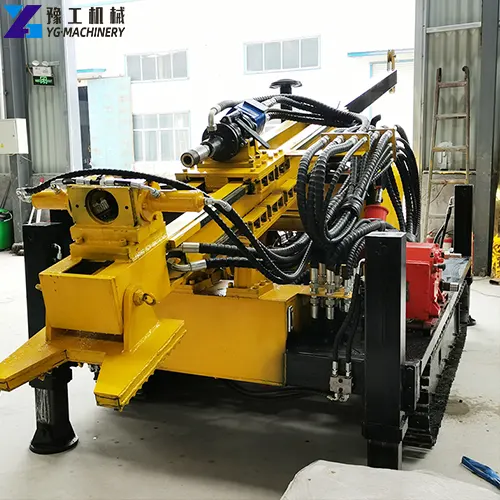
The Real Selection Question: Depth, Core Size, or Core Quality?
Most buyers begin with a depth target. For example: “We need a 600-meter rig,” or “We need a 1,000-meter core drilling machine.”
That is only the beginning of the selection process.
A useful drilling-rig proposal should answer three linked questions:
- What depth do you need at the required core size?
- What core quality is required for the geology and project objective?
- What site systems are needed to keep the hole stable and the rig productive?
A rig that can reach a stated depth under one core-size condition may not reach the same depth with a larger diameter, heavier casing, fractured ground, steep angle, or different drilling-fluid program.
For this reason, YG evaluates depth together with:
- BQ, NQ, HQ, PQ, or other project-defined core size
- Hole diameter and final-hole requirement
- Ground hardness and fractured zones
- Hole angle and deviation-control needs
- Anticipated casing depth
- Drill-string weight and friction
- Mud pump and drilling-fluid requirements
- Available water and mud-management capacity
- Road access, drill-pad size, and rod storage
- Crew experience and planned shifts
In-Stock Models Ready to Ship – See What’s Available

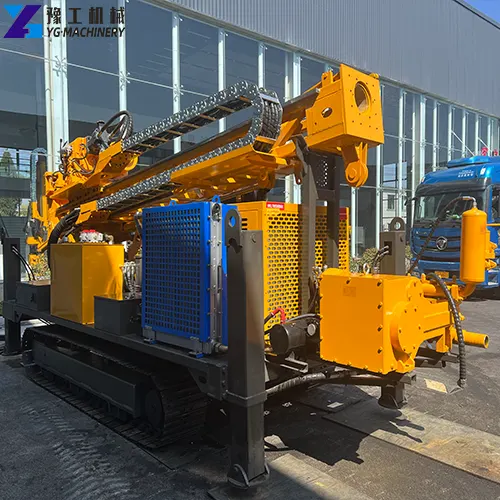
How Wireline Coring Changes Deep-Hole Productivity
A wireline core drilling rig can be useful for suitable deep-hole drilling programs because it can reduce the need to pull the full drill string every time the core barrel is retrieved.
With a wireline system, an overshot retrieves the inner tube through the drill rods. The drill rods remain in the hole while the core barrel is recovered and replaced.
Potential advantages, subject to the drilling design and crew practice, include:
- Less full-string tripping during core retrieval
- More efficient core recovery at greater depths
- Reduced non-drilling time in suitable drilling programs
- Better continuity of drilling operations when the system is correctly maintained
- A more organized deep-hole workflow when core barrels, overshots, rods, and spare tools are available
However, wireline coring is not simply an accessory to add at the last minute. It requires compatible core barrels, rods, overshots, landing systems, operator training, inspection routines, and spare components.
How Much Non-Drilling Time Will Wireline Coring Remove?
At deeper levels, project productivity may be affected more by non-drilling time than rotary-head speed.
Time is often lost during:
- Core recovery
- Full-string tripping
- Adding rods
- Handling stuck tools
- Mixing drilling fluid
- Conditioning the hole
- Reaming unstable intervals
- Replacing worn bits
- Managing casing
- Moving water and fuel
- Shift handovers
- Maintaining pumps, filters, and hydraulic components
Wireline coring may reduce part of this non-drilling time in suitable deep-hole projects. The value should be evaluated using planned hole depth, core-run length, number of shifts, expected geology, crew experience, and available tooling.
Get 12-Month Warranty & 24/7 Technical Support – Learn More
Frequently Asked Questions About Fully Hydraulic Core Exploration Drilling Rigs
A1: The listed depth values refer to different drilling conditions, core sizes, drill strings, and project configurations. A smaller core size may allow greater depth than a larger core size under the same general rig class. Ground conditions, hole angle, casing, fluid system, and operator practice also affect achievable depth.
A2: Choose core size based on the required sample volume, geological objective, expected ground conditions, target depth, logging standard, and budget. BQ may suit some deeper or smaller-diameter programs, while HQ or PQ may be selected when more core volume or larger-diameter samples are needed. YG should review the borehole design before matching a rig.
A3: Wireline coring can be useful for suitable deep-hole projects because the inner tube can be retrieved without pulling the entire drill string each time. Its value depends on hole depth, core-run length, core size, geology, crew experience, compatible tools, and the planned drilling workflow.
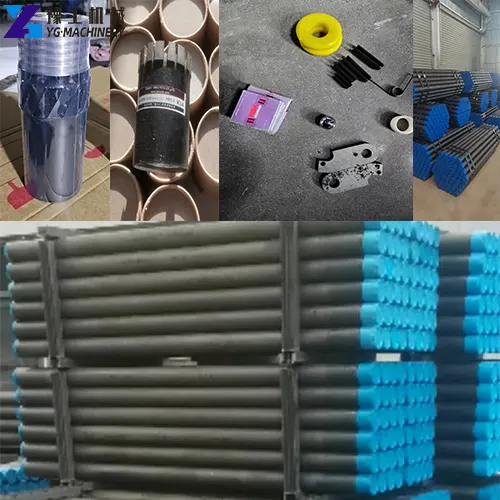
Depending on the conditions, the project may require selected diamond-bit types, reaming shells, casing, drilling-fluid additives, mud-control equipment, deviation-survey tools, wireline tooling, and additional spare parts. The exact package should be based on geological information and drilling objectives.
A5: It may be suitable for selected engineering, hydrogeological, or investigation projects where core recovery is needed. However, it should not automatically replace a dedicated water well rig when the main objective is large-diameter borehole construction, casing installation, or water-production drilling rather than continuous core sampling.
A6: The arrangement depends on the confirmed model, tooling package, destination, and contract scope. Before shipment, YG can discuss export packing, container loading, English documents, recommended spares, operational guidance, and remote technical communication. Confirm final delivery, support, training, and warranty terms in the quotation and contract.
Request a Full Hydraulic Exploration Drilling Proposal
A full hydraulic exploration drilling rig should be selected around your core size, depth, geology, hole angle, fluid system, access route, and field-support plan—not only a single advertised drilling-depth figure.
Match Your Core Size, Depth, and Ground Conditions with a YG project-based recommendation.
Please provide:
- Target depth
- BQ, NQ, HQ, PQ, or required hole diameter
- Geological log, rock description, or formation profile
- Borehole angle and deviation-control requirement
- Expected casing depth
- Core recovery objective
- Water availability and drilling-fluid plan
- Site elevation and temperature range
- Access-road and drill-pad photos
- Available platform size
- Fuel and electrical conditions
- Number of operating shifts
- Operator experience level
- Destination country and port
- Expected purchasing timeline
Send Your Borehole Design for a Rig Recommendation and request a Full Hydraulic Exploration Drilling Proposal from YG Machinery.