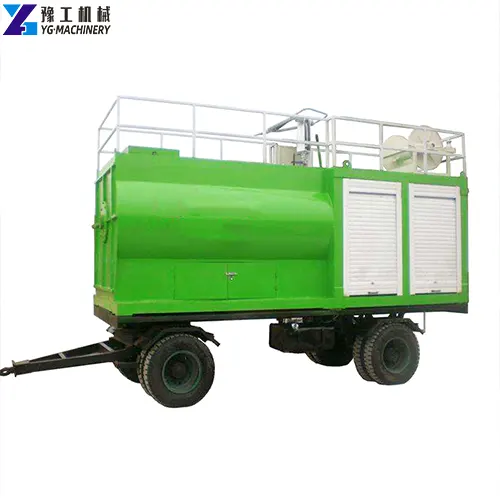
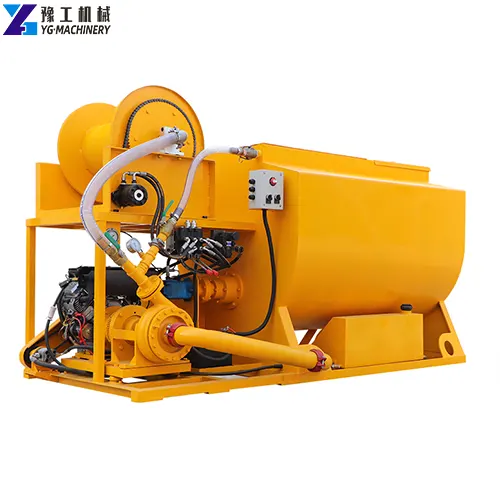
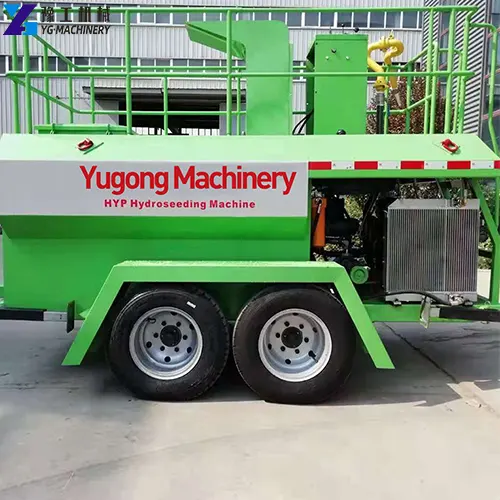
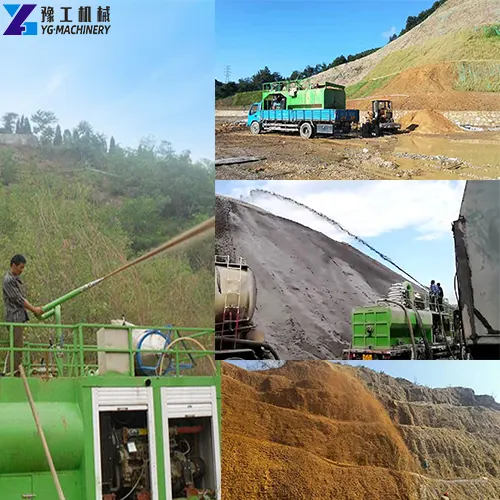
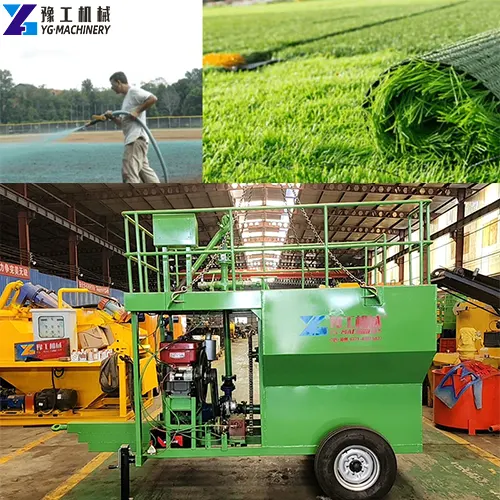
A small hydroseeding machine, also known as a mini grass sprayer, hydraulic sprayer, or portable greening sprayer, is a professional greening device that mixes grass seeds, fertilizer, water-retaining agents, adhesives, soil conditioners, and other materials with water, then sprays the mixture onto a slope using a high-pressure pump.
Common Pain Points in the Greening Industry
- Traditional manual grass planting is inefficient, costly, and time-consuming; large-scale operations simply cannot keep up with schedules.
- Slope planting is too dangerous for manual labor; it’s impossible to stand on steep slopes.
- Uneven seed distribution results in denser areas than sparser areas, requiring replanting after germination.
- Uneven mixing of fertilizer and seeds leads to inconsistent growth and complicated post-planting maintenance.
- Many remote mountainous areas have poor transportation, making it impossible for large equipment to access them.
If your project also faces these problems, please contact YG now to recommend suitable equipment to improve your work efficiency.
Get Factory Direct Pricing Today
YG Hot-sale Small Hydroseeding Machine Technical Parameters
| Item | YG-2 | YG-4 | YG-6 | YG-8 |
| Tank Volume | 2m³ | 4m³ | 6m³ | 8m³ |
| Spraying Area | 200-500m² | 500-1500m² | 700-2000m² | 1000-2500m² |
| Spraying Distance | H 20-30m | H 20-35m | H 20-35m | H 24-40m |
| V 10-20m | V 10-25m | V 10-25m | V 15-30 | |
| Pipe Head | H 20-50m | H 20-60m | H 20-70m | H 30-80m |
| V 20-30m | V 30-40m | V 30-40m | V 30-50m | |
| Weight | 1000KG | 1300KG | 1600KG | 1900KG |
| Dimension | 2.5*1.5*1.4m | 3.3*1.5*2.4m | 3.6*1.8*2.4m | 4.2*1.8*2.4m |
Get a Quote for Your Specifications Now
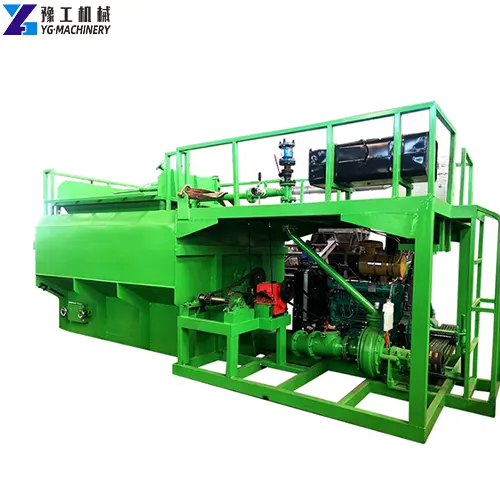
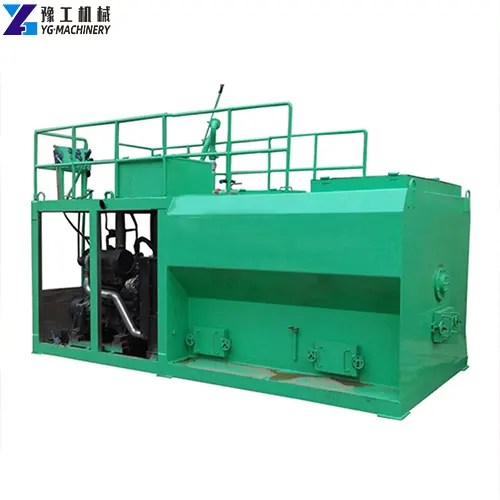
How to Choose the Right Hydroseeding Machine?
1. First, clarify your project type and scale.
- If you mainly do small-area municipal or residential landscaping, a small machine with a capacity of 1-2 cubic meters is sufficient.
- If you mainly do medium to large-scale projects such as highway slopes and mine revegetation, it is recommended to choose a 2- to 3-cubic-meter machine.
- If you frequently do large-scale projects, especially those requiring topsoil hydroseeding, it is recommended to choose a 3-5 cubic meter reinforced model.
- Don’t be greedy for too big or too small; the right size offers the best cost performance.
2. Consider spraying height and distance requirements.
- Most slopes are less than 30 meters high, so a standard model is sufficient.
- If you frequently need to spray slopes over 50 meters high, you should choose a model with a high-lift pump.
- The higher the lift, the greater the pump power and the higher the price; choose according to your actual needs.
3. Consider transportation and relocation conditions.
- If the construction sites are all in easily accessible locations, you can choose a larger model.
- If many construction sites are in… For remote mountainous areas with poor road conditions, choose a small and lightweight model.
- Also consider whether your transport vehicle can carry it—a pickup truck or a lorry.
- Whether the trailer chassis meets local road requirements.
4. Consider whether you need a soil-spraying function.
- If you’re only spraying seeds and fertilizer, a regular hydroseeder is sufficient.
- If you need to spray a substrate containing soil, choose a model specifically designed for soil spraying.
- Soil spraying places higher demands on the pump, requiring greater power and better wear resistance.
- Soil sprayers are more expensive than regular hydroseeders, but have a wider range of applications.
5. Consider after-sales service and spare parts availability.
- Hydroseeders are engineering equipment; problems can lead to significant delays and losses.
- Choose a manufacturer with reliable after-sales service.
- Are commonly used spare parts readily available, and what is the delivery time?
- Is technical support timely, and can remote guidance be provided to resolve issues?
Get Factory Direct Pricing Today
How to Improve Seedling Emergence Rate in Hydroseeding?
Emergence rate is crucial for hydroseeding projects; a high germination rate directly impacts project acceptance. How can we improve the germination rate?
1. Choose Suitable Seeds:
- Select varieties suitable for local climate and soil conditions.
- Don’t blindly choose cheap seeds; adaptability is important.
- Choose fresh seeds with high germination rates; older seeds have lower germination rates.
- Mixed sowing of multiple varieties can complement each other’s advantages and improve overall germination rate.
- Combining grasses and shrubs provides better results; herbaceous plants provide rapid coverage, while shrubs offer long-term stability.
2. The formulation should be scientifically sound:
- A sufficient water-retaining agent is essential, especially in arid regions, as water retention is key to germination.
- An appropriate amount of adhesive is crucial; too little will cause the seeds to wash away, while too much will hinder germination.
- Moderate fertilizer application is important; too much will burn the seedlings, while too little will result in insufficient nutrients.
- Adding soil conditioner can improve slope soil conditions.
3. Timing of application is critical:
- It’s best to apply the fertilizer before or after the rainy season. Good soil moisture promotes germination.
- Avoid spraying in hot, sunny weather, as rapid evaporation can cause seeds to dry out and die.
- Avoid spraying before heavy rain, as seeds are easily washed away immediately after spraying.
- Proper timing can more than double the germination rate.
4. Appropriate spraying thickness is crucial:
- Don’t spray too thinly, as this will hinder water retention and cause seeds to dry out easily.
- Don’t spray too thickly either, as this will prevent germination.
- Generally, a spraying thickness of 1-2 cm is sufficient for pure grass seeds.
- A spraying thickness of 3-5 cm is suitable for topsoil.
5. Necessary post-sowing care:
- If there are consecutive sunny days after spraying, it’s best to water once to ensure sufficient moisture for germination.
- If any areas are washed away and exposed after germination, re-spray promptly.
- Pay attention to pest and disease control, and address any problems immediately.
- Appropriate fertilization in the early stages promotes seedling growth.
Get a Quote for Your Specifications Now
Price and Purchase Information for Small Hydroseeding Machines
Price Influencing Factors:
- Tank Volume.
- Engine Brand and Power (Domestic or Imported).
- High-Pressure Pump Brand and Type.
- Mixing System Type (Mechanical or Hydraulic).
- Whether a Trailer Chassis is Included.
- Transportation Pipeline Length and Number of Accessories.
- Whether the Soil Spraying Function is Included.
- Transportation Costs and Insurance.
- Training and After-Sales Service.
YG Factory Direct Sales Advantages:
- Eliminating middlemen, prices are 10-15% lower than those of dealers.
- Custom configurations can be made to your specific needs, such as special tank volumes or the addition of soil spraying functions.
- Free operation and technical training are provided, and engineers can be arranged for on-site guidance.
- One-year warranty on the whole machine; engine and pump warranties are subject to the manufacturer’s warranty. Standardized execution, lifetime maintenance service.
- Global parts supply, commonly used parts shipped within 72 hours.
- 24-hour technical hotline, professional engineers available to answer your questions anytime.
- Provide hydroseeding formula guidance, recommending the most suitable formula based on different regions and climates.
- Flexible payment methods.
Selection suggestions:
- Mainly for small projects with low slopes: Choose a small machine (1-2 cubic meters).
- For medium-sized projects with most slopes under 30 meters: Choose a standard model (2-3 cubic meters).
- For frequent large projects with high slopes requiring topsoil hydroseeding, choose a reinforced model (3-5 cubic meters).
- Contact YG’s professional engineers for free selection advice and configuration solutions.
- We can help you conduct a return on investment analysis based on your project requirements and select the most suitable model.