What do you do when your piling return slurry carries heavy sand? Can treated slurry go back into boreholes for reuse?
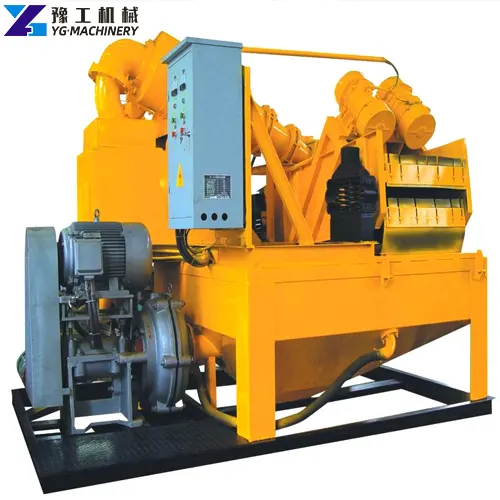
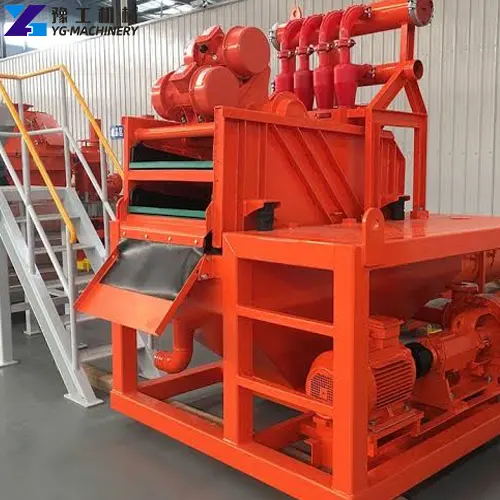
If you are a first-time buyer — piling contractor, site project manager, or equipment distributor — a desander for piling construction is designed exactly for this problem. It is a core unit in a piling slurry recycling system, also known as a piling desander or slurry desander. It separates sand particles from return drilling slurry so usable mud can circulate back to the borehole.
What Is a Piling Desander?
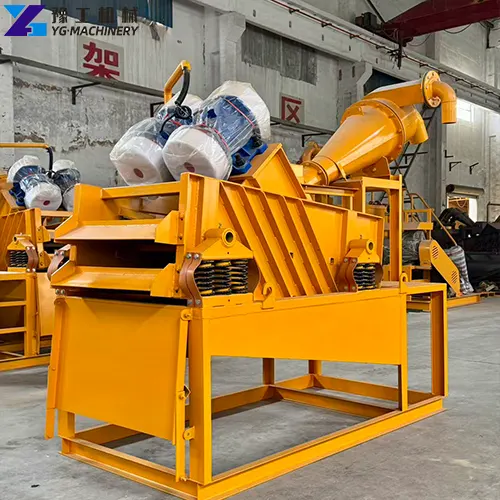
A piling desander, also called a slurry desander, is equipment that removes sand and coarse solids from drilling slurry. In piling work, slurry is used to stabilise the borehole, carry cuttings and reduce friction. When sand content becomes too high, the slurry may cause faster wear on pumps, pipes and drilling tools, and may reduce circulation efficiency.
The desander does not remove all clay, fine silt, dissolved chemicals, or organic materials. It mainly targets sand and larger solid particles. After treatment, the slurry may still look cloudy, especially when fine particles remain. Whether the slurry can be reused depends on project requirements, slurry type, and on-site testing.
See Factory-Direct Pricing – Request Quote
Bored Pile Construction Desander Machine Technical Parameters
| Model | YG100-A | YG100-B | YG100-C | YG250-B | YG300-C | YG400-C |
| Maximum slurry handling capacity | 100M3/h | 100M3/h | 120M3/h | 250M3/h | 300M3/h | 400M3/h |
| Vibrating motor | 0.25kw×2 | 0.25kw×2 | 0.25kw×2 | 1.5kw×2 | 2.2kw×2 | 2.2kw×2 |
| Maximum moisture content of undersize material | 30% | 30% | 30% | 30% | 30% | 30% |
| Separation particle size d50 (μm) | 180 | 180 | 180 | 180 | 180 | 180 |
| Solids screening capacity (t/h) | 10-25 | 10-25 | 12-30 | 25-62.5 | 30-75 | 40-100 |
| Compatible feed pump (to be provided by the customer) | 7.5kw | 7.5kw | 7.5-11kw | 22kw | 37kw、45kw、55kw | 37kw、45kw、55kw |
| Total power consumption | 0.5 kW | 8 kw | 22.5kw | 25kw | 59.4kw | 59.4kw |
| Total machine weight | 550 kg | 1000 kg | 1250 kg | 2300 kg | 5500kg | 8000kg |
| Sand content in slurry after purification | <2% | <2% | <2% | <2% | <2% | <2% |
| Overall dimensions (length × width × height) | 2.5*0.83*2.1m | 2.16*1.43*2.23m | 2.2*1.56*2.2m | 3.3*2.0*2.3m | 4.3*3*3.1m | 6.4*2.55*4.3m |
| Internal pump | None | 7.5 kW motor + vertical-column pump | 22 kW motor + horizontal pump | 22 kW motor + horizontal pump | 55kW motor + horizontal pump | 55kW motor + horizontal pump |
| Inlet and outlet dimensions | Inlet: 3 inches (76 mm)Upper outlet: 4 inches (102 mm)Lower outlet: 6 inches (152 mm) | Inlet: 3 inches (76 mm)Upper outlet: 4 inches (102 mm)Lower outlet: 6 inches (152 mm) | Inlet: 3 inches (76 mm)Upper outlet: 4 inches (102 mm)Lower outlet: 6 inches (152 mm) | Inlet: 4 inches (102 mm)Upper outlet: 6 inches (152 mm)Lower outlet: 6 inches (152 mm) | Inlet: 6 inches (152 mm)Upper outlet: 6 inches (152 mm)Lower outlet: 8 inches (195 mm) | Inlet: 8 inches (195 mm)Upper outlets: 8 inches (195 mm) × 2Lower outlet: 8 inches (195 mm) |
Find the Right Model for Your Piling Project – Free Consultation
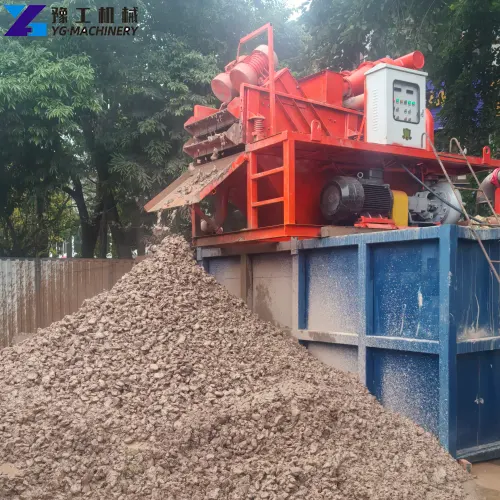
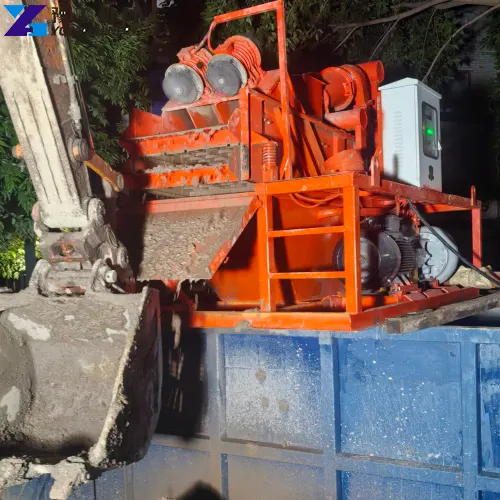
How a Piling Desander Works: Simple Process Breakdown
The standard slurry treatment workflow:
- Return slurry collection: Dirty mud flows out from the borehole into the mud tank.
- Primary screening: Large cuttings are caught by the vibrating screen.
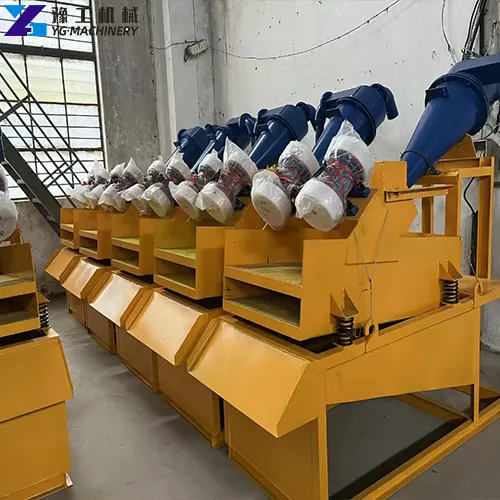
- Pump feeding: Slurry is pumped into hydrocyclones. A hydrocyclone is a cone-shaped separator that uses centrifugal force to split heavy solids from liquid.
- Sand separation: Heavier sand spins outward and sinks; cleaner slurry moves upward.
- Discharge & recirculation: Sand drops to the bottom for dewatering and discharge. Treated slurry flows out the top and returns to the active mud tank.
Note: The exact workflow changes with your machine configuration.
- Vibrating screen: Dewaters separated sand to reduce liquid loss in discharged solids.
- Hydrocyclone group: Creates centrifugal force to capture sand particles smaller than the primary screen can catch.
- Sand discharge outlet: Releases separated sand continuously or intermittently.
Key Components and What to Confirm Before Buying
| Component | What problem it helps solve | What to confirm before purchase |
| Vibrating screen | Removes coarse cuttings and protects downstream units | Screen mesh size, wear resistance, replacement method |
| Hydrocyclone | Separates sand and heavier solids from slurry | Cyclone size, separation range, material wear life |
| Slurry pump | Moves slurry through the system | Flow rate, head, abrasion resistance, power supply |
| Sand discharge outlet | Discharges separated solids continuously or intermittently | Discharge method, pipeline connection, blockage risk |
| Control panel | Supports start/stop and basic operation management | Voltage, protection level, operator training needs |
| Frame and tank | Provides stable installation and slurry buffering | Footprint, mobility, lifting points, site space |
Ask an Engineer for Model Recommendation – Free Consultation
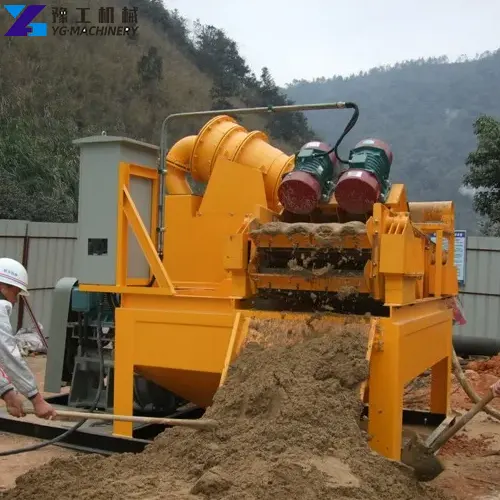
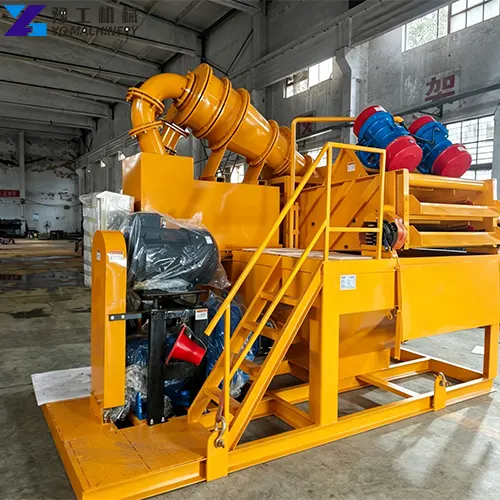
Where This Piling Mud Desander Plant Equipment Is Used
A desander for piling construction is commonly used in:
- Bored pile construction
- Diaphragm wall slurry treatment
- Rotary drilling projects with bentonite or polymer slurry
- Bridge and foundation works with high sand return
- Temporary slurry circulation systems that need sand control
If your project uses bentonite slurry or polymer slurry, compatibility should be confirmed before selection. Not every slurry type behaves the same way, and some additives may affect screening, pumping, or separation performance.
Why Slurry May Still Look Cloudy After Sand Removal
After desanding, slurry can still appear turbid. This is normal in many cases.
A desander mainly removes sand and part of the coarse solids. It is not a slurry dewatering unit, and it does not automatically produce clear water, filter cake, or discharge-ready wastewater. Fine clay particles, colloids, and chemical additives may remain in the slurry. Before reuse, the slurry should be tested according to project requirements, including density, viscosity, sand content, and other parameters.
If the goal is wastewater discharge, additional treatment equipment may be required. If the goal is slurry reuse, the desander helps reduce sand content, but final slurry quality must be verified on site.
How to Choose the Right Configuration
Capacity in m³/h is important, but it should not be the only selection criterion.
Before choosing a piling desander, confirm:
- Actual return slurry flow rate
- Sand content and particle size distribution
- Slurry type and density
- Daily operating hours
- Site space and mobility requirements
- Power supply and voltage
- Pump and mud tank interface
- Whether additional screening or storage is needed
Treatment capacity refers to slurry flow, not sand discharge volume. Separation performance indicates a target particle range, not a guarantee that every particle above a certain size will be removed 100 percent. Real performance depends on slurry properties, operating conditions, and system configuration.
Get Your Free Quote Today – Fast Response
Frequently Asked Questions (FAQs) Regarding Mud Filters for Pile Foundation Engineering
A1: It is mainly used for drilling slurry from piling and foundation work, including bentonite or polymer slurry. Compatibility should be checked based on slurry type, sand content, and particle size.
A2: Capacity should match the actual return slurry volume, not only the theoretical pump rating. Provide your rig type, borehole diameter, depth, slurry flow, and operating hours for a more suitable recommendation.
A3: No. It reduces sand and coarse solids. It does not automatically produce clear water or meet discharge standards. Additional treatment may be needed if wastewater discharge is required.
A4: A complete piling slurry recycling system may include slurry tanks, feeding lines, return lines, additional screens, storage capacity, and pumps. The exact configuration depends on site layout and process requirements.
A5: Screens, hydrocyclone liners, pump parts, and other wear components require regular inspection. Maintenance frequency depends on sand load, slurry abrasiveness, and operating hours. A spare parts list should be prepared before project start.
A6: Please provide construction type, soil conditions, slurry type, return slurry volume, sand content, reuse target, site photos or layout, power supply, and destination port.
Expand Your Slurry Management Capabilities
For projects requiring comprehensive slurry treatment, this desander for piling construction can be effectively paired with our dredge robots. While the desander focuses on separating sand and solids from active circulation, a desilting robot can handle the cleaning of sediment from mud tanks, settling pits, or difficult-to-reach areas upstream of the treatment process. Combining these solutions creates a more complete piling slurry recycling system, reducing manual cleaning labor and ensuring a consistent supply of slurry for the desander to process. If you are interested in an integrated approach to slurry management, please mention this in your inquiry so we can propose a compatible setup.