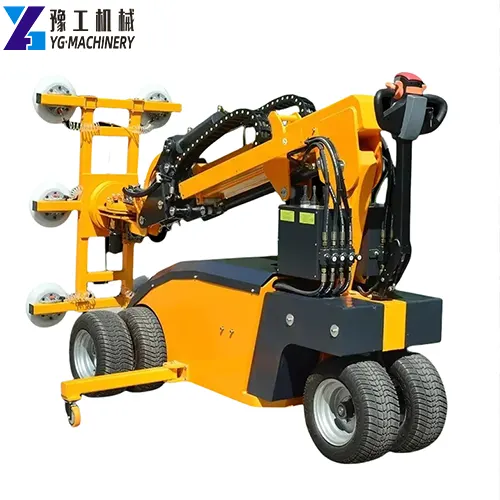
What Is a Glass Glazing Robot?
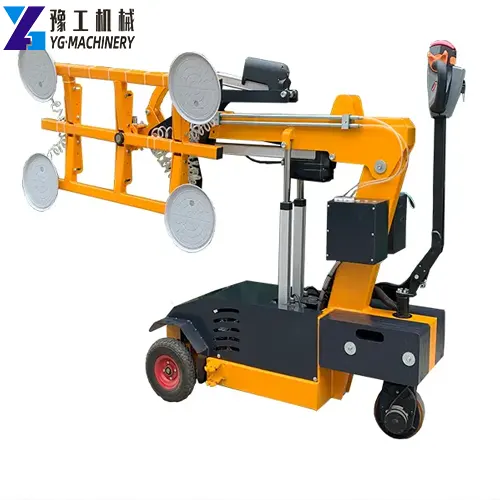
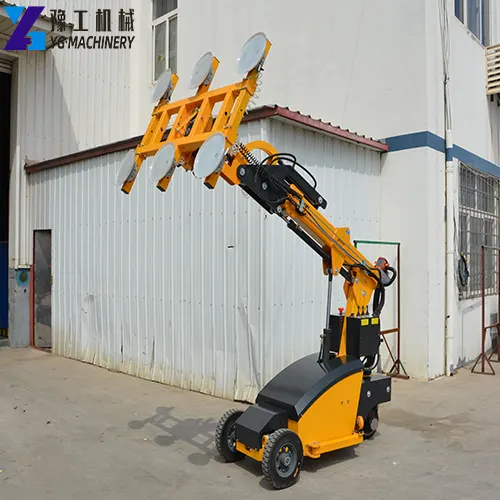
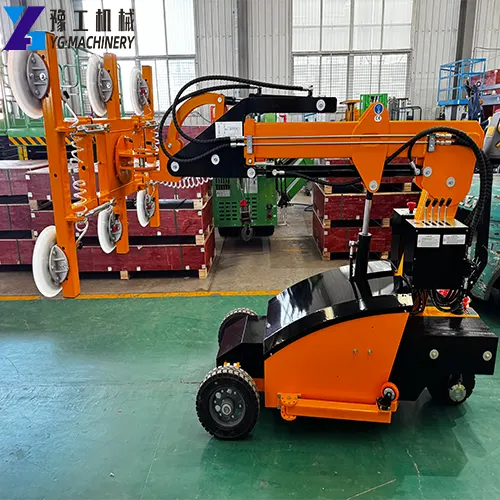
A glass glazing robot is a compact, mobile lifting and positioning machine used to handle glass panels and selected non-porous sheet materials. It may also be called a glazing robot, glass lifting robot, glass installation robot, or glass vacuum lifter.
The machine usually uses vacuum suction cups to hold a panel. It then allows the operator to move the glass from a storage rack, transport vehicle, staging area, or indoor location to its final installation position.
Depending on the selected model and configuration, a glass glazing robot may provide:
- Vacuum suction for glass handling
- Hydraulic or electric lifting movement
- Forward reach or articulated boom movement
- Glass rotation for horizontal or vertical installation
- Forward and backward tilt adjustment
- Side-shift or fine-positioning movement
- Compact travel dimensions for restricted-access areas
- Battery-powered operation for selected indoor applications
- Remote control for selected models and applications
Glazing robots are commonly used in restricted-access environments where contractors need to transport and accurately position glass without relying only on manual lifting.
Contact us now for more product information, and we can recommend the most suitable model for you.
Get a Factory-Direct Quote on Glazing Robots
View the Technical Specifications of YG Cost-Effective Glass Assembly Robots
| Model Type | YG-LD-300 | YG-LD-400 | YG-LD-500 | YG-LD-600 | YG-LD-800 | |
| Load Capacity | 300kg(retract)150kg(extend) | 400kg(retract)200kg(extend) | 500kg(retract)250kg(extend) | 600kg(retract)300kg(extend) | 800kg(retract)400kg(extend) | |
| Lifting Height | 3500mm | 3500mm | 3700mm | 3700mm | 4500mm | |
| QTY of Suction Cap | 4pcs | 4pcs | 6pcs | 6pcs | 8pcs | |
| Rubber Suction Cap | 300mm | Ø300mm | Ø300mm | Ø300mm | Ø300mm | |
| Maintenance-free Battery | 2x12V/80AH | 2x12V/100AH | 2x12V/120AH | 2x12V/120AH | 2x12V/120AH | |
| Battery Charger | Smart Charger | Smart Charger | Smart Charger | Smart Charger | Smart Charger | |
| Drive motor | 24V/1200W | 24V/1200W | 24V/1200W | 24V/1200W | 24V/1200W | |
| Lifting Motor | 24V/2000W/6L | 24V/2000W/6L | 24V/2000W/6L | 24V/2000W/6L | 24V/2000W/12L | |
| Chassis L*W | 2660*810mm | 2660*810mm | 2800*810mm | 2800*810mm | 2800*810mm | |
| Driving Wheel | Ø250x80mm | Ø250x80mm | Ø300x100mm | Ø300x100mm | Ø300x125mm | |
| Packing Size(mm) | 2560*1030*1700 | 2560*1030*1700 | 2580*1050*1700 | 2580*1050*1700 | 3000*1250*2300 | |
| N.W/G.W | 1100/1150kg | 1280/1330kg | 1300/1350kg | 1400/1450kg | 1600/1650kg | |
| Loading Qty | 1x20GP/40GP: 6SETS/12SETS | |||||
| Movement | Automatic(4 kinds) | 1. The suction cup frame flips 180° electrically. 2. The support plate automatically retracts. 3. The hydraulic arm lifts electrically. 4. The base of the whole machine moves 100- 150 mm horizontally. | ||||
| Manual (2kinds) | 1. The suction cup holder can be manually rotated 90 degrees (electrically powered optional). 2. The suction cup holder can be manually rotated 360 degrees (electrically powered optional). | |||||
| Usages | Mainly used for the handling, movement, and installation of materials such as glass, marble, wood, iron plate, etc. | |||||
Find the Right Glazing Robot for Inside-Out Installation – View Models
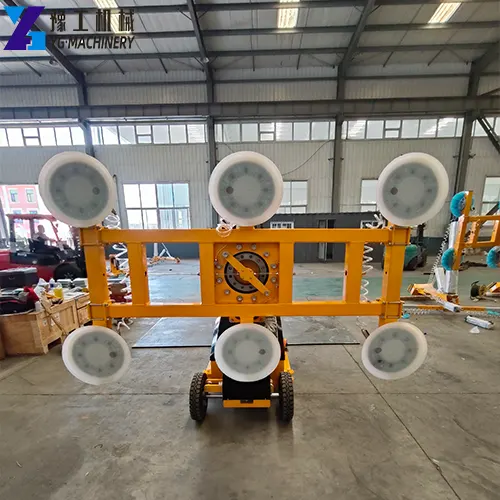
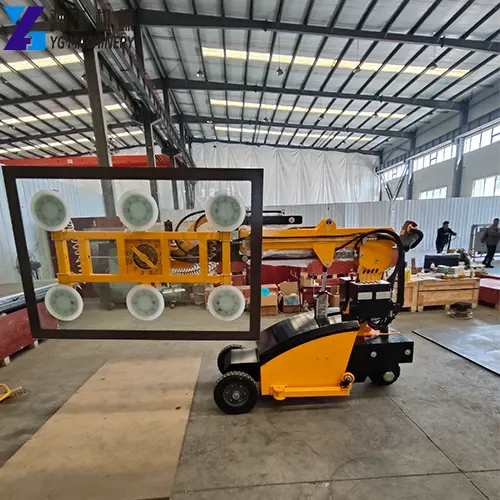
How to Select the Right Glass Installation Equipment
Before requesting a quotation, collect the project information that directly affects equipment selection.
Glass Details
Please provide:
- Maximum glass weight
- Maximum glass length and width
- Glass thickness
- Laminated, insulated, coated, curved, printed, or standard glass
- Surface condition and available suction area
- Glass storage orientation before lifting
- Required installation orientation
Installation Route
The access route often determines the equipment choice.
Please confirm:
- Doorway clear width and clear height
- Corridor width and turning locations
- Elevator dimensions and rated capacity, if applicable
- Thresholds, ramps, stairs, slopes, or uneven areas
- Indoor floor type and floor loading limitations
- Outdoor travel conditions
- Distance from glass storage to installation point
Installation Position
Tell YG:
- Installation height
- Required working radius or forward reach
- Whether the panel must rotate, tilt, or side-shift
- Whether the installation point is indoor, façade-facing, rooftop, or in an atrium
- Whether the glass must move around obstacles
- Typical number of panels installed per day
Operating Conditions
Also provide:
- Indoor or outdoor environment
- Wind exposure for outdoor work
- Available electrical supply and charging conditions
- Required operating hours per shift
- Local safety requirements
- Destination country and port
- Expected purchase or project-start timeline
Typical configurations can cover compact indoor handling through heavier façade panels. However, the actual safe working load must always follow the machine nameplate, applicable load chart, vacuum lifter instructions, panel condition, and approved project lifting plan.
Contact Engineer for Site-Specific Glazing Solution
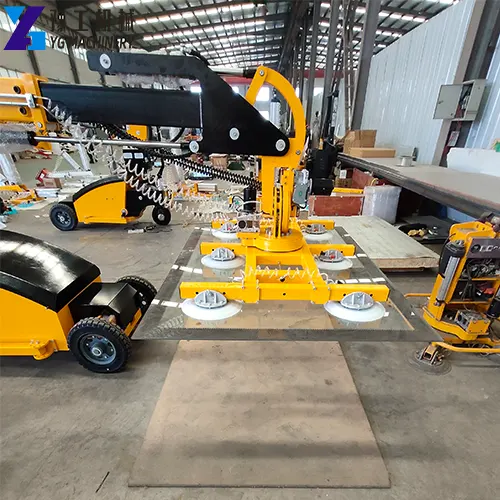
Frequently Asked Questions About Glass Assembly Robots
A1: Use the machine nameplate, load chart, and vacuum lifter rated capacity as the basis, and confirm them against the actual glass weight, surface, and pad layout. Do not exceed the rated safe load. The vacuum holding force also depends on surface condition and cleanliness, so confirm the plan with YG and the project safety team.
A2: A suitable vacuum pad arrangement and lift capacity must be matched to your specific glass, because surface texture, coating, curvature, and weight affect holding. Confirm the glass data with YG so the correct lifter and pad configuration can be selected.
A3: Compare the machine’s transport and operating width, height, and turning radius with your door, lift, corridor, and ramp dimensions. Provide the clear aisle width, clear height, thresholds, and slopes so YG can confirm whether the machine can access the work area.
A4: Choose a spider crane with a vacuum lifter when the installation height and working radius exceed what a glazing robot can reach — for example, façades, roofs, atriums, or complex hoisting paths. The vacuum lifter must be matched to the glass weight, size, surface, and installation attitude.
A5: A spider crane man basket can be used for personnel-assisted work such as glazing aid, curtain-wall maintenance, sealing, and finishing, but only where local regulations, equipment configuration, the project safety plan, and rated-load limits are satisfied. It is not a substitute for a specialist elevated work platform. Personnel must not be carried with suspended glass and must not stand beneath it.
A6: Scope varies by project and destination and should include installation, commissioning, operator training, spare vacuum pads and parts, and remote technical support as agreed in the contract. Confirm these items and the delivery timeline with YG before ordering.
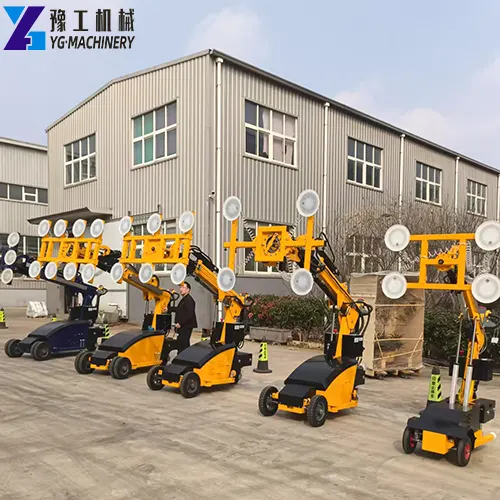
Match Robot to Your Glass Panel Size
Send Us Your Glass Size, Weight and Installation Layout
A glass glazing robot should be selected around the full installation task—not only the panel weight.
Send Us Your Glass Size, Weight and Installation Layout so YG can recommend a suitable glass glazing robot, spider crane with a vacuum lifter, or other project-based solution.
Please include:
- Glass photo, drawing, or panel specification
- Maximum panel weight
- Glass length, width, thickness, and surface type
- Laminated, insulated, coated, curved, or standard glass details
- Installation height and required working radius
- Indoor or outdoor installation environment
- Doorway, corridor, elevator, and access-route dimensions
- Ground condition, slope, threshold, and floor-loading information
- Required rotation, tilt, side-shift, or forward reach
- Whether you need a vacuum lifter, spider crane, or approved man basket configuration
- Destination country and port
- Expected project start date and purchasing timeline
Get a Glass Installation Equipment Recommendation from YG Machinery for your curtain wall, interior glazing, storefront, skylight, railing, or façade project.