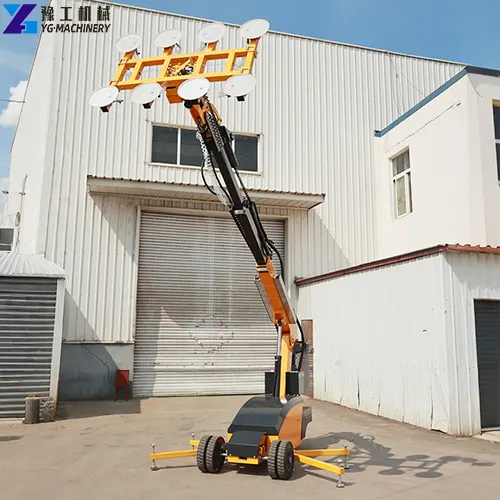
Site Working Conditions First — 3 Core Pre-Sales Questions for a Glass Installation Robot
Before selecting a glass installation robot or self-propelled vacuum glass handling robot, our sales team first validates three core project questions:
- What is the total glass panel weight?
- What horizontal reach (forward extension) is required during glass placement?
- Can the machine travel through access routes and reach the installation location?
These three questions filter out unsuitable solutions quickly.
3 primary technical paths for glass lifting work:
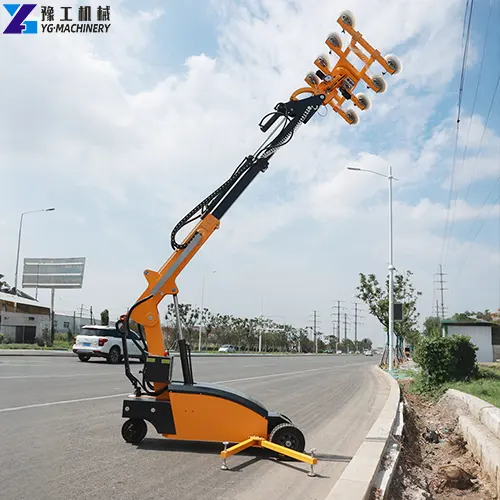
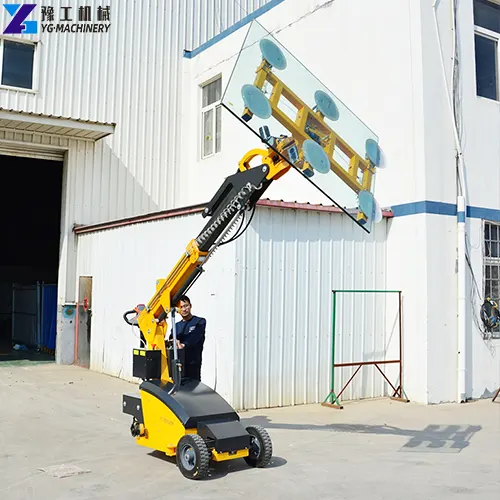
- Indoor, short-distance, fine position adjustment: A glass installation robot (self-propelled vacuum glass handling robot) is the preferred solution.
- High elevation or cross-obstacle lifting: Spider crane paired with a suspended vacuum glass lifter.
- Projects requiring precise glass attitude control at height: Evaluate spider crane compatibility with glass handling attachments.
Send Your Glass Weight, Required Reach, and Access Layout for a project-based equipment recommendation.
Get Your Free Quote in 12 Hours
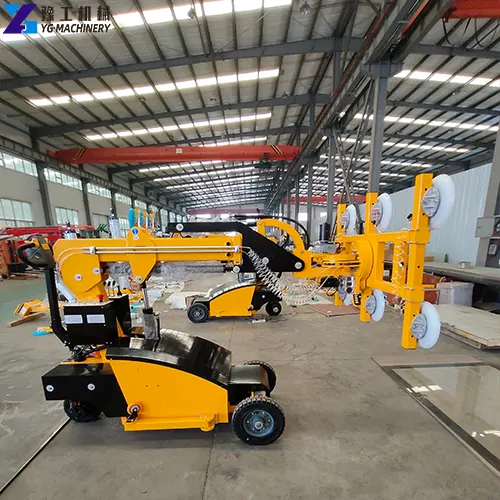
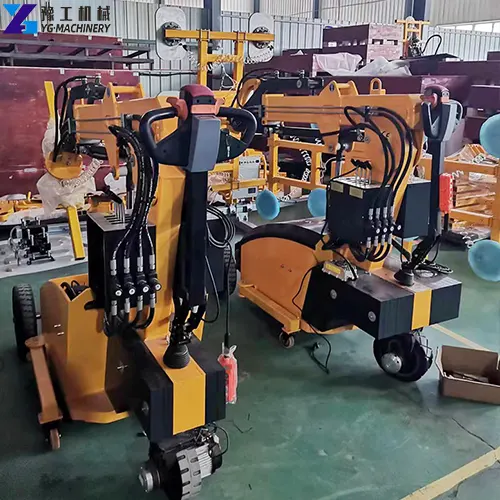
Technical Specifications of the YG Self-Propelled Glass Assembly Robot
| Model Type | YG-LD-300 | YG-LD-400 | YG-LD-500 | YG-LD-600 | YG-LD-800 | |
| Load Capacity | 300kg(retract)150kg(extend) | 400kg(retract)200kg(extend) | 500kg(retract)250kg(extend) | 600kg(retract)300kg(extend) | 800kg(retract)400kg(extend) | |
| Lifting Height | 3500mm | 3500mm | 3700mm | 3700mm | 4500mm | |
| QTY of Suction Cap | 4pcs | 4pcs | 6pcs | 6pcs | 8pcs | |
| Rubber Suction Cap | 300mm | Ø300mm | Ø300mm | Ø300mm | Ø300mm | |
| Maintenance-free Battery | 2x12V/80AH | 2x12V/100AH | 2x12V/120AH | 2x12V/120AH | 2x12V/120AH | |
| Battery Charger | Smart Charger | Smart Charger | Smart Charger | Smart Charger | Smart Charger | |
| Drive motor | 24V/1200W | 24V/1200W | 24V/1200W | 24V/1200W | 24V/1200W | |
| Lifting Motor | 24V/2000W/6L | 24V/2000W/6L | 24V/2000W/6L | 24V/2000W/6L | 24V/2000W/12L | |
| Chassis L*W | 2660*810mm | 2660*810mm | 2800*810mm | 2800*810mm | 2800*810mm | |
| Driving Wheel | Ø250x80mm | Ø250x80mm | Ø300x100mm | Ø300x100mm | Ø300x125mm | |
| Packing Size(mm) | 2560*1030*1700 | 2560*1030*1700 | 2580*1050*1700 | 2580*1050*1700 | 3000*1250*2300 | |
| N.W/G.W | 1100/1150kg | 1280/1330kg | 1300/1350kg | 1400/1450kg | 1600/1650kg | |
| Loading Qty | 1x20GP/40GP: 6SETS/12SETS | |||||
| Movement | Automatic(4 kinds) | 1. The suction cup frame flips 180° electrically. 2. The support plate automatically retracts. 3. The hydraulic arm lifts electrically. 4. The base of the whole machine moves 100- 150 mm horizontally. | ||||
| Manual (2kinds) | 1. The suction cup holder can be manually rotated 90 degrees (electrically powered optional). 2. The suction cup holder can be manually rotated 360 degrees (electrically powered optional). | |||||
| Usages | Mainly used for the handling, movement, and installation of materials such as glass, marble, wood, iron plate, etc. | |||||
Model Elimination & Recommendation Logic
Start with the glass weight at your required extended reach. Compare the glass weight against the model’s extended arm rated load, not retracted load.
- If glass weight ≤150 kg at working reach: YG-LD-300 is the baseline option. Check floor load, access path, and lifting height requirements. Eliminate if lifting height is insufficient.
- If glass weight >150 kg and ≤200 kg: YG-LD-400. Verify that the 3500 mm lifting height meets your installation opening.
- If glass weight >200 kg and ≤250 kg: YG-LD-500. 6 suction cups for larger panels, increased vertical stroke to 3700 mm.
- If glass weight >250 kg and ≤300 kg: YG-LD-600. 6 suction cups, same 3700 mm lifting height. Remember: retracted load of 600 kg cannot be used for extended-reach lifting.
- If glass weight >300 kg and ≤400 kg: YG-LD-800. Highest extended arm load (400 kg), maximum lifting height 4500 mm, 8 suction cups for large glass panels.
If the glass weight exceeds 400 kg at the required reach, eliminate all LD glass installation robot models. Evaluate spider crane plus suspended vacuum glass lifter solution.
Compare Prices Across All Models – See Pricing

Glass Installation Equipment Selection Comparison Table
Decision logic: Select by installation height → working radius → site access path. Eliminate unsuitable options before recommending equipment.
Quick Decision Path Cards
- Indoor · Short Reach · Low & Medium Height Fine positioning, narrow access, doors, windows & interior partitions → Glass Installation Robot (Self-propelled vacuum glass handling robot)
- High Elevation · Obstacle-crossing · Large Radius Facade, roof, atrium, skylight glazing → Spider Crane + Suspended Vacuum Lifter
- High-level Auxiliary Manwork Sealing, joint finishing, curtain wall maintenance → Spider Crane + Man Basket (Must comply with local safety rules; never lift glass and workers together)
| Comparison Item | Glass Installation Robot(Self-propelled vacuum glass handling robot) | Spider Crane + Suspended Vacuum Lifter | Spider Crane + Man Basket |
| Core Function | Glass transport, lifting, rotation, tilting, and precision positioning for installation | High-rise glass lifting & placement for complex hoisting paths | Auxiliary work at height: sealing, joint finishing, maintenance |
| Suitable Height | Low to medium height (YG-LD series lifting height: 3500–4500 mm) | High & extra-high height; determined by boom length and working radius | Working height follows boom coverage |
| Working Radius | Short forward reach; limited extension (extended load:150–400kg) | Large radius, cross obstacles; load decreases with radius (load curve) | Large radius for worker access |
| Site & Access Requirements | Narrow chassis (810mm), works indoors, elevators and corridors; floor load capacity required | Requires outrigger deployment space and ground bearing capacity; larger working area | Same space requirement as spider crane, plus separate rated load & regulatory limits for man basket |
| Load Calculation Rule | Differentiate retracted arm load vs extended arm load; select model based on extended rated load | Load varies with radius and boom angle; vacuum lifter dead weight must be included | Limited by rated capacity: total weight of workers + tools |
| Vacuum Suction Setup | Rigid-mounted suction cups with multi-cup layout | Suspended vacuum lifter, matched by glass weight and attitude | NOT for glass lifting (glass and personnel hoisting prohibited at the same time) |
| Typical Projects | Interior partitions, doors & windows, storefront curtain wall closing works | External curtain wall, roof skylight, atrium, oversized high-rise glass | Curtain wall sealing, maintenance and caulking |
| Key Limitations & Pre-job Checks | Not for high-rise, overweight, or obstacle-crossing lifting; verify suction cup compatibility for coated / textured/curved glass | Check outrigger space, load curve, and glass suitability for vacuum lifter | Personnel lifting must follow local safety codes; man basket cannot replace aerial work platform |
In-Stock Models Ready to Ship – See What‘s Available
Frequently Asked Questions About YG Glass Assembly Robots
A1: No. Extended-arm load is the limiting factor for glass placement. For example, YG-LD-600 retracted load is 600kg, but extended rated load is only 300kg. Glass heavier than 300kg at working reach must eliminate this model. Always use the extended arm load for selection.
A2: Not automatically. The glass panel held on the robot adds extra width. You must check turning clearance, thresholds, elevator size, and floor load capacity as part of the full travel envelope.
A3: Standard flat glass is suitable. For coated, textured, or curved glass, we need to review the glass surface condition and suction cup layout. Some surface types may not work with vacuum handling.
A4: A glass installation robot is a self-propelled rigid mount for indoor fine positioning. A spider crane + suspended vacuum lifter handles high elevation and cross-obstacle lifting. Load charts and safety rules are separate; do not mix specifications.
A5: No. Max lifting height is the arm stroke. Actual install height must account for glass panel size, suction cup placement, forward reach, and overhead obstructions at the opening.
A6: Inspect suction cup wear, vacuum seal leakage, battery health, hoses, and frame damage. Complete a vacuum safety test before lifting every panel.
Send Your Glass Weight, Required Reach, and Access Layout
Fill out our inquiry form with glass drawings, panel weight, glass dimensions, installation height, required horizontal reach, site travel route, elevator/floor load conditions, delivery destination, and expected purchase timeline. Our engineering team will review your project data and filter matching glass installation robot models.