
Are you a new energy vehicle owner complaining about slow charging, leaving your parking lot empty?
Are you stuck in long queues at highway service areas, missing the best charging times?
Are you planning to set up a charging station but are unsure which wattage offers the best cost-performance ratio?
A 120kW charging station (120 kW DC charging pile) is currently the golden power range for commercial electric vehicle charging stations globally, balancing charging speed and electricity costs, and perfectly balancing user experience and operational profitability. It’s 17 times faster than a 7kW slow charger and 60% cheaper to build than Tesla Superchargers, making it the top choice for small and medium-sized investors entering the new energy charging industry.
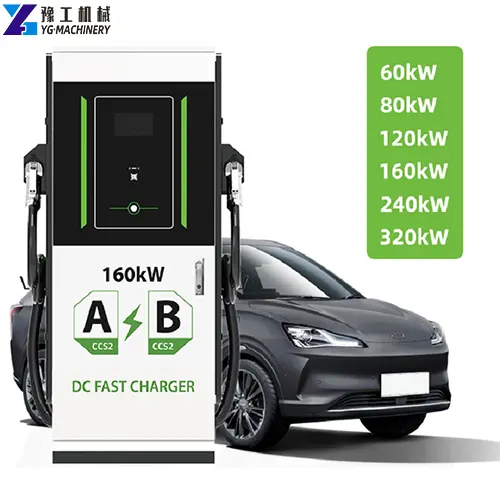
A 120kW charging station, commonly known as a 120kW DC fast charging pile, is a mainstream model among DC charging stations. It directly outputs DC power to charge the car battery, eliminating the need for an onboard charger, significantly increasing charging speed.
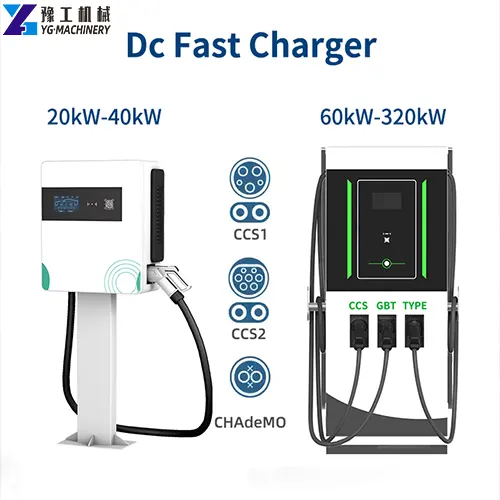
The entire unit features a vertical, integrated design with a simple and elegant appearance and supports customized colors and advertising screens. The core structure consists of four main parts:
- Power Module Group: Six 20kW standard power modules connected in parallel, supporting hot-swapping; a single module failure does not affect the overall operation.
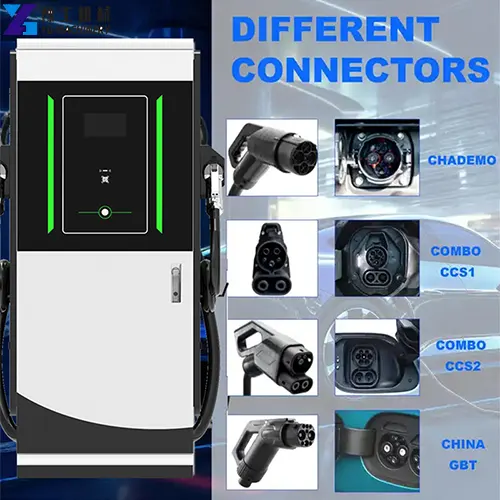
- Dual-Gun Charging System: Two national standard/European standard charging guns, supporting full-power output from a single gun and power sharing between both guns.
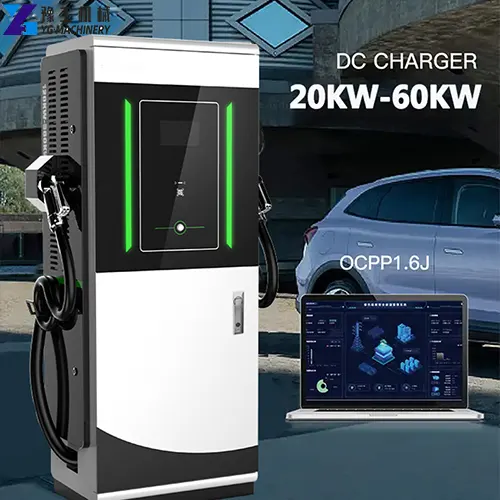
- Intelligent Control System: Integrates a payment module, remote monitoring, and fault alarm functions.
- Protective Shell: 1.5mm thick cold-rolled steel powder-coated shell, IP54 dustproof and waterproof, suitable for harsh outdoor environments.
Are you also interested in purchasing a charging station? Contact us now for more product information.
Get a Quote for Your Specifications Now
YG Hot-sale Portable Electric Vehicle Charger Technical Parameters
| Model | YG-40 | YG-120 | YG-160 |
| Output Power | 40kw | 120kw | 160kw |
| Input voltage | 380V±20% | ||
| Charging method | Automatic charging, by time, by power, by amount | Automatic charging, by time, by power, by amount | Automatic charging, by time, by power, by amount |
| Output voltage | DC50~1000V | 330-750V | 330-750V |
| output current | 120A | 250A | 250A |
| Frequency | 50HZ | 50-60Hz | 50-60Hz |
| Charging mode | Swipe card/ APP /manual | Swipe card/ APP /manual | Swipe card/ APP /manual |
| Wire length | 5 meter | 5 meter | 5 meter |
| Work temperature | ‘-20℃ ~ +50℃ | ‘-20℃ ~ +50℃ | ‘-20℃ ~ +50℃ |
| Waterproof level | IP 54 | IP 54 | IP 54 |
| Network | standard: Ethernet option:4G | standard:Ethernet option:4G | standard:Ethernet option:4G |
| Weight: | 280 KG | 260 KG | 280 KG |
| Machine Size | 517cm*207cm*675MM | 780*685*1750 mm | 780*685*1750 mm |
Get a Quote for Your Specifications Now

Why Choose a 120kW Charging Station? What Practical Benefits Does It Bring to Businesses?
- A perfect balance between charging efficiency and cost. A 120kW power configuration means that a typical electric vehicle can be charged from 30% to 80% in just 25-35 minutes. This meets the need for rapid charging while avoiding the equipment investment and grid expansion costs associated with excessively high power outputs. For small and medium-sized enterprises (SMEs), this power range offers the optimal return on investment.
- Reduced operating costs and improved management efficiency. The intelligent charging management system supports peak-valley electricity pricing strategies, allowing businesses to set charging times and utilize off-peak electricity rates at night to charge their fleets, significantly reducing electricity costs. Remote monitoring further reduces the workload of manual inspections, improving maintenance efficiency by over 40%.
- Enhanced service capabilities and brand image. Equipping commercial locations with fast-charging facilities not only meets the charging needs of employees and customers but also reflects the company’s green and environmentally friendly philosophy, enhancing its brand image. For service-oriented businesses such as retail and catering, charging stations can effectively extend customer dwell time and drive additional consumption.
- Flexible scalability to adapt to future development. The modular design of the 120kW charging pile supports smooth power upgrades, allowing companies to gradually add charging modules according to actual needs, avoiding excessive one-time investment. The equipment also supports OTA remote upgrades, ensuring continuous functional iteration and updates.
How Does a 120 kW DC Fast Charging Station Work?
- Step 1: AC Input and Rectification. The device receives 380V three-phase AC power from the grid. After EMI filtering and rectification, the AC power is converted into high-voltage DC power. This step is mainly completed by the rectifier unit in the charging module.
- Step 2: DC/DC Power Conversion. The rectified high-voltage DC power passes through a DC/DC converter circuit, which precisely adjusts the output voltage and current according to the charging demand commands issued by the vehicle’s BMS (Battery Management System). A 120kW device typically uses multiple power modules operating in parallel, with current-sharing control ensuring balanced load across all modules.
- Step 3: Intelligent Control of the Charging Process. The charging station communicates with the vehicle’s BMS in real time, dynamically adjusting charging parameters. Initially, it charges rapidly with a constant high current. When the battery level reaches approximately 80%, it automatically switches to a constant voltage mode, gradually reducing the current to protect battery safety. Throughout the charging process, the protection system continuously monitors key parameters such as voltage, current, and temperature, immediately activating the protection mechanism in case of any abnormality.
- Step 4: Charging Completion and Payment. When the battery is fully charged, or the user actively stops charging, the device gradually reduces its output power until it is completely disconnected, then generates a charging order, completes the payment settlement, and uploads data.
Get Factory Direct Pricing Today
Results of Using YG 120kW Charging Stations by Customers in Germany and Australia
Case Study 1: A Logistics Distribution Center in Germany
- Customer Background: A medium-sized logistics company in North Rhine-Westphalia, Germany, operates 25 electric delivery trucks with a daily delivery radius of approximately 80 kilometers.
- Problems Faced: The existing 7kW AC charging stations were too slow to meet the needs of shift work; vehicles often had to wait to recharge after returning to the depot, impacting delivery efficiency.
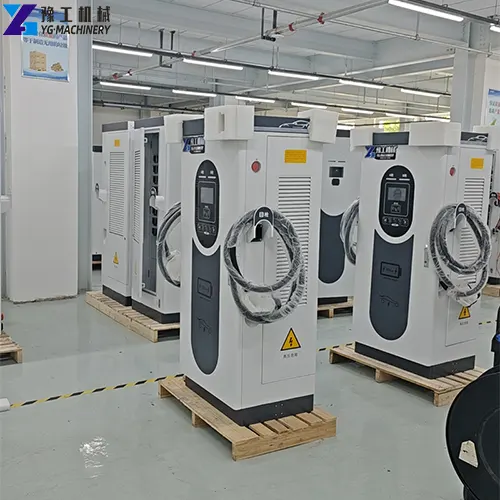
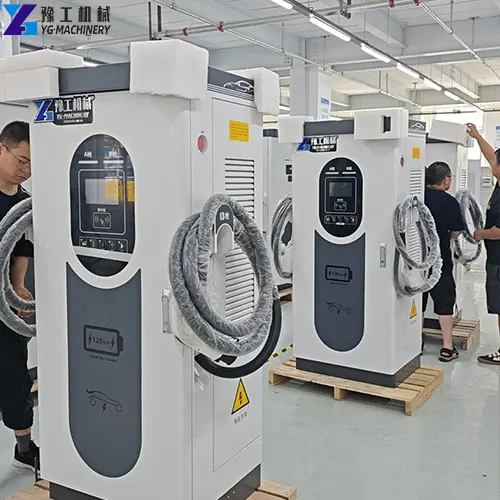
- Solution: Purchased two 120kW dual-gun DC fast charging stations and deployed them in the logistics center’s parking lot. Combined with an intelligent dispatch system, this enabled fast and orderly charging for vehicles.
- Results: Recharging time per vehicle was reduced from 4 hours to 40 minutes; vehicle turnover rate increased by 60%. Utilizing peak-valley electricity pricing, average charging costs decreased by 28%. The equipment has been operating stably and reliably for a year without any major malfunctions.
- Customer Testimonial: “The 120kW fast charging stations completely solved our fleet’s slow charging problem. Vehicles can be fully charged in the time it takes to grab a coffee after a trip, significantly improving delivery efficiency. YG’s technical team was extremely professional from on-site surveying to installation and commissioning, and their subsequent maintenance response was also very timely. We are very satisfied with this investment.” — Markus Weber, Logistics Center Operations Manager
Case Study 2: A Commercial Retail Park in Australia
- Client Background: A medium-sized commercial retail park in the suburbs of Melbourne, housing over ten businesses including a supermarket, restaurant, and gym, with an average daily foot traffic of approximately 3,000 people.
- Problems Faced: The park’s existing charging facilities were insufficient, and visitors frequently complained about not being able to find charging stations; merchants reported that many customers shortened their shopping time due to charging issues.
- Solution: Four 120kW dual-gun DC charging stations were installed in the park’s parking lot, providing paid fast charging services to customers while also meeting the charging needs of park employees’ vehicles.
- Results: After the charging stations were put into use, they served approximately 80 vehicles per day. The average customer dwell time increased from 45 minutes to 75 minutes, and merchant sales increased by an average of 15%. The charging service itself also brought stable additional revenue to the park.
- Customer Testimonial: “The fast charging station has become a major highlight of our park. Many customers specifically choose to shop here because of the convenient charging. The 120kW power is just right; customers can charge their phones in the time it takes to eat a meal. The operating platform provided by YG is also very user-friendly, with clear revenue details.” — Sarah Chen, Head of Park Management
Get Factory Direct Pricing Today
Frequently Asked Questions about Industrial-Grade Charging Stations
A1: Not recommended. Home electrical capacity is typically only 10-20kW, which cannot support a 120kW charging station. A 7kW AC charging station is more suitable for home use.
A2: Yes, it supports Chinese, European, and American standard interfaces and is compatible with all mainstream new energy vehicle models such as Tesla, BYD, and Volkswagen.
A3: A transformer capacity of at least 150kVA is required, with a 20% power margin to prevent overload tripping.
A4: Very low. The main costs are electricity and a few replacement parts for wear and tear. The annual maintenance cost is approximately 2%-3% of the total equipment price.
A5: Yes, our device uses a modular design and can be upgraded to 180kW or 240kW later by adding power modules.
A6: Yes, the device has an IP54 protection rating, and the charging gun is waterproof, so there will be no leakage during normal charging in the rain.