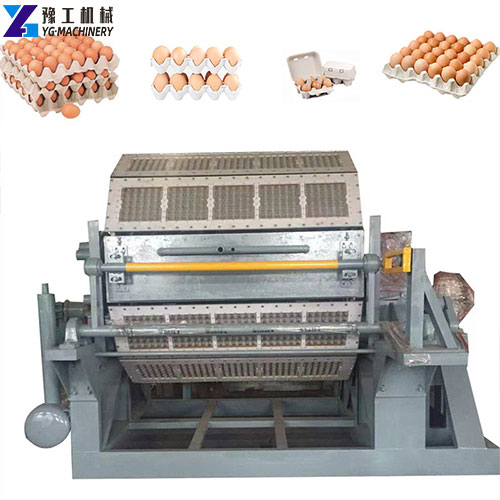
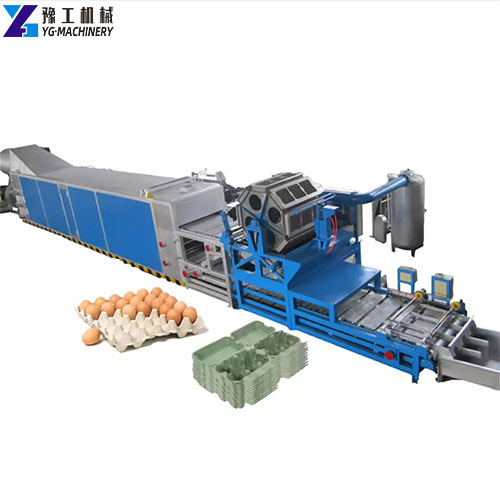
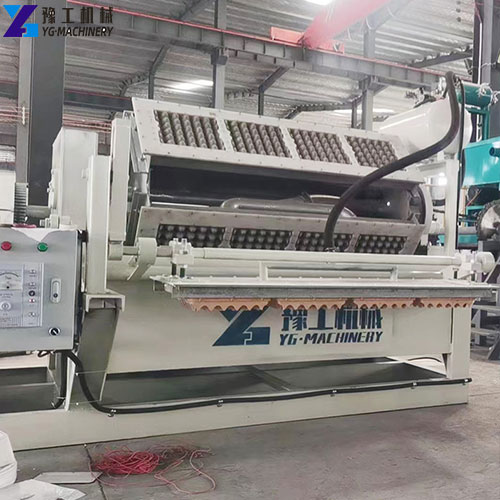
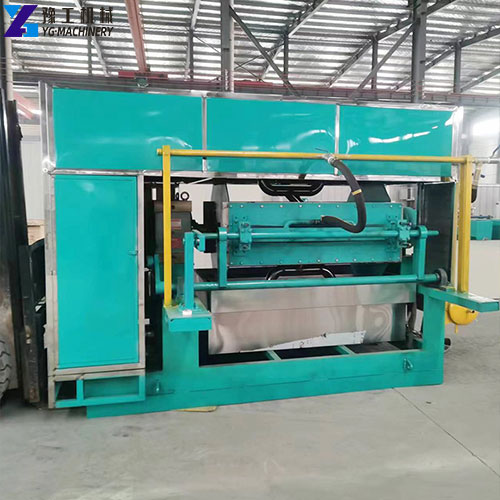
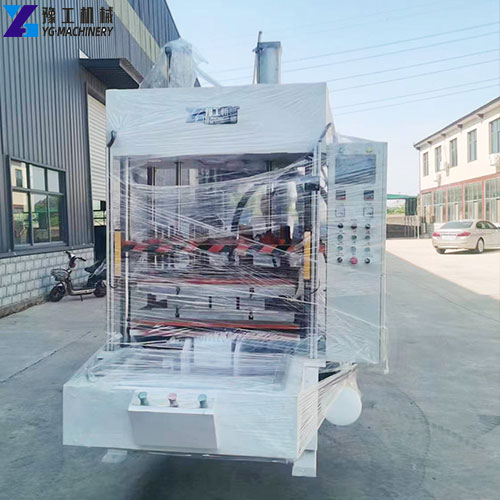
Egg tray making machines, also commonly known as egg tray forming machines or pulp egg tray machines, and often simply referred to as egg tray machines in the industry, are designed to convert recyclable resources such as waste paper and old cardboard boxes into environmentally friendly pulp. Through vacuum suction molding and drying/curing processes, they produce pulp egg trays and various packaging trays with shockproof, anti-drop, and breathable properties, used for the storage and transportation packaging of products such as poultry eggs, fruits, and electronic components. YG, a company deeply rooted in the packaging machinery manufacturing field, offers egg tray making machines based on fully automatic pulp molding technology. Their product line features a full range of paper egg tray making machines, boasting core advantages such as high efficiency, energy saving, and stable durability. By changing molds, these machines can produce egg crates (egg crate making machine), various pulp egg trays (pulp egg tray making machine), and even fruit trays (apple tray making machine), among other packaging products. Thanks to their reliable quality and flexible adaptability, YG’s egg tray making machines have been widely used in numerous packaging production scenarios worldwide, helping businesses reduce production costs, improve packaging quality, and promote green and environmentally friendly upgrades in the packaging industry. If you are also interested in investing in an egg tray making machine, please contact us now for more product information.
Get Factory Direct Pricing Today
Egg Tray Production Line Specification and Consumption
| Production Line Models | Output (p/h) | Hydraulic Pulper | Egg Tray Machine | Drying Method | |||
| Natural Drying | Brick Drying Line | Single-layer Metal Drying Line | Multilayer Metal Drying Line | ||||
| YGDT3×1-1000 | 1000 | ZDS1(1m³) | DTF3×1 | √ | √ | √ | √ |
| YGDT4×1-1500 | 1500 | ZDS1(1m³) | DTF4×1 | √ | √ | √ | √ |
| YGDT3×4-2000 | 2000 | ZDS1(1m³) | DT3×4 | √ | √ | √ | √ |
| YGDT4×4-2500 | 2500 | ZDS2(2m³) | DT4×4 | √ | √ | √ | √ |
| YGDT3×8-3000 | 3000 | ZDS2(2m³) | DT3×8 | √ | √ | √ | |
| YGDT4×8-4000 | 4000 | ZDS4(4m³) | DT4×8 | √ | √ | √ | |
| YGDT5×8-5000 | 5000 | ZDS4(4m³) | DT5×8 | √ | √ | √ | |
| YGDT5×12-6000 | 6000 | ZDS6(6m³) | DT5×12 | √ | √ | √ | |
| YGDT6×8-7000 | 6000-7000 | ZDS6(6m³) | DT6×8 | √ | √ | √ | |
| Production Line Models | Drying Method | Raw Material(kg/h) | Power(kW/h) | Fuel Consumption | ||||
| Paper | Water | Coal(kg/h) | Gas(m³/h) | Diesel(kg/h) | LPG(kg/h) | |||
| YGDT3×1-1000 | Natural drying | 85 | 255 | 23.6 | ||||
| YGDT3×1-1000T | Brick drying line | 36.1 | 50 | 22-32 | 18-28 | 18-28 | ||
| YGDT3×1-1000J1 | Single-layer metal drying line | 36.1 | 22-32 | 18-28 | 18-28 | |||
| YGDT3×1-1000J6 | Multilayer metal drying line | 36.1 | 22-32 | 18-28 | 18-28 | |||
| YGDT4×1-1500 | Natural drying | 102 | 306 | 27.3 | ||||
| YGDT4×1-1500T | Brick drying line | 38.6 | 60 | 26-36 | 22-32 | 22-32 | ||
| YGDT4×1-1500J1 | Single-layer metal drying line | 38.6 | 26-36 | 22-32 | 22-32 | |||
| YGDT4×1-1500J6 | Multilayer metal drying line | 38.6 | 26-36 | 22-32 | 22-32 | |||
| YGDT3×4-2000 | Natural drying | 170 | 510 | 32.6 | ||||
| YGDT3×4-2000T | Brick drying line | 45.3 | 83 | 37-47 | 30-40 | 30-40 | ||
| YGDT3×4-2000J1 | Single-layer metal drying line | 45.3 | 37-47 | 30-40 | 30-40 | |||
| YGDT3×4-2000J6 | Multilayer metal drying line | 45.3 | 37-47 | 30-40 | 30-40 | |||
| YGDT4×4-2500 | Natural drying | 212 | 636 | 34.2 | ||||
| YGDT4×4-2500T | Brick drying line | 46.8 | 104 | 46-56 | 38-48 | 38-48 | ||
| YGDT4×4-2500J1 | Single-layer metal drying line | 46.8 | 46-56 | 38-48 | 38-48 | |||
| YGDT4×4-2500J6 | Multilayer metal drying line | 46.8 | 46-56 | 38-48 | 38-48 | |||
| YGDT3×8-3000T | Brick drying line | 255 | 765 | 88.9 | 125 | 56-66 | 46-56 | 46-56 |
| YGDT3×8-3000J1 | Single-layer metal | 88.9 | 56-66 | 46-56 | 46-56 | |||
| YGDT3×8-3000J6 | Multilayer metal drying line | 88.9 | 56-66 | 46-56 | 46-56 | |||
| YGDT4×8-4000T | Brick drying line | 340 | 1020 | 91 | 160 | 67-77 | 55-65 | 55-65 |
| YGDT4×8-4000J1 | Single-layer metal drying line | 91 | 67-77 | 55-65 | 55-65 | |||
| YGDT4×8-4000J6 | Multilayer metal drying line | 91 | 67-77 | 55-65 | 55-65 | |||
| YGDT5×8-5000T | Brick drying line | 424 | 1272 | 100 | 185 | 82-92 | 67-77 | 67-77 |
| YGDT5×8-5000J1 | Single-layer metal drying line | 100 | 82-92 | 67-77 | 67-77 | |||
| YGDT5×8-5000J6 | Multilayer metal drying line | 100 | 82-92 | 67-77 | 67-77 | |||
| YGDT5×12-6000T | Brick drying line | 510 | 1530 | 105 | 208 | 92-103 | 77-87 | 77-87 |
| YGDT5×12-6000J1 | Single-layer metal drying line | 105 | 92-103 | 77-87 | 77-87 | |||
| YGDT5×12-6000J6 | Multilayer metal drying line | 105 | 92-103 | 77-87 | 77-87 | |||
| Notes: 1. The above data is calculated according to the weight of each egg tray of 100g. 2. The above data is calculated as pure pulp without adding stone powder. If 20-30% stone powder is added, the actual consumption of paper is 70-80% of the above data. Contact us for more details. | ||||||||
Get Factory Direct Pricing Today
Features of the YG Egg Tray Making Machine
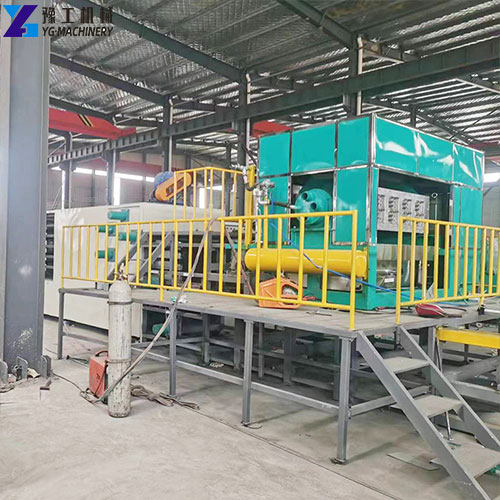
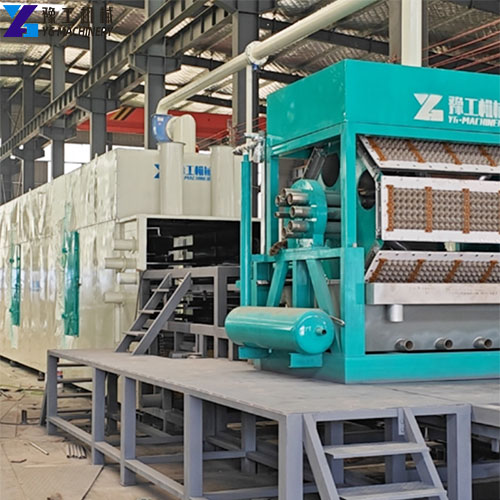
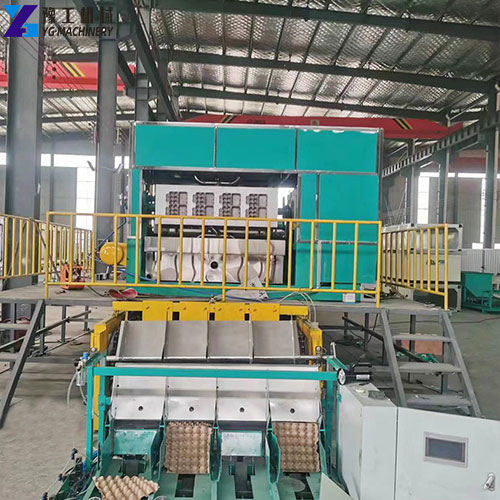
- Fully Automatic Intelligent Production: Utilizing a PLC + touchscreen automatic control system, it achieves full automation of the entire process, including pulp preparation, pulp suction molding, transfer and demolding, drying and curing, and finished product conveying. No manual intervention is required, significantly reducing labor intensity and saving over 60% in labor costs compared to semi-automatic equipment.
- Flexible Multi-Mold Adaptability: By changing different molding molds, it can quickly switch between producing various products such as paper egg trays, egg crates, and apple trays. Mold replacement is convenient and takes only 30 minutes, adapting to diverse packaging production needs and enabling multiple revenue streams from a single machine.
- High-Efficiency and Energy-Saving Drying: Equipped with a hot air circulation drying system, the temperature can be precisely controlled between 150-200℃, with a thermal efficiency of over 85%. This saves 30% energy compared to traditional drying methods. Drying time can be flexibly adjusted according to product thickness, ensuring the finished product’s moisture content is controlled at 8%-12%, guaranteeing product strength.
- Stable and High-Yield Guarantee: Using high-precision molding molds and a stable vacuum suction system, the molding pass rate reaches over 99%. Equipment capacity can be adjusted according to the model, ranging from 1000 pieces/hour to 7000 pieces/hour, meeting different production scale needs.
- Environmentally Friendly and Energy-Saving Design: Using renewable resources such as waste paper and old cardboard boxes as raw materials, the production process has no wastewater or exhaust gas emissions, meeting green environmental protection requirements. The equipment uses energy-saving motors and high-efficiency heating elements, resulting in low energy consumption and significantly reducing operating costs over the long term.
- Easy Maintenance Design: Key components are reasonably arranged and easy to disassemble. Wearable parts such as molds and filters are highly interchangeable and easy to replace. The equipment is equipped with a fault diagnosis system that can monitor the operating status of each component in real time and automatically alarm in case of failure, reducing maintenance difficulty.
- Comprehensive Safety Protection: Equipped with multiple safety devices such as overload protection, leakage protection, and high-temperature warning, the equipment can automatically shut down if any abnormality occurs during operation, comprehensively ensuring the safety of operators and equipment.
Get Factory Direct Pricing Today
8 Typical Application Areas of the YG Egg Tray Making Machine
- Poultry farming industry: Used for the storage, warehousing, and transportation of eggs at poultry farms. It allows for the self-production of suitable paper egg trays, reducing the cost of purchasing packaging materials.
- Fresh food delivery industry: Suitable for the transportation and packaging of fresh products such as eggs and fruits. By changing molds, it can produce fruit trays (such as apple trays), ensuring the safe transportation of fresh produce.
- Packaging processing industry: Professional packaging processing plants use it to handle orders for various types of packaging, including egg trays, egg crates, and fruit trays, meeting the customized needs of different customers.
- Food processing industry: Used for the finished product packaging of egg products such as preserved eggs and salted eggs. Customized egg trays can enhance product recognition and brand image.
- Agricultural e-commerce industry: Suitable for the express packaging of agricultural products such as eggs and fruits on e-commerce platforms. The shock-absorbing and breathable pulp packaging can reduce transportation damage rates.
- Catering chain industry: Used for the procurement, storage, and distribution of eggs in chain restaurants. Standardized egg trays facilitate standardized management.
- Electronic components industry: Used for the cushioning packaging of small electronic components. The pulp material is insulating and shock-absorbing, protecting electronic components from damage during transportation.
- Gift packaging industry: Used for the customized packaging of high-end gifts such as eggs and fruits. Logos and patterns can be printed on the surface of the egg tray to enhance the gift’s quality.
Get Factory Direct Pricing Today
Frequently Asked Questions about YG Egg Tray Machines
A: Any plant fiber, such as old cardboard boxes, office paper, books, and even straw fiber, can be used as raw materials for the paper egg tray making machine.
A: The core difference lies in the molding dies. The former produces egg trays, while the latter produces egg crates. The YG egg tray making machine can be used interchangeably by changing the molds, without the need for additional equipment. Mold replacement can be completed in just 30 minutes, adapting to the production of multiple product types.
A: It is environmentally friendly and pollution-free. The production process uses waste paper as raw material, with no wastewater or exhaust gas emissions; the finished products are naturally biodegradable, complying with global environmental protection policies. This can help companies avoid restrictions on plastic packaging and expand into overseas markets.
A: Yes. The manufacturer provides free technical training on equipment operation, parameter adjustment, and mold replacement; mold customization is also supported, allowing for the customization of egg tray, egg crate, and apple tray molds of different specifications and patterns according to customer needs.
A: If you have ample space and sufficient sunlight, natural drying can significantly reduce the initial investment of the egg tray making machine; if you pursue high efficiency and space utilization, a fully automatic metal drying line is a better option.
A: No. You only need to purchase a set of dedicated Apple tray molds to use your equipment as an Apple tray-making machine. Switching is very simple.