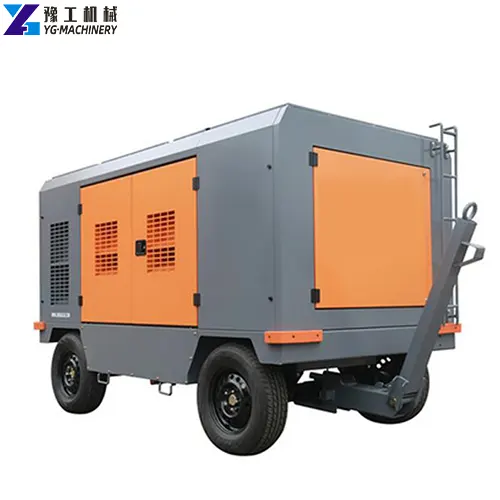
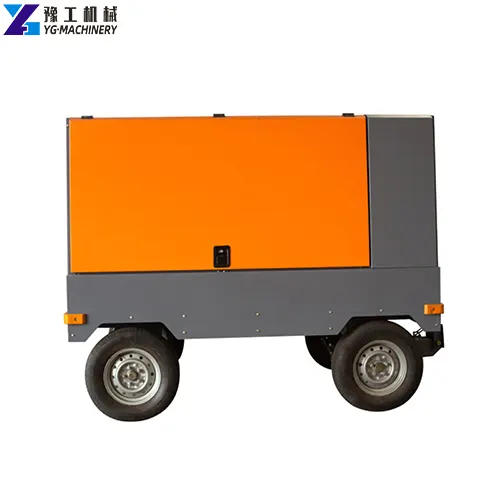
A sandblasting compressor, commonly known as a sandblasting air compressor or sandblasting air compressor in the industry, is primarily used to provide stable, high-pressure compressed air for various sandblasting equipment. This air drives abrasive particles (quartz sand, corundum, etc.) at high speed, removing rust and oil and roughening the workpiece surface. It is an indispensable power source for sandblasting operations. Automatic sandblasting machines and sandblasting booths are both supporting equipment for sandblasting operations. The former provides power, while the latter two handle the actual sandblasting operation, using a blasting can to propel the abrasive at high speed onto the workpiece surface to achieve cleaning, rust removal, deburring, or surface strengthening. They can work together to improve operational efficiency. If you are interested, please get in touch with us for more product information.
Get Factory Direct Pricing Today
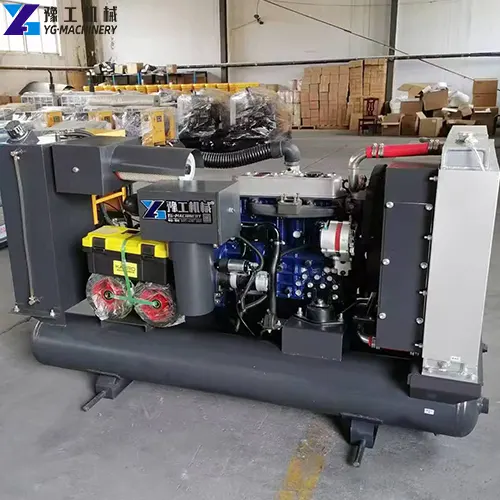
Technical Data for YG Portable Air Compressor
| Compressor | Working pressure | Bar | 8 |
| Free air delivery | CFM | 185 | |
| Diesel engine | Make | YUCHAI | |
| Power | KW/HP | 46/60 | |
| Cylinders | 4 | ||
| Rated speed(loading) | RPM | 2400 | |
| Rated speed(unloading) | RPM | 1300 | |
| Engine oil capacity | L | 5 | |
| Coolant capacity | L | 10 | |
| Fuel tank capacity | L | 70 | |
| Whole Machine | Separator capacity | L | 38 |
| Coolant oil capacity | L | 20 | |
| Cooling system | water | ||
| Air outlet | “ | 1-1/2, 3/4 | |
| Max.ambient temperature | °C | 45 | |
| Wheels | 2 | ||
| Dimension | mm | 2880*1650*1650 | |
| Weight | kg | Max. ambient temperature |
Get Factory Direct Pricing Today
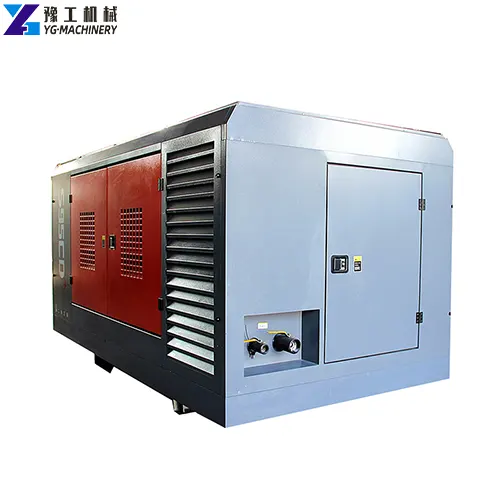
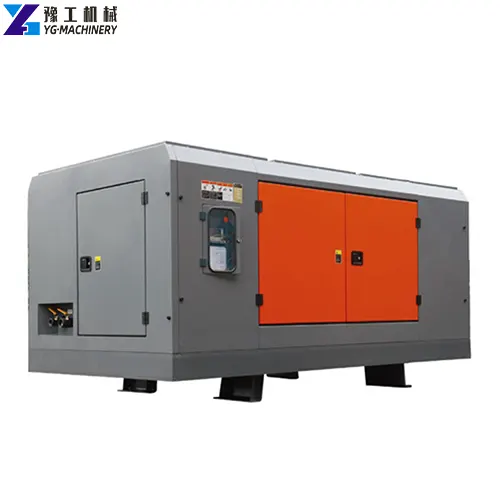
Working Principle of the YG Sandblasting Machine with Compressor
- Intake: Air enters the compressor’s main unit through an air filter. As the screw rotors rotate, the volume of the rotor’s inter-lobe spaces gradually increases, drawing in air.
- Compression: As the rotors continue to rotate, the volume of the inter-lobe spaces gradually decreases, thereby compressing the intake air. Simultaneously, injected lubricant mixes with the air, serving the functions of cooling, sealing, and lubrication.
- Discharge: Once the compressed air reaches the preset pressure, it is discharged through the outlet and flows into the oil-gas separator.
- Oil-Gas Separation and Cooling: Inside the oil-gas separator, the compressed air is separated from the lubricant. The separated, high-temperature compressed air then enters an after-cooler to be cooled, removing the majority of its moisture. Subsequently, it undergoes further purification through a precision filter, ultimately delivering clean, dry, high-pressure air to the sandblasting tank for sandblasting operations. In the case of mobile sandblasting equipment, this entire compression and processing sequence is integrated onto a single, compact mobile platform.
Case Study: A Malaysian Client’s Ship Repair Project Utilises YG Sandblasting Machines and Air Compressors
Client Background: A small to medium-sized ship repair company in Malaysia undertakes hull rust removal and corrosion protection repair projects on ships. The work sites are outdoor docks, requiring mobile operations and the use of mobile sandblasting equipment. Requirements include a stable high-pressure air supply from the compressor, easy mobility, a tight schedule, and control over equipment procurement and operating costs.
Challenges Faced:
- Outdoor operations lack a fixed power source, requiring diesel power.
- Dispersed work sites necessitate flexible equipment movement and coordinated operation with mobile sandblasting equipment.
- Rust removal requires a high-pressure air supply; otherwise, sandblasting will be incomplete, affecting corrosion protection.
- A tight schedule requires continuous equipment operation and a low failure rate.
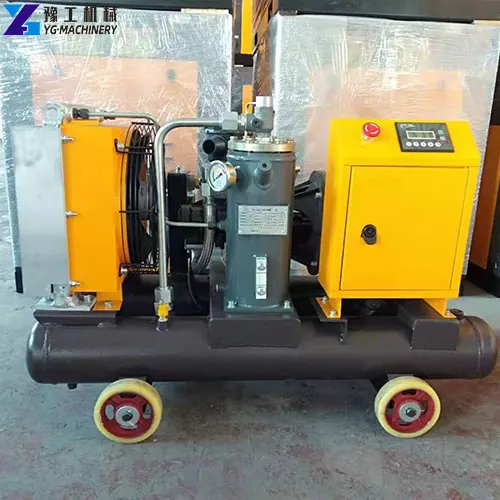
Solution: YG recommended a standard sandblasting compressor, a screw-type diesel-powered model with a displacement of 8 m³/min and a rated pressure of 1.0 MPa. Its mobile design, equipped with a towing device and casters, allows for flexible movement. A three-stage filtration system ensures a clean air supply, and it integrates seamlessly with mobile sandblasting equipment. Water cooling allows for 24-hour continuous operation, meeting project deadlines.
Results: The equipment is easy to move and adaptable to different areas of the dock, working smoothly with mobile sandblasting equipment. High-pressure, stable air supply ensures thorough sandblasting and rust removal, achieving a 100% rust removal pass rate on ship hull surfaces. It operated continuously for 15 days without failure, demonstrating high durability. The diesel power source is suitable for outdoor scenarios without power, reducing energy consumption by 20% compared to traditional compressors, significantly lowering operating costs, and completing the project 3 days ahead of schedule.
Customer review: “YG’s sandblasting compressor for sale is portable and provides a stable air supply, perfectly suited to our outdoor ship repair scenario. When used with mobile sandblasting equipment, it is extremely efficient, ensuring both rust removal quality and cost control. It is a core piece of equipment for our ship repair.”
Get Factory Direct Pricing Today
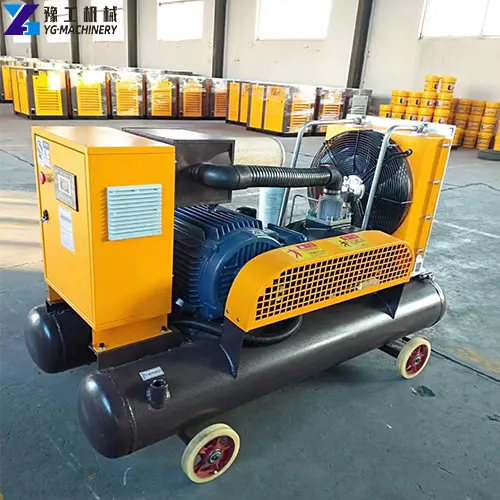
7 Key Features and Functions of the YG Sandblasting Compressor
- Stable High-Pressure Air Supply for Optimal Sandblasting Results: Utilising high-efficiency screw compression technology, the unit delivers a rated discharge pressure of 0.8–1.2 MPa and an air displacement of 3–20 m³/min. The air supply pressure remains highly stable—free from significant fluctuations—ensuring that sandblasting abrasives are projected at high velocity to remove rust and oil stains from workpiece surfaces thoroughly. This enhances surface treatment precision and meets the high-accuracy sandblasting requirements of automated sandblasting machines.
- Energy Efficiency and Reduced Operating Costs: By incorporating Variable Frequency Drive (VFD) control technology, the compressor automatically adjusts its power output to meet the specific demands of the sandblasting operation. During idle periods (no-load), it automatically reduces its operating frequency, resulting in 15%–30% energy savings compared to traditional fixed-frequency compressors. Furthermore, the main unit features a low-noise design with an operating noise level of ≤75 dB, effectively preventing noise pollution and ensuring compliance with environmental standards.
- Three-Stage Filtration for Workpiece and Equipment Protection: Equipped with a three-stage filtration system—comprising primary, fine, and oil-removal filters—the unit effectively eliminates oil, moisture, and impurities from the compressed air. This prevents contaminants from entering the sandblasting equipment and causing blockages, while simultaneously safeguarding workpiece surfaces from oil contamination, thereby enhancing sandblasting quality and reducing equipment maintenance costs.
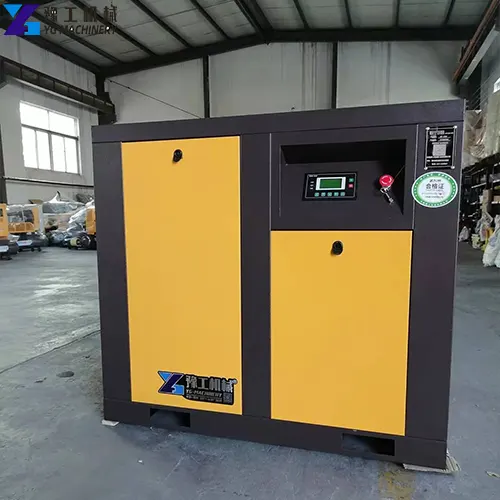
- Versatile Application Across Multiple Scenarios: Flexible and Convenient: Available in two configurations—fixed and mobile—the unit offers flexible deployment options. The fixed model is ideal for stationary operations within workshops, factories, and similar facilities, featuring a larger footprint and higher air output capacity. The mobile model is equipped with universal casters and a towing mechanism, enabling easy relocation. It is well-suited for mobile operations in outdoor environments or construction sites and pairs seamlessly with mobile sandblasting equipment.
- Intelligent Control and Streamlined Maintenance: The system features an intelligent PLC control panel and provides real-time monitoring of operating parameters (pressure, temperature, runtime). It supports automatic start/stop functions, overload protection, and fault alarms, eliminating the need for dedicated 24-hour manual supervision. Consumable parts (such as filter elements and seals) use a universal, standardised design, enabling quick, easy replacement and simplifying maintenance.
- Robust Continuous Operation Capability for High-Intensity Demands: With a highly efficient heat dissipation system, the air-cooled model can operate continuously for over 8 hours, while the water-cooled model can sustain continuous operation for 24 hours without overheating-related shutdowns. This robust capability makes the unit ideally suited to high-intensity operational environments, such as ship maintenance and sandblasting large-scale workpieces.
- Compatibility and Interoperability—Expanding Operational Boundaries: This system integrates seamlessly with a wide range of sandblasting equipment—including automatic sandblasting machines, sandblasting booths, and mobile sandblasting units—to support sandblasting operations across scales and precision requirements. Furthermore, depending on specific operational needs, it can be paired with air storage tanks of various capacities to enhance air supply stability.
Get Factory Direct Pricing Today
Frequently Asked Questions about YG Portable Sandblaster with Compressor
A1: A sandblasting air compressor is a high-pressure, high-flow air compressor specifically designed for sandblasting operations. Compared to standard air compressors, it typically features higher discharge pressure and greater airflow capacity to meet the kinetic energy demands of sandblasting. Additionally, it is equipped with a more sophisticated air treatment system to ensure the purity of the output air, thereby preventing contamination of the abrasive media and the workpiece.
A2: Selecting the appropriate model requires considering several factors: the number of sandblasting guns in use, nozzle sizes, required operating pressure and airflow volume, the working environment (indoor/outdoor, availability of electricity), and whether mobility is required (in which case, mobile sandblasting equipment is recommended). We suggest consulting the professional team at YG; we will provide customised recommendations based on your specific requirements.
A3: Diesel-driven air compressors (such as mobile sandblasting units) offer high mobility and are ideal for field operations or areas without access to electricity; however, they tend to produce higher noise levels and emissions. Electric-driven air compressors are more eco-friendly, operate with lower noise levels, and typically incur lower running costs; however, they require a stable power supply and are better suited for stationary sandblasting booths or factory environments where a reliable power source is available.
A4: Routine maintenance primarily involves regularly checking oil levels; replacing air filters, oil filters, and oil-gas separator elements; checking belt tension; cleaning the radiator; and periodically draining condensed water from the air storage tank. Proper maintenance effectively extends the equipment’s service life and ensures optimal operational efficiency.
A5: Yes, YG offers highly customised services. We can design and manufacture equipment tailored to meet specific client requirements—such as unique airflow/pressure combinations, explosion-proof specifications, adaptability to extreme environments, or integration with automatic sandblasting machines—ensuring the equipment perfectly matches your specific application.
A6: In addition to the price of the sandblasting compressor, you should also consider the equipment’s brand reputation, after-sales service support, spare parts availability, energy efficiency, noise levels, environmental performance, and ease of operation. Only by comprehensively weighing these factors can you select the equipment that offers the best value for money and is best suited for long-term use.