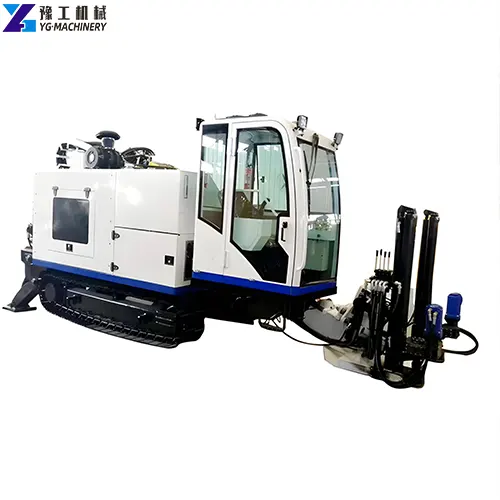
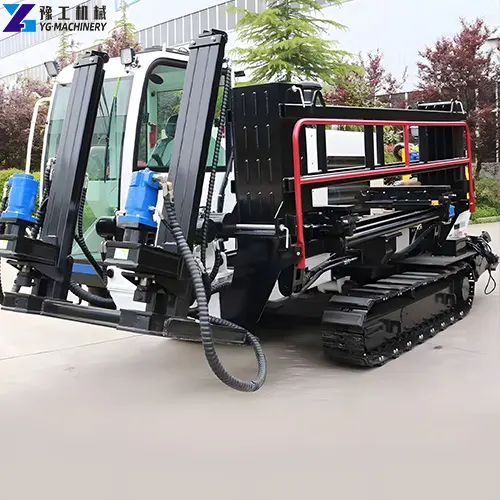
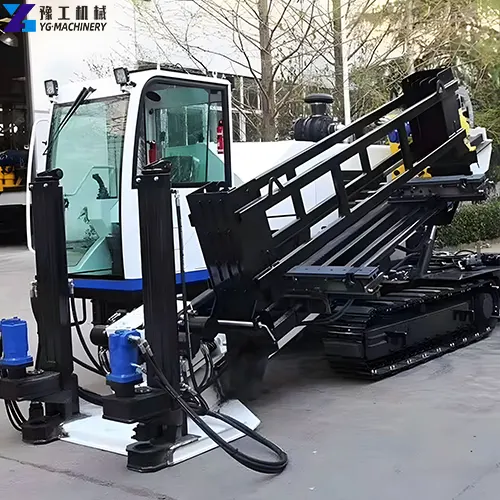
Horizontal directional drilling equipment, also known as horizontal directional drilling or trenchless directional drilling, is often simply referred to as an HDD rig in the industry. In English, it is often called a horizontal directional drilling rig, horizontal drilling rig, or directional drilling rig (emphasizing its guiding function). Its core difference from traditional excavation equipment lies in its “trenchless, high-precision, compact, and easy-to-operate” features. Designed specifically for small to medium-sized projects, it can quickly complete underground pipeline laying operations without the need for a professional construction team. Compared to large directional drilling equipment, YG’s horizontal directional drilling equipment is better suited to the pain points of small to medium-sized projects: the machine body adopts a lightweight steel structure design, weighing only 5-20 tons, with a small footprint, allowing it to flexibly enter scenarios inaccessible to large equipment, such as residential areas, narrow municipal roads, and rural roads. It eliminates the need for large lifting equipment for transportation, saving on transportation and site access costs.
Key components feature customized designs: the guiding system uses an imported high-precision guide, achieving a positioning accuracy of ±2cm, avoiding pipeline damage and rework caused by drilling deviations; the drill rod is made of high-strength alloy material, hardened for wear resistance and bending resistance, suitable for various geological conditions such as soil, gravel, and light rock, eliminating the need for frequent drill rod replacements; the hydraulic system adopts an energy-saving design, providing ample power while consuming minimal energy, avoiding energy waste. If you are also looking for suitable equipment for your project, please get in touch with us now for product information.
Get Factory Direct Pricing Today
YG Horizontal Directional Drilling Equipment Technical Parameter
| Model | YG-160A | YG-180 | YG-280 | YG-320 | YG-320A |
| Engine rated power | 100KW | 97KW | 160KW | 140KW/160KW | 160KW |
| Push and pull | Cylinder | Motor | Motor | Cylinder | Motor |
| Maximum drag/feed force | 160/100KN | 180/180KN | 280/280KN | 320/320KN | 320/320KN |
| The maximum torque of the powerhead | 5000N.n | 6000N.n | 10000N.n | 12000N.n | 12000N.n |
| Powerhead speed | 0-180r/min | 0-140r/min | 0-120r/min | 0-140r/min | 0-140r/min |
| Moving speed of powerhead | 30m/min | 20m/min | 20m/min | 20m/min | 20m/min |
| Moving speed of the powerhead | Φ600mm | Φ600mm | Φ750mm | Φ800mm | Φ800mm |
| Drill rod length (single) | 3m | 3m | 3m | 3m | 3m |
| Drill pipe diameter | Φ60mm | Φ60mm | Φ73mm | Φ73mm | Φ73mm |
| Drill pipe diameter | 10-23° | 10-22° | 10-23° | 10-20° | 10-20° |
| Maximum mudflow | 160L/min | 250L/min | 320L/min | 320L/min | 320L/min |
| Maximum mud pressure | 100bar | 80bar | 80bar | 80bar | 80bar |
| Overall quality | 6700kg | 8500kg | 12500kg | 11500kg | 11200kg |
| Dimension(length*width*height) | 5700*1820*2400mm | 6400*2270*2340mm | 7100*2260*2450mm | 7100*2250*2450mm | 7100*2250*2550mm |
Get Factory Direct Pricing Today
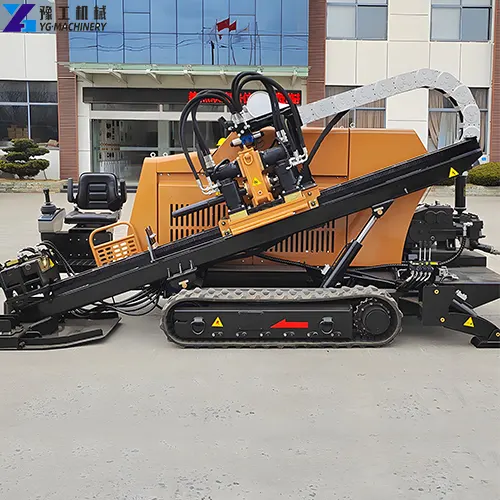
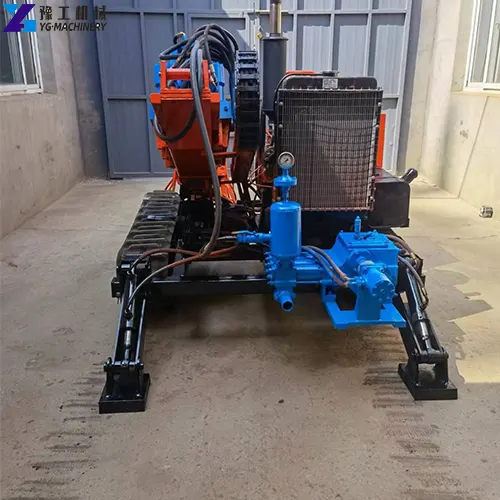
Application Scenarios of Horizontal and Directional Drilling Equipment
- Municipal Small Pipeline Construction: Suitable for laying water supply and drainage pipelines and gas branch pipes in residential areas and narrow municipal road sections. It avoids damaging the road surface and sidewalks, minimizing disruption to residents’ travel. Construction is efficient and environmentally friendly.
- Rural Pipeline Construction: Suitable for laying rural irrigation pipelines, rural gas pipelines, and communication cables. Rural roads are narrow, and the terrain is complex. The lightweight design of the equipment allows for flexible site access, eliminating the need for large hoisting equipment and reducing construction difficulty. HDD RIG is the preferred specification for this scenario.
- Industrial Park Pipeline Renovation: Suitable for renovating communication cables and power lines in industrial parks and science parks. No production or work stoppage is required. Trenchless construction avoids damaging the park’s roads and facilities, quickly completing pipeline renovations without affecting normal park operations. It meets the guidance requirements of directional drilling rigs.
- Scenic Area Pipeline Construction: Suitable for laying water supply and drainage pipelines and lighting cables in scenic areas. Strictly adhering to environmental protection requirements, trenchless construction protects vegetation and roads, avoids damage to the landscape, and minimizes construction noise, ensuring uninterrupted operation.
- Urban Branch Pipe Extension: Suitable for extending branch pipes along urban main roads. No need to close main roads, avoiding traffic disruption. High-precision guidance accurately avoids existing underground pipelines along main roads, reducing construction risks.
- Campus Pipeline Construction: Suitable for laying and upgrading water supply, drainage, communication, and power pipelines within campuses. Fast construction speed and low noise, avoiding disruption to students’ classes. Trenchless construction protects campus roads and greenery and requires no lengthy repairs after completion.
- Oilfield Small Pipeline Construction: Suitable for laying small oil and gas branch pipes within oilfields. The equipment is suitable for lightly rocky geology in oilfields. High-precision guidance avoids damage to existing oilfield pipelines, ensuring construction safety and normal oilfield production.
- Farmland Irrigation Construction: Adaptable to the laying of farmland irrigation and drainage pipelines, the equipment can flexibly enter farmland without damaging it, and the construction is highly efficient, helping to upgrade farmland irrigation facilities and improve irrigation efficiency.
Get Factory Direct Pricing Today
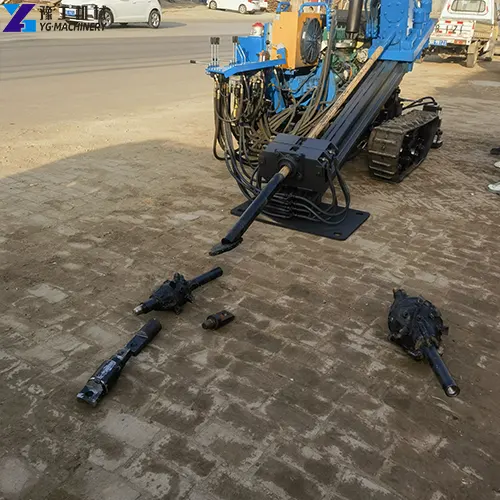
How to Choose the Right Horizontal Directional Drilling Equipment?
1. Define Your “Operating Radius” (Push-Pull Force and Torque)
This is the most crucial parameter when selecting a horizontal directional drilling rig.
- What is the pipe diameter? If you are simply laying ordinary fiber optic cables or water pipes (under 200mm in diameter), a 15-20 ton rig is sufficient.
- What is the distance? If you need to cross rivers or main roads (over 200 meters), you will need a greater push-pull force.
- Simple Formula: Resistance mainly comes from the friction between the pipe and the ground. Generally, the larger the tonnage, the longer and heavier the pipe that can be pulled.
2. Consider the Type of “Ground” You Will Be Drilling (Geological Adaptability)
Different geological conditions place completely different requirements on directional drilling rigs.
- Clay/Sand: Most ordinary drilling rigs can handle this.
- Hard Rock/Pebble: In this case, you can’t just look at the pull force; you need to consider the torque. Torque determines the drill bit’s ability to rotate through hard materials. If you frequently work in rock, it’s recommended to choose an HDD rig with a powerful mud motor and rock drill bit.
3. Check the “Auxiliary Systems” (Mud and Guidance).
The drilling rig itself is only the power source; its success depends entirely on two “helpers”:
- Mud Pump: Like the “blood” of the drilling rig. Insufficient mud flow will prevent rock fragments from being expelled, easily causing the drill to jam. When buying a machine, be sure to check if the mud pump’s flow rate matches the machine’s tonnage.
- Guidance System: It’s the “eyes” of the drilling rig. In urban construction, it’s crucial to avoid dense underground pipelines. When purchasing, it’s recommended to choose a mainstream brand for convenient maintenance and spare parts.
4. Calculate “Hidden Costs” (Maintenance and Resale Value).
When purchasing a horizontal drilling rig, don’t just look at the purchase price:
- Are spare parts readily available? If the drill pipe has a very unusual thread design or the hydraulic components are from a lesser-known brand, a single day’s downtime due to a broken part could be equivalent to the loss of half a machine.
- Resale Value: Machines from reputable manufacturers like YG Machinery retain their value very well in the secondhand market, even after three years of use.
Get Factory Direct Pricing Today
YG Professional Selection Process for Horizontal Directional Drilling Rigs
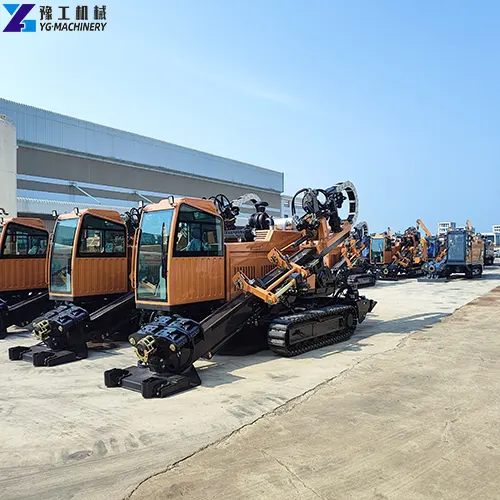
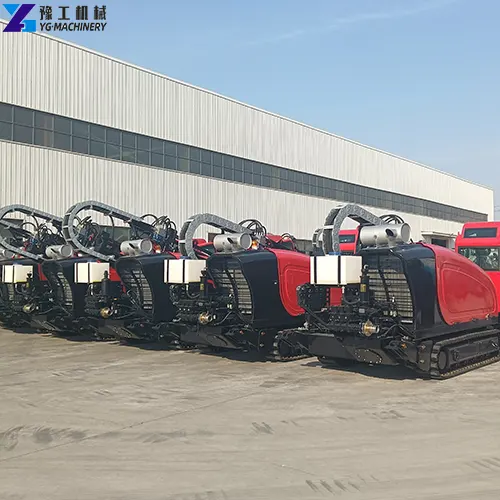
To help you make an informed decision, YG recommends following this selection process:
- Initial Needs Communication: Discuss your project type, scale, budget, and expected goals with the YG professional team.
- Geological Data Analysis: Provide a detailed geological survey report, or have YG assist with a preliminary geological assessment.
- Equipment Recommendation: YG engineers will recommend several suitable horizontal directional drilling equipment models based on your specific needs, providing detailed technical parameter comparisons.
- Customized Configuration: Customized drilling tools, mud systems, or auxiliary equipment configurations will be provided based on your specific requirements.
- Site Visit and Training: You are welcome to visit the YG factory for an on-site inspection, and professional technical personnel can be arranged to provide operational training.
Choosing the right horizontal directional drilling equipment is a complex investment decision that requires you to comprehensively consider project needs, geological conditions, equipment performance, technical characteristics, and cost-effectiveness. YG, as a professional manufacturer of mechanical equipment, is committed to providing you with high-performance, highly reliable directional drilling rig products and comprehensive technical support and services. We understand that every customer’s needs are unique, and we insist on providing customized solutions to ensure your investment is worthwhile. Don’t let complex selection processes hinder your project progress. Contact the YG professional team today for a free consultation and quote on horizontal directional drilling equipment selection! Visit our product page for more details, or call us directly or inquire via WhatsApp!