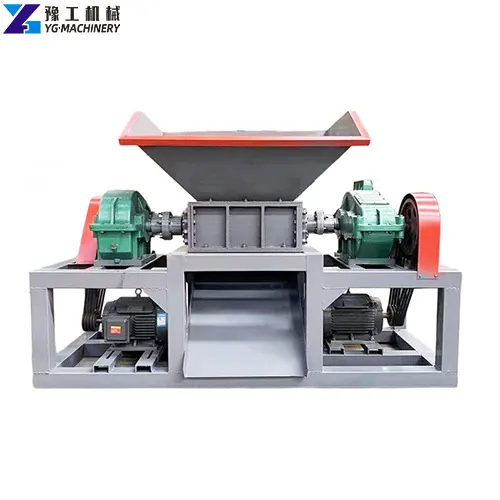
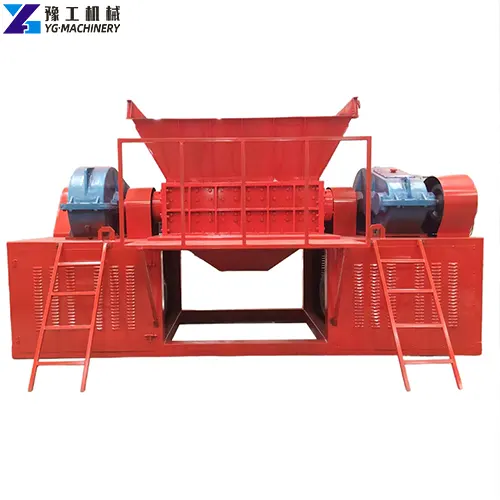
In industries such as rubber product processing, waste tyrerubber shredding machine recycling, and environmental regeneration, the treatment of rubber waste is a core step in achieving resource utilisation and reducing environmental pressure. Currently, large quantities of waste tyres, rubber scraps, and discarded rubber products are difficult to process efficiently. Traditional shredding equipment suffers from drawbacks such as high energy consumption, uneven output, easy material jamming, and poor adaptability, seriously affecting recycling efficiency and resource utilisation. A rubber shredding machine, also known as a rubber crusher or rubber shredder, is a specialised, environmentally friendly piece of machinery designed to shred various types of rubber waste, achieving material volume reduction and resource reuse. Its core function is to shred large pieces of rubber waste, waste tyres, and rubber scraps into uniform particles or fragments, facilitating subsequent crushing, grinding, reprocessing, or recycling. It is widely used in various rubber waste recycling and tire regeneration scenarios and can be seamlessly adapted to tire recycling production lines. When paired with a tire wire removing machine, it enables the complete recycling process of waste tires. It is a core piece of equipment for small and medium-sized recycling companies and rubber processing plants, and a high-performance, cost-effective product developed by YG Heavy Industry, focusing on the environmental protection field. Contact YG now for more product information.
Get Factory Direct Pricing Today
YG Rubber Shredder Machine Technical Parameter
| Model | YG-3 | YG-6 | YG-10 | YG-16 | YGL-16 | YG-30 |
| Capacity | 1-3t/d | 4-6t/d | 8-10t/d | 12-16t/d | 8t/d (only for rubber powder) | 30-35t/d |
| Working Process | Batch | Batch | Batch | Batch | Semi-continuous | Fully continuous |
| Reactor Size | φ1400*4900mm | φ2200*6000mm | φ2600*6600mm | φ2800*7100mm | φ2800*7100mm | φ1800*18500mm |
| Land (L*W*H) | 18m*4.2m*6m | 30m*12m*8m | 30m*13m*8m | 33m*13m*8m | 33m*13m*8m | 70m*20m*10m |
| Power | 16.65kw | 37.85kw | 44.3kw | 55.6kw | 55.6kw | 256kw |
| Burner | 2*200,000 kcal | 2*300,000 kcal | 2*300,000 kcal | 2*400,000 kcal | 2*400,000 kcal | 2.5 million kcal per set |
| Total Weight of Shipped Materials | About 18t | About 24.5t | About 28t | About 34.5t | About 34.5t | About 150t |
| Noise (dB) | ≤60 | ≤60 | ≤60 | ≤60 | ≤60 | ≤60 |
Get Factory Direct Pricing Today
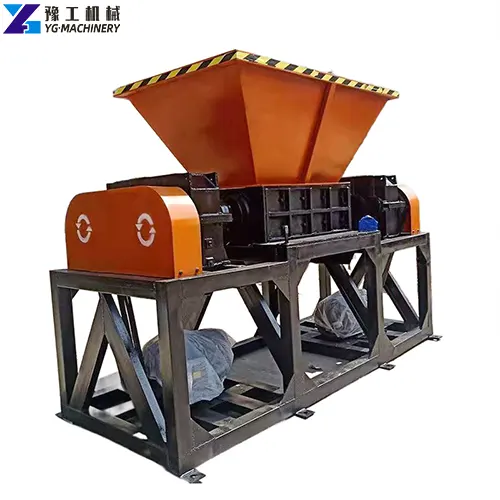
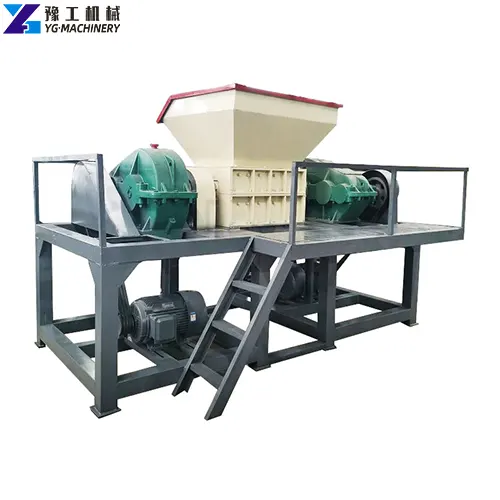
Working Principle of a Rubber Shredding Machine
- Power Transmission Principle: After starting the equipment, the motor generates power, which is transmitted to the reducer via a coupling. The reducer reduces the power and increases torque, then drives the shredding rollers to rotate via gear transmission. The roller speed can be adjusted by the control system to adapt to the shredding requirements of different materials.
- Material Shredding Principle: Rubber waste (or waste tyres) is evenly fed into the inlet through the feeding device. The feeding device conveys the material between the shredding rollers. Due to the double-axis staggered design of the rollers, the blades interlock, generating strong shearing, tearing, and compressive forces on the material during rotation, shredding large pieces of rubber into particles or fragments of a preset size. If processing waste tyres, the shredded fragments can be conveyed to a tire wire removing machine for steel wire separation, adapting to the entire process of a tire recycling production line.
- Material collection principle: The shredded rubber granules or fragments are discharged through the discharge port below the cutter roller. The discharge port can be equipped with a conveyor belt to automatically transport the material to a designated collection container or subsequent processing equipment (such as a grinding mill or tire wire removing machine), realizing automated discharge and continuous operation. The equipment is equipped with a screen to filter out materials that do not meet the particle size requirements, ensuring uniform discharge.
Get Factory Direct Pricing Today
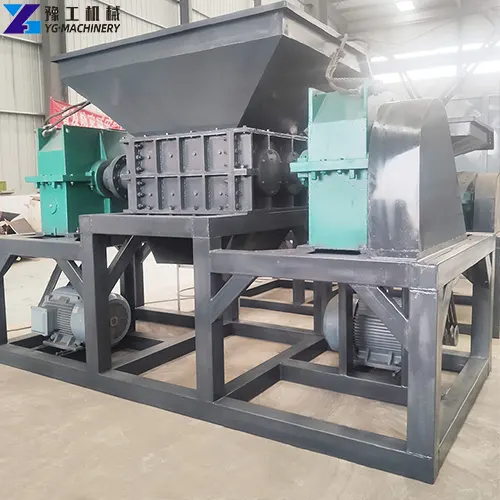
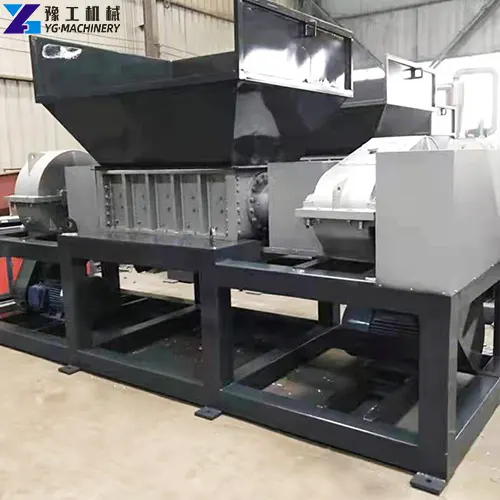
Applications and Uses of the YG Tyre Shredding Machine
- Waste Tire Recycling Industry: Used for shredding waste car tyres, motorcycle tyres, truck tyres, etc. The shredded tire fragments can be further processed with a tire wire removing machine to separate the steel wires, adapting to tire recycling production lines for tire reuse. It is a core piece of equipment in the waste tire recycling industry and a primary application scenario for tire shredding machines.
- Rubber Product Processing Industry: Used for shredding scraps, waste materials, and defective products generated during rubber product manufacturing, enabling waste recycling, reducing production costs, and improving resource utilisation.
- Environmental Recycling Industry: Used for shredding various waste rubber products (such as rubber hoses, rubber gaskets, rubber seals, silicone waste, etc.), achieving volume reduction and resource recycling of rubber waste, contributing to environmental protection, and complying with global environmental policy requirements.
- Road Construction Industry: Used to shred waste tyres into rubber granules for road paving, road repair, and track construction. These rubber granules offer advantages such as wear resistance, slip resistance, and shock absorption, improving road lifespan and safety.
- Waterproofing Materials Industry: Used to shred rubber waste into fine particles, serving as raw materials for waterproofing materials such as rubber waterproof membranes and coatings, enhancing the toughness and waterproofing performance of these materials.
- Mining and Metallurgy Industry: Used to shred rubber waste generated in the mining and metallurgical industries (such as waste rubber conveyor belts and rubber lining plates), enabling waste recycling and reducing environmental pressure on the industry.
- Waste Treatment Industry: Used for shredding various types of rubber waste in waste transfer stations, reducing waste volume for easier transportation and processing, and improving waste treatment efficiency.
- Rubber grinding industry: Used to shred large pieces of rubber waste into uniform fragments, which serve as the feed material for rubber grinding mills, facilitating subsequent grinding and processing to produce recycled rubber powder for the secondary production of various rubber products.
Get Factory Direct Pricing Today
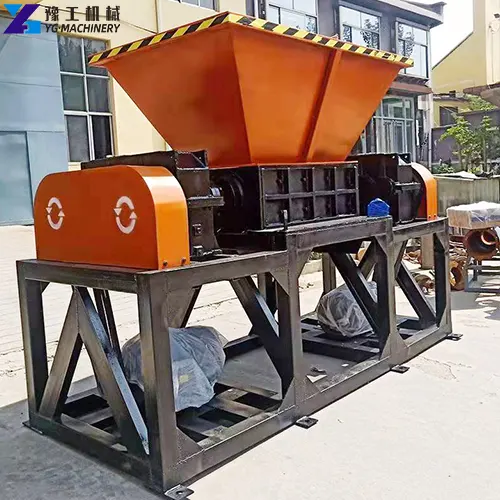
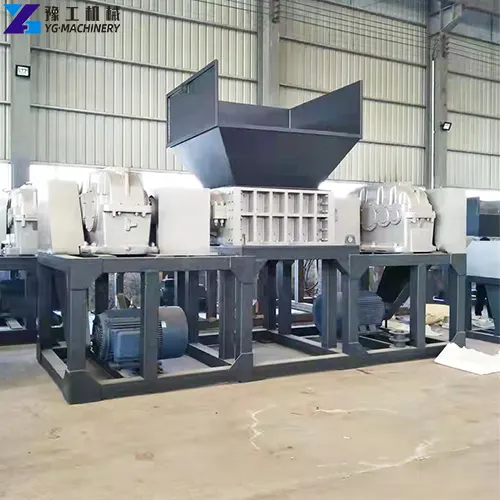
Dual-Shaft Shredder VS. Single-Shaft Shredder: Which Is More Suitable for Small and Medium-Sized Tire Recycling Companies?
| Characteristic Dimensions | Dual-shaft shredder (Recommended) | Single-shaft shredder |
| Working Principle | Shear type: Two blade shafts rotate relative to each other, crushing materials through shearing and tearing actions between moving blades and between moving and stationary blades. | Tearing/Cutting type: A single rotating blade shaft primarily relies on hooks to pull and tear materials, creating shearing action with the fixed blades in the housing. |
| Power and Energy Consumption | Typically driven by two motors, it boasts enormous torque and strong instantaneous impact force, capable of handling hard materials. For the same processing capacity, its energy consumption per ton is typically lower. | Single motor drive, relatively simple structure, but potentially higher peak starting and running current; prone to jamming when encountering hard objects. |
| Output Size | Controllable and uniform. The output size (e.g., 10-50mm) is precisely controlled via a bottom screen, resulting in regular-shaped outputs with clear edges. | Shear type: Two-blade shafts rotate relative to each other, crushing materials through shearing and tearing actions between moving blades and between moving and stationary blades. |
| Tool Durability | Wide range. Particularly adept at handling tough, hard, and large-sized materials, such as whole tires, large bundles of plastic, metal drums, and wood. | Rapid wear. The hooks endure significant bending and impact stress during the pulling and tearing process, making them prone to chipping and breakage, leading to higher replacement and maintenance costs. |
| Applicable Materials | Uneven output, large size. Usually, no screen or a large screen; discharge relies on the gap between the blades and gravity, resulting in inconsistent output sizes, mostly in strips or blocks. | Limitations. More suitable for processing loose, soft, and pre-crushed materials such as films, woven bags, and lightweight household waste. Difficult to process whole tires, especially truck tires with steel wire layers, and can damage the blades. |
| System Compatibility | Excellent. Produces uniformly sized rubber blocks, greatly facilitating subsequent processes such as magnetic separation (steel wire separation), fine crushing, and grinding, making it an ideal starting point for building an efficient tire recycling production line. | Poor performance. Large output size with a large number of long steel wires poses significant challenges to subsequent sorting and processing, easily clogging the equipment and reducing overall line efficiency. |
| Investment and Maintenance | While the initial investment is higher, its durability, efficiency, and low consumption result in a lower total cost of ownership (TCO) in the long term. Modular cutting tools facilitate easy replacement. | Extremely high efficiency. Constructed with high-strength alloy steel and a modular design, typically, only the blade tip wears. The shearing action minimizes impact on the blades, extending their lifespan and allowing for multiple repairs. |
Get Factory Direct Pricing Today
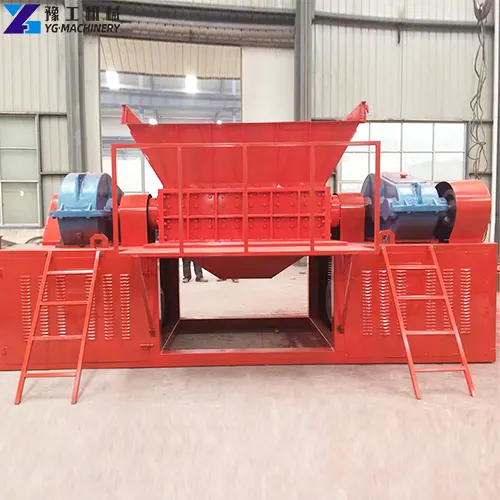
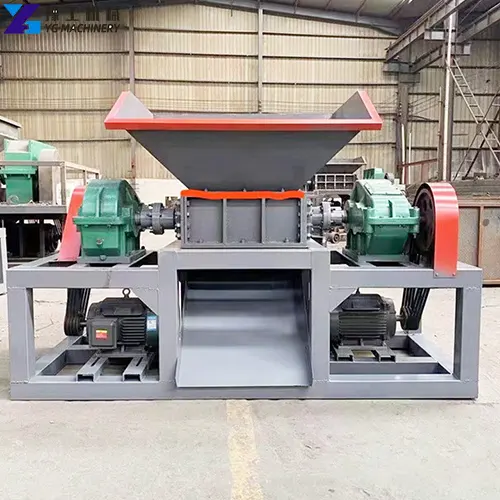
Why Are Twin-Shaft Shredders More Suitable for Small and Medium-Sized Tire Recycling Companies?
- Excellent cost-effectiveness and return on investment. Small and medium-sized enterprises often have limited budgets for equipment investment. Compared to large and complex multi-stage crushing systems, twin-shaft shredders have lower initial investment costs, significantly lowering the barrier to entry into the waste tyre recycling industry. At the same time, their high-efficiency shredding capacity and relatively low energy consumption ensure controllable operating costs, thereby accelerating the return on investment cycle. For companies focused on the price of waste tyre recycling machines, twin-shaft shredders offer a very attractive balance.
- Flexible processing capacity and efficient operation. Twin-shaft shredders are specifically designed to process various waste rubber materials, including whole waste tyres (whether or not they contain steel wire), rubber scraps, etc. Their unique blade design and high-torque, low-speed operating mode can easily handle tough rubber, effectively avoiding the entanglement and jamming problems common in traditional shredders. For small and medium-sized enterprises, this means higher operating efficiency and less downtime, ensuring the smooth operation of the tyre recycling production line.
- Compact Structure and Easy Maintenance. Considering the limited space and technical personnel typically available to small and medium-sized enterprises (SMEs), the compact structure and modular design of the twin-shaft shredder are significant advantages. The equipment has a small footprint, flexible installation, and is easily integrated into existing production lines. Furthermore, its blades are made of high-wear-resistant alloy steel and support rotatable or quick-change operation, greatly simplifying daily maintenance and reducing reliance on specialised technicians, further optimising the long-term operating costs of the tyre shredding machine.
- Supporting Environmental Compliance and Resource Recycling. Choosing a twin-shaft shredder is not only a business decision but also an environmental commitment. It effectively reduces the volume of waste tyres, providing qualified raw materials for subsequent fine crushing, grinding, or pyrolysis, thereby achieving the resource recycling of waste rubber. This not only helps companies comply with increasingly stringent environmental regulations but also opens up new profit growth points and enhances the company’s social responsibility image by producing high-value-added products such as recycled rubber granules and rubber asphalt.