A Quick Clarification Before We Start
In this article, “tank mover” refers to an electric device for moving heavy industrial items — tanks, transformers, cabinets, molds, machine tools, and other heavy equipment — across a floor. It is not a military tank.
For the New Buyer: What Is an Electric Tank Mover?
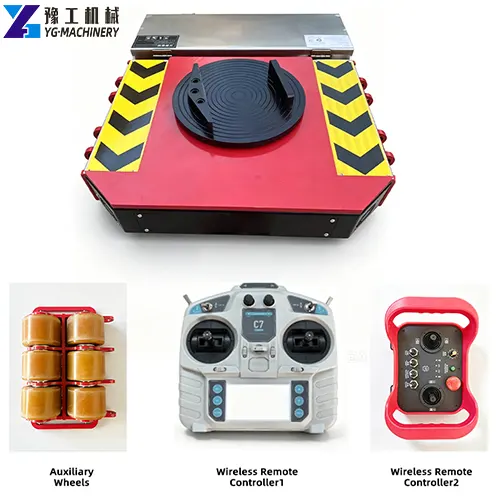
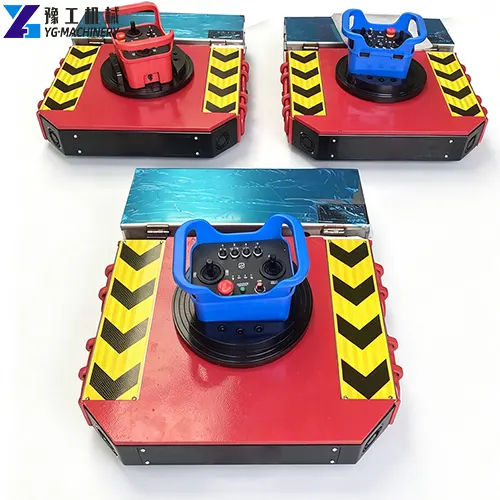
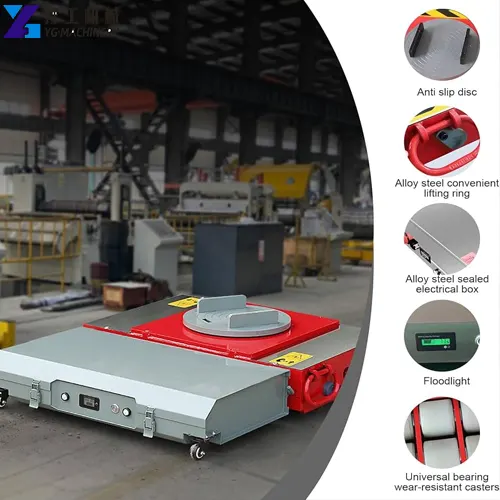
An electric tank mover (also called a battery-powered mover or electric load moving skate) is a battery-powered, remote-controlled transport unit for moving heavy loads over short distances on flat, controlled factory floors.
Three points make it worth understanding correctly:
- It is battery-powered — no manual pushing or pulling of the load.
- It is remote-controlled — the operator stands clear and drives the unit.
- It is a ground transport device — it moves loads along the floor. It is not a lifting device and cannot raise or lower a load like a crane or forklift.
It works where a load is too heavy to move by hand but does not need to be lifted — only repositioned on the same level.
Lock In Today‘s Factory Price – Request Quote Now
Specification Sheet for YG Hot-sale Electric Tank Movers
| Parameters | YG-10 | YG-20 | YG-25 | YG-30 | YG-35 | YG-50 | YG-80 |
| Load Capacity | 10t | 20t | 25t | 30t | 35t | 50t | 80t |
| Motor Power | 400W×2 | 750W×2 | 1000W×2 | 1000W×2 | 1500W×2 | 2000W×2 | 2500W×2 |
| Battery Capacity | 30Ah ternary lithium | 60Ah ternary lithium | 60Ah ternary lithium | 60Ah ternary lithium | 120Ah ternary lithium | 120Ah ternary lithium | 120Ah ternary lithium |
| Body Dimensions (mm) | 600×500×140 | 620×620×155 | 620×620×155 | 700×700×185 | 750×750×185 | 910×800×185 | 910×800×200 |
| Turntable Height | 200mm | 200mm | 200mm | 200mm | 200mm | 200mm | 200mm |
| Turntable Diameter | 250mm | 250mm | 250mm | 320mm | 320mm | 320mm | 320mm |
| Weight | 85kg | 137kg | 150kg | 235kg | 240kg | 260kg | 280kg |
| Maximum Gradeability | 15° | 15° | 15° | 15° | 15° | 15° | 15° |
| Road Speed | 0-6m/min | 0-6m/min | 0-6m/min | 0-6m/min | 0-6m/min | 0-6m/min | 0-6m/min |
| Charging Voltage | 110-260V | 110-260V | 110-260V | 110-260V | 110-260V | 110-260V | 110-260V |
| Range (Fully Loaded) | 6-8h | 4-6h | 4-6h | 4-6h | 4-6h | 4-6h | 4-6h |
Match Load Capacity to Your Equipment (10T–100T Options) – View Chart

6 Common Use Cases for an Electric Tank Mover
- Transformer and generator positioning. Substation and power plant sites often need to set large transformers into precise positions. A remote-controlled tank mover lets operators stay at a safe distance while positioning heavy power equipment in tight indoor spaces.
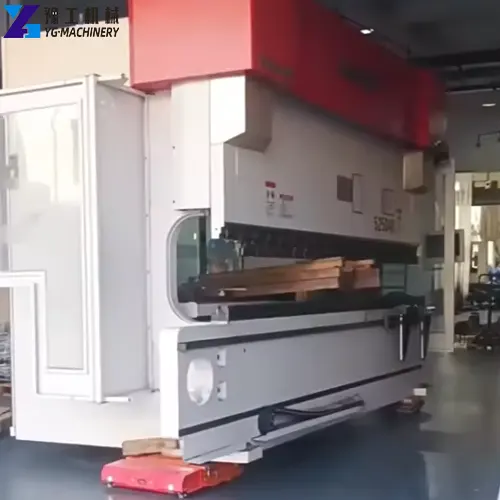
- Heavy machine tools, presses, and injection molding machines relocation. Manufacturing plants frequently reposition large production machinery. An electric tank trolley moves these heavy assets without needing overhead crane access.
- Process tank and vessel transport. Chemical, food, and processing facilities move large empty or pre-assembled tanks across workshop floors. Low-profile electric load moving skate solutions avoid the lifting risks that come with cranes.
- Mold changes for heavy tooling. Heavy mold sets are moved between storage and press stations. Battery-powered tank movers support repeated short-distance transfers during production changeovers.
- Production line reconfiguration. When factories rearrange assembly lines, multiple heavy stations need to shift position. Electric tank movers support phased relocation without full facility shutdowns.
- Warehouse and equipment maintenance work. Maintenance teams pull large cabinets and industrial assets out of fixed positions for inspection, repair, or replacement.
When Do You Need an Electric Tank Mover?
Use this simple checklist to see if an electric tank mover fits your job:
- The load is far too heavy for manual pushing or hand carts.
- Forklifts cannot fit through doorways or lack turning space at your site.
- Crane rental and setup costs are too high, or ceiling height restricts crane use.
- You need frequent short-distance heavy load moves, not one-off lifting jobs.
- Your working floor is relatively flat, and your moving route is predictable and controlled.
- You want the operator to stay away from the heavy load during movement for improved safety.
When an Electric Tank Mover Is NOT the Right Choice
An electric tank mover is not universal handling equipment. It will not be suitable if your project matches any of these:
- Your operation requires vertical lifting of the load. This is a floor transport tool, not a hoist.
- Your floor surface is uneven, wet, poorly reinforced, or cannot support concentrated load pressure.
- Aisles or turning radii are too tight for the mover and load combination.
- Your load has a high or unstable center of gravity and cannot be secured properly.
- You plan long-distance outdoor transport over rough ground.
- You need to move heavy equipment between different building floors.
Check Real-Time Stock Availability – Ships in 7 Days

Electric Tank Mover vs Forklift
| Factor | Electric Tank Mover | Forklift |
| Main function | Horizontal movement of heavy equipment | Lifting, stacking, and transporting loads |
| Best load type | Transformers, tanks, machinery, molds, generators, cabinets | Pallets, crates, drums, and fork-accessible goods |
| Lifting ability | No vertical lifting | Can lift loads to a specified height |
| Aisle requirement | Needs a planned route and turning space, but can suit some tight equipment-moving tasks | Needs aisle width and turning clearance for safe operation |
| Floor requirement | Requires a stable, relatively flat industrial floor | Requires a floor suitable for forklift wheels and load capacity |
| Operator position | Remote control operation, subject to site safety procedures | Operator rides or stands on the forklift |
| Best work pattern | Short-distance, precise repositioning of heavy equipment | Repeated pallet handling, loading, unloading, and racking |
| Cost consideration | Often project-based purchase for heavy equipment moves | Can be cost-effective for frequent pallet and warehouse work |
What to Check Before Choosing a Model
Prepare the following information before requesting a recommendation:
- Load weight, including attachments and support frame
- Load length, width, height, and drawings where available
- Center-of-gravity location
- Required travel route and travel distance
- Floor photographs and floor material
- Door width, aisle width, and height restrictions
- Turning points, columns, drains, ramps, and thresholds
- Floor gradient and any uneven areas
- Required final positioning accuracy
- Available charging area and power supply
- Local safety requirements and operator-training needs
- Destination country, port, and purchase timeline
YG lists 10T through 100T electric tank trolley options, with reference travel speeds of 2–10 m/min. Confirm the selected model’s capacity, battery configuration, dimensions, drive system, braking arrangement, and compatible operating conditions before placing an order.
Spec Your Own Load Capacity & Dimensions – Free Consultation


Frequently Asked Questions About YG Electric Tank Movers
A1: It is used for the horizontal transport of heavy industrial equipment on suitable surfaces. Typical loads include transformers, generators, storage tanks, molds, industrial machinery, cabinets, and production line equipment.
A2: No. The electric heavy-load mover is designed specifically for horizontal transport. You must use other approved equipment—such as jacks, cranes, gantry cranes, or forklifts—to lift the heavy load and place it onto the mover.
A3: YG offers a product range that includes models with capacities of 10, 20, 25, 30, 40, 50, 60, and 80 tons. The specific model selection depends on the actual load, floor conditions, transport route, center of gravity, and safety requirements.
A4: Not by default. Operation on ramps depends on the gradient, load, floor conditions, traction, braking performance, route design, and on-site safety assessment. Please consult YG regarding the specific application of your chosen model.
A5: Clean, solid, and relatively flat industrial flooring is preferred. Before moving heavy equipment, it is essential to assess the floor’s load-bearing capacity and check for factors such as expansion joints, cracks, drainage channels, uneven areas, moisture, and obstacles.
A6: According to YG’s specifications, the wireless remote control has an operating range of up to 50 meters. The actual effective range may vary depending on the site environment, signal interference, obstacles, and the type of controller used.