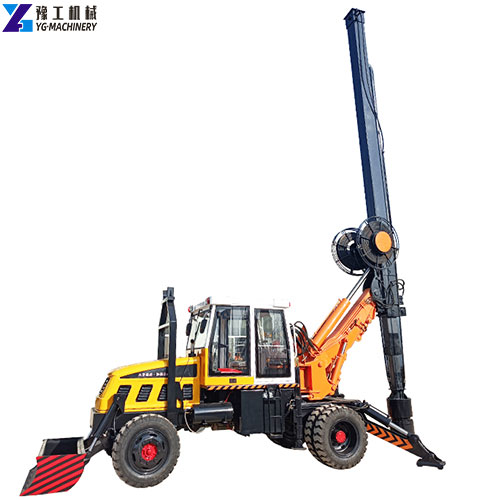
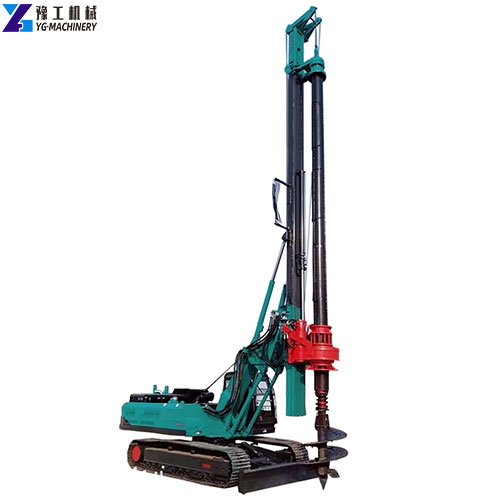
A rotary drilling machine is a type of construction machinery used for drilling holes in building foundation engineering. It utilizes a rotating drill rod to drive a drill bit at the top to cut the ground surface, loading excavated soil and rock into a drill bucket and lifting it to the surface for unloading. It is suitable for pile foundation construction in various infrastructure projects such as buildings, transportation, and water conservancy, and can achieve pile drilling operations with diameters from Φ500-2500mm and depths up to 80 meters. Compared to traditional impact drills, the biggest advantage of rotary drilling rigs is their high efficiency. They can change different drill bits depending on the geological conditions (such as clay, sand, and even medium-hard rock). For small and medium-sized construction projects, choosing a suitable rotary piling machine means lower unit pile foundation costs and faster capital turnover. Contact us for more product information.
Get Factory Direct Pricing Today
Hydraulic Rotary Drilling Rig Parameter
| Dimensions (mm) | 7900*2260*3100 |
| Vehicle mass (kg) | 8000 |
| Wheelbase (mm) | 3150 |
| Wheelbase (mm) | Front 1400 After 1060 |
| Drilling depth (m) | 13 |
| Drilling diameter (mm) | 600-1600 |
| Rotation angle | 180 degree |
| Walking speed (km/h) | 50 |
| Gear pump model | CBJT2080 |
| Hydraulic system working pressure (Mpa) | 20-25 |
| Hydraulic system displacement (ml/r) | 80 |
| engine model | 4108 |
| Engine power (kW) | 88 |
Get Factory Direct Pricing Today
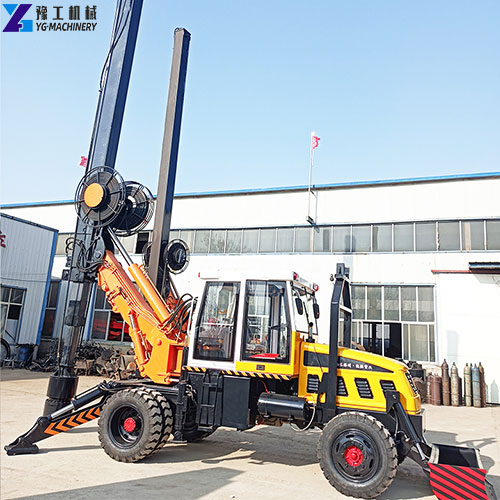
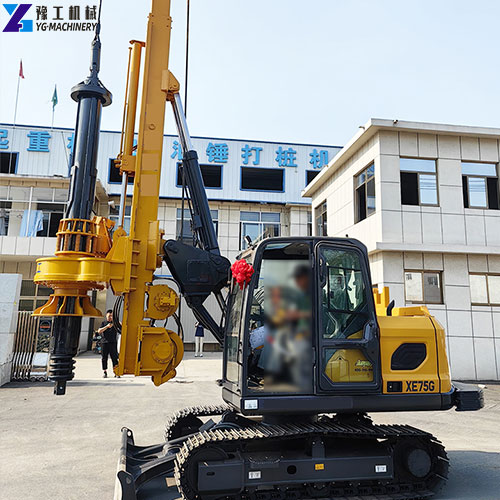
Working Principle of YG Rotary Piling Machine
- Equipment Debugging and Drill Tool Installation: Select a suitable drill bit according to geological conditions and complete the connection and installation of the drill rod and drill bit; start the equipment and debug core parameters such as hydraulic pressure, speed, and boom position to ensure normal equipment operation.
- Positioning and Drilling: Adjust the drill bit to align with the pile position through the intelligent control system, start the hydraulic drive system, and the drill bit rotates to cut the surface rock and soil to perform drilling operations.
- Rotary Cutting and Hole Formation: While the drill bit rotates and cuts the rock and soil, the equipment slowly lowers the drill rod, and the cut rock and soil are collected in the drill bit; when the drill bit is full, the drill rod is raised to unload the rock and soil, and this process is repeated until the preset hole depth is reached.
- Mud Wall Protection and Hole Cleaning: During the hole formation process, the mud circulation system continuously delivers mud into the hole. The mud stabilizes the hole wall and prevents collapse, while carrying some fine rock cuttings out of the hole; after hole formation, a second cleaning is performed to ensure that no residual soil or debris remains in the hole.
- Pile Casting: After hole cleaning, the hole depth and verticality are checked to ensure they meet requirements. The reinforcing cage is then lowered, and concrete is poured into the hole through a concrete delivery pipe to complete the pile foundation formation.
Throughout the process, the intelligent control system monitors all parameters in real time, ensuring precise coordination between hydraulic drive, rotary cutting, and mud wall protection to achieve efficient, accurate, and safe pile casting operations.
Get Factory Direct Pricing Today
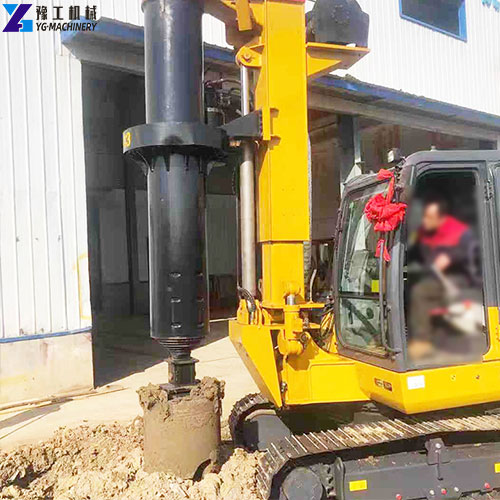
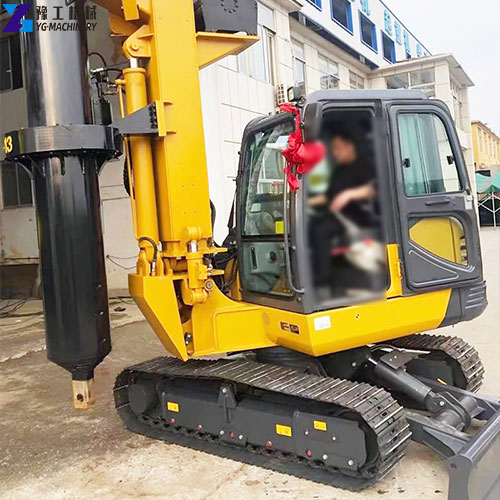
Features of the YG Rotary Piling Machine
- High-Efficiency Hydraulic Pile Drilling: Utilizing core hydraulic rotary drilling machine technology, the hydraulic system pressure reaches up to 35MPa, providing high output torque. Drilling efficiency reaches 15-25 meters per hour in soft soil and sandy soil, and 3-8 meters per hour in weathered rock, representing an efficiency increase of over 80% compared to traditional drilling rigs and significantly shortening the pile foundation construction period.
- Precise Adaptability to Multiple Geological Conditions: Equipped with various sizes of drill buckets and bits, it can operate in various geological conditions such as soft soil, sandy soil, gravel, weathered rock, and medium-hard rock. It also supports customized hole diameter and depth, adapting to all scenarios from ordinary building pile foundations to deep piles for large bridges.
- Intelligent and Precise Control: Equipped with an intelligent verticality detection and automatic correction system, the hole verticality error is ≤1%, and the hole position deviation is ≤5cm, ensuring that the pile quality meets design requirements. Real-time monitoring of drilling parameters automatically adjusts the rotation speed and feed rate according to the hardness of the soil and rock, reducing the risk of hole wall collapse.
- Energy-saving and consumption-reducing design: The optimized hydraulic system and intelligent frequency conversion technology can automatically adjust power output according to the construction load, saving more than 25% energy compared to similar equipment; the drill rod and drill bucket are made of wear-resistant materials, with a long service life, reducing the replacement cost of vulnerable parts.
- Flexible operation and adaptability: The boom can be adjusted to multiple angles, with a working radius covering 5-18 meters, allowing for flexible operation in confined spaces; the tracked walking design facilitates easy relocation, eliminating the need for large hoisting equipment and reducing construction preparation costs.
- Comprehensive safety protection: Equipped with multiple safety devices such as hydraulic system overload protection, engine over-temperature protection, drill rod breakage warning, and emergency shutdown, it also features an anti-tipping monitoring system that automatically alarms and shuts down when the equipment tilts beyond a safe threshold, comprehensively ensuring the safety of construction personnel and equipment.
- Intelligent operation and maintenance convenience: The equipment is equipped with a fault diagnosis system that can monitor the operating status of each component in real time. When a fault occurs, it automatically pops up a window indicating the fault location and solution; the key elements are rationally laid out, easy to disassemble, and have low daily maintenance difficulty.
Get Factory Direct Pricing Today
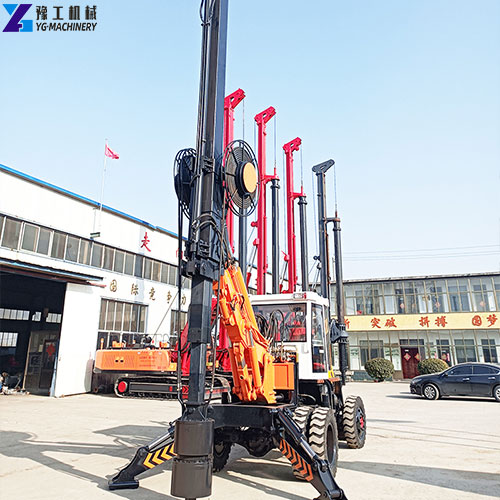
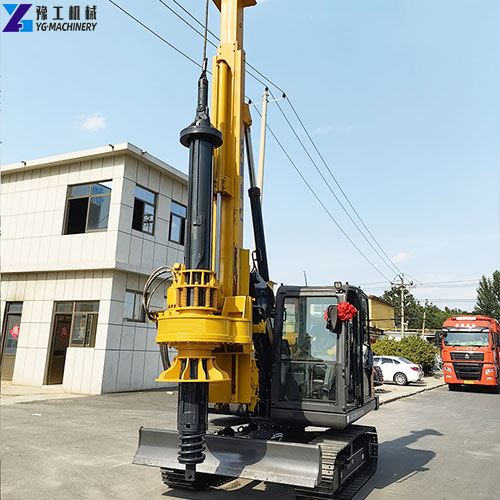
Answering Frequently Asked Questions for the Rotary Drilling Machine
A: The advantages include stable power from the full hydraulic drive, increasing drilling efficiency by over 80%; stepless speed adjustment to adapt to various geological conditions; high precision intelligent control resulting in minimal verticality error; stable operation with fewer malfunctions, low maintenance costs, and a low operating threshold.
A: Basic rotary piling machines are suitable for soil, sand, gravel, and highly weathered rock. For moderately weathered or harder ground, it usually requires the use of a cutting bit.
A: Friction drill rods are suitable for soft soil layers and offer faster speed; mechanically locked drill rods can transmit enormous downward pressure through mechanical locking blocks and are the standard for handling hard rock formations.
A: Yes. The manufacturer provides free training on equipment operation, parameter adjustment, drill bit replacement, and maintenance.
A: Daily maintenance should include: cleaning the drill rods, drill bucket, and hydraulic system after construction to prevent residue buildup; regularly checking hydraulic oil, engine oil, and filters; checking the wear of the drill rods and replacing them promptly; storing the machine in a dry and ventilated place, protecting it from dust and sunlight.
A: The price is affected by factors such as model specifications, hydraulic system brand, drill bit material, and customization requirements. Bulk purchases can enjoy tiered discounts. The specific discount can be negotiated with customer service based on the purchase quantity. Direct sales from the manufacturer eliminate intermediaries, making it more cost-effective.