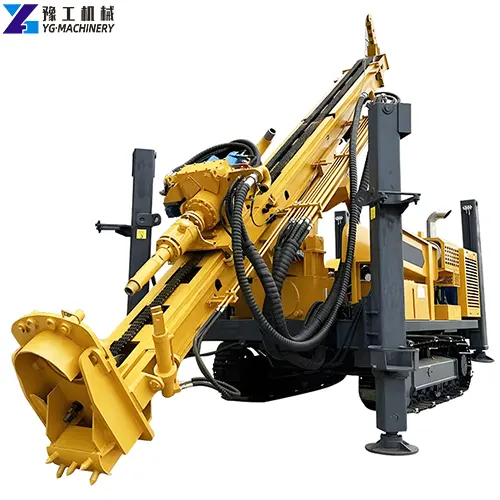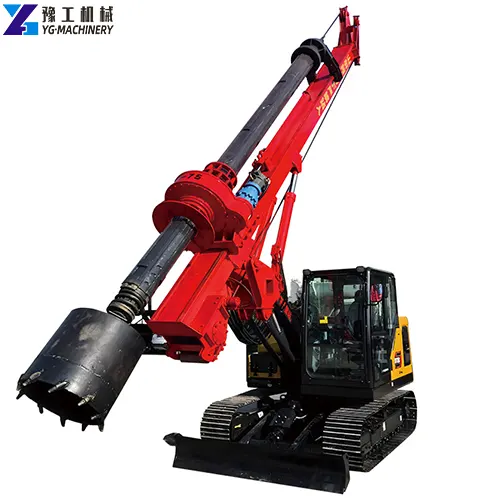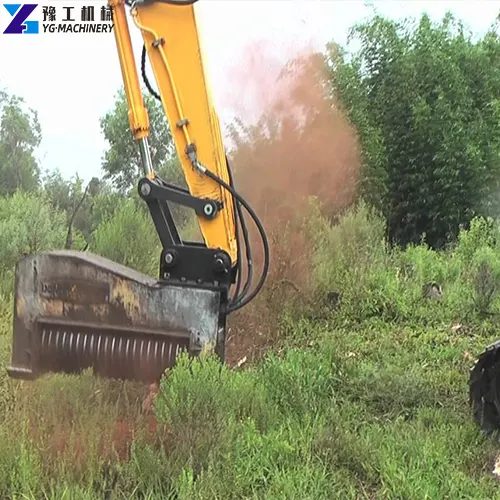
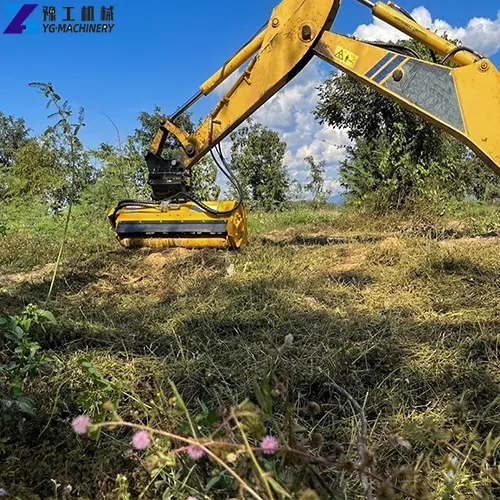
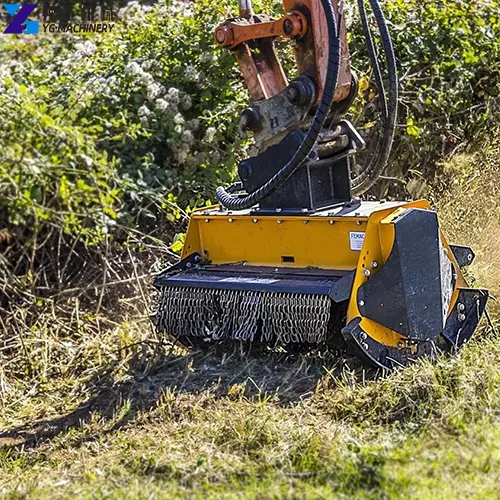
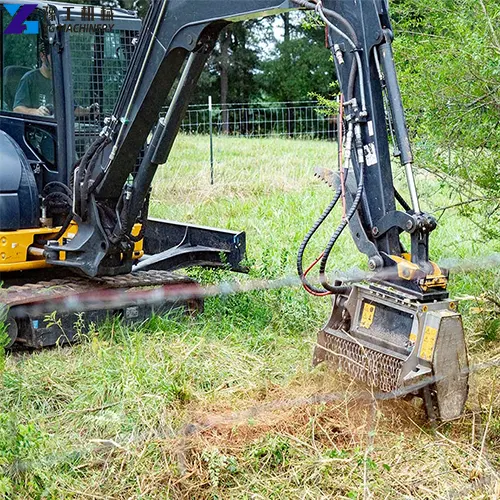
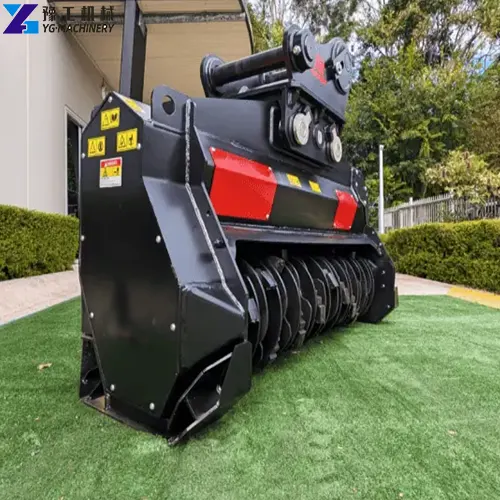
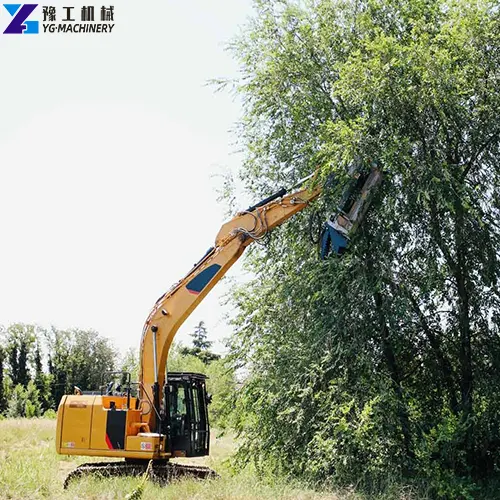
Forest clearing, vegetation management, and road construction are fundamental procedures in forestry, municipal, and mining engineering. Traditional manual logging and ordinary wood chipping equipment are inefficient, consume materials quickly, and have poor adaptability, making them unsuitable for dense mixed trees, robust shrubs, and complex forest terrain. The excavator forestry mulcher is an excavator accessory specifically designed for forestry operations. Through a high-speed rotating blade drum, it shreds trees, shrubs, and branches into fine wood chips for forest clearing, vegetation management, and biomass recycling. Also known in the industry as an excavator wood chipper head or forestry wood chipping attachment, it can be directly installed on various small and medium-sized excavators. Unlike ordinary handheld or stationary wood chippers, it requires no separate power source, relying on the excavator’s hydraulic system for drive. It is highly mobile, has a wide operating range, and can reach deep into dense forests, steep slopes, and other complex terrains. Its wood chipping efficiency and durability far exceed those of ordinary equipment. Furthermore, it is interchangeable with accessories such as the excavator crusher bucket and pile breaker, allowing one excavator to be equipped with multiple attachments, saving on equipment procurement costs. Contact us now for more product information.
Get Factory Direct Pricing Today
YG Excavator Forestry Mulcher Technical Parameters
| Model | YG-70 | YG-120 | YG-200 |
| Excavator Weight (t) | 6-7 | 10-15 | 20-30 |
| Rotor Length (mm) | 600 | 950 | 1300 |
| Rotating Speed (rpm) | 1400 | 1600 | 1600 |
| Numbers of Blades | 11 | 15 | 24 |
| Cutting Diameter (mm) | 250 | 300 | 400 |
| Oil Pressure (Mpa) | 24.5 | 24.5 | 24.5 |
| Oil Flow (|/min) | 90 | 150 | 220 |
| Overall Weight (kg) | 650 | 1000 | 1500 |
Get Factory Direct Pricing Today
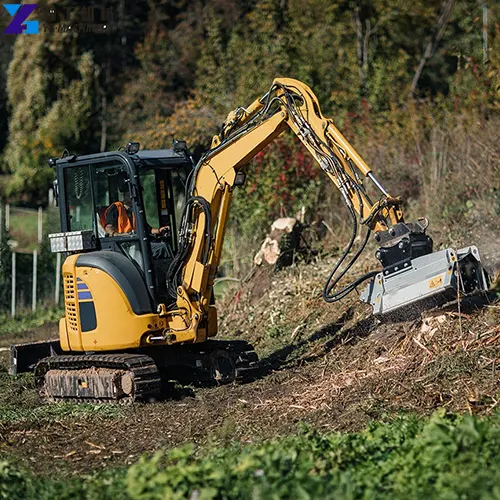
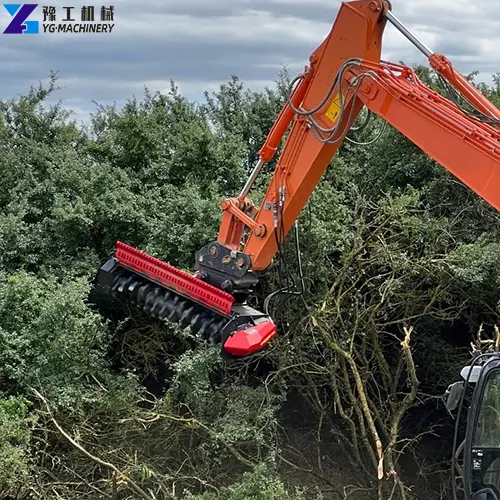
How Does an Excavator Forestry Mulcher Work?
Understanding the operational process helps operators maximise productivity and equipment longevity:
- Step 1: Hydraulic Connection. Attach the mulcher to your excavator’s quick coupler, then connect the hydraulic hoses. YG designs facilitate connection within 30-60 minutes for operators experienced with attachment changes.
- Step 2: System Initialisation. Activate the hydraulic flow from the excavator. The system draws power from the excavator’s hydraulic pump, delivering fluid to the mulcher’s internal motor assembly.
- Step 3: Rotor Engagement. The hydraulic motor drives the rotor shaft, spinning the cutting drum at operational RPM. The staggered tooth arrangement ensures continuous material engagement without stalling.
- Step 4: Vegetation Contact. Guide the rotating cutting head into contact with the target vegetation. The cutting teeth slice through woody material while the housing contains debris within the cutting chamber.
- Step 5: Size Reduction. Material undergoes multiple cutting cycles as the rotor continues processing. The reduction creates fine mulch particles suitable for ground cover applications.
- Step 6: Discharge. Processed material exits the cutting chamber through the rear opening, dispersing evenly across the work surface. The mulch layer provides immediate soil protection.
- Step 7: Continuous Operation. Move the excavator forward systematically, maintaining a consistent head position. Experienced operators achieve processing rates of 1-5 acres per day, depending on vegetation density.
Get Factory Direct Pricing Today
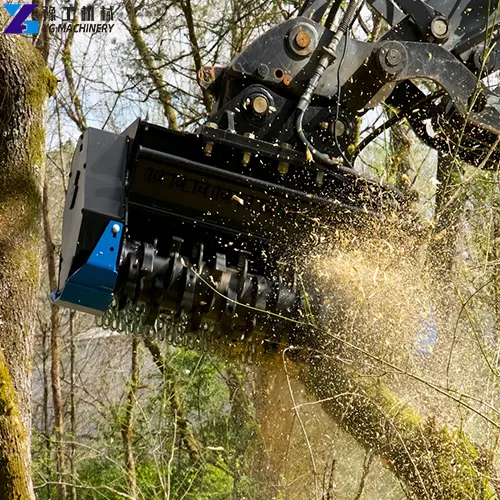
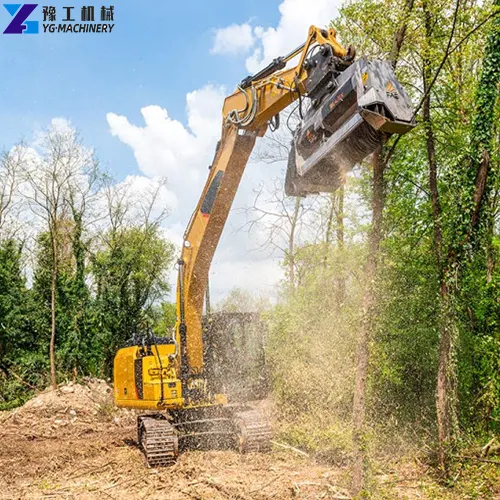
What Are the Suitable Applications of an Excavator Forestry Mulcher? (8 Major Application Areas)
- Forest clearing and vegetation management. Clearing undergrowth, pruning shrubs, and shredding dead branches in forests and forest farms to control excessive vegetation growth, prevent forest fires, and recycle wood chips for biomass fuel.
- Road opening and maintenance. Opening forest roads, rural roads, and scenic trails by clearing undergrowth and shrubs along roadsides to ensure smooth traffic flow; during road maintenance, clearing fallen trees and branches to quickly restore traffic flow.
- Mine and construction site clearing. Clearing surface undergrowth and shrubs before mining and construction to create conditions for construction; can be used with an excavator crusher bucket to crush rocks, achieving integrated clearing and crushing operations.
- Municipal greening and maintenance. Pruning shrubs and shredding dead branches along urban parks, green belts, and roadsides; cleaning up green waste and beautifying the environment; the crushed wood chips can be used as organic mulch to nourish the soil.
- Biomass energy recovery. Crushed forest debris, crop straw, and dead branches are used for biomass power generation and biomass fuel processing, achieving resource recycling and reducing energy costs.
- Wetland and wildlife habitat maintenance. Invasive vegetation is cleared from wetlands and nature reserves to maintain wildlife habitats and prevent excessive vegetation growth from disrupting the ecological balance.
- Orchard and tea plantation pruning. Pruning branches and clearing debris from orchards and tea plantations; the crushed branches can be used as organic fertiliser to nourish fruit and tea trees and increase yields.
- Emergency clearance operations. After typhoons and heavy rains, fallen trees and broken branches are cleared to quickly restore traffic and power supply; after earthquakes and floods, site clearing is conducted to buy time for rescue operations.
Get Factory Direct Pricing Today
When Should You Choose a Forestry Mulcher Over a Crusher Bucket?
Both attachments serve important functions, but understanding their distinct applications prevents costly misapplication:
Choose a Forestry Mulcher When:
- Vegetation represents the primary material to process.
- Standing trees and brush require on-site size reduction.
- Soil structure preservation matters for subsequent land use.
- Organic ground cover provides erosion control benefits.
- Noxious weed or invasive species control requires material destruction in place.
Choose a Crusher Bucket When:
- Concrete, brick, or asphalt processing represents the primary task.
- Demolition debris requires on-site crushing for reuse.
- Aggregate production for construction fill is the objective.
- Material processing occurs in contained areas with minimal vegetation.
Attempting to use a crusher bucket for vegetation clearing damages the equipment and produces unsatisfactory results. Conversely, forestry mulchers cannot effectively process concrete or rock materials.
What Happens to the Processed Material?
- On-Site Decomposition: The processed material serves as immediate ground cover, typically decomposing within 6-18 months depending on climate and vegetation type. This natural breakdown releases nutrients while maintaining soil coverage.
- Soil Amendment: Work the mulch into agricultural soil during preparation phases to increase organic matter content. The material improves soil structure, moisture retention, and microbial activity.
- Composting Applications: Wood chips created by forestry mulching work well in composting operations when combined with nitrogen-rich materials. Maintain carbon-to-nitrogen ratios around 30:1 for efficient decomposition.
- Biomass Energy: Facilities accepting green waste for energy production may accept forestry mulch material. Check local regulations regarding permitted feedstocks for biomass conversion facilities.
- Erosion Control: Apply thicker mulch layers on slopes to provide immediate erosion protection while vegetation establishes. The mulch absorbs rainfall impact and reduces surface runoff velocity.
Get Factory Direct Pricing Today
Frequently Asked Questions about the Mini Excavator Mulcher Attachment
A1: For light vegetation management, a 2-5 ton small excavator is sufficient to accommodate the smaller mulcher blades. Medium-sized operations require an 8-15 ton excavator, while heavy-duty clearing operations involving trees with a diameter exceeding 300 mm require an excavator of 20 tons or more, equipped with correspondingly high hydraulic flow.
A2: The blades have a lifespan of 800-1200 hours, depending on the material being worked on. Replacement is simple, requiring no disassembly of the entire machine; one person can complete the task in 10 minutes. Genuine blades are provided by the manufacturer at a discounted price.
A3: Experienced operators can typically complete attachment installation within 30-60 minutes. The installation process includes connecting quick couplings, connecting hydraulic lines, and checking system pressure before starting operations.
A5: Yes, the equipment is driven by the excavator’s hydraulic system and does not require an external power source. As long as the excavator is working normally, the wood chipper can operate simultaneously, making it fully adaptable to field scenarios without power.
A4: Yes, YG equipment uses a universal connection interface and can be used interchangeably with excavator pile drivers, pile breakers, and other excavator attachments. One excavator can perform multiple tasks, saving investment.
A6: No. YG attachments have a built-in comprehensive protective valve assembly that effectively isolates impact pressure. As long as the return oil pipe (drain pipe) is connected as required, your excavator system is safe.
A7: YG provides a 12-month warranty, covering the machine body and rotor (excluding vulnerable parts such as cutting teeth). The blade teeth are consumables and not covered under warranty, but YG offers a discounted replacement price.