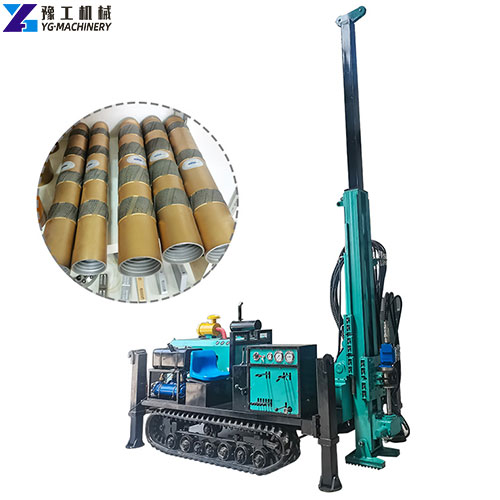
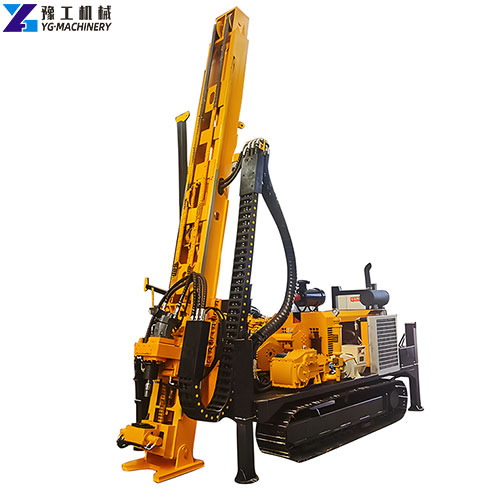
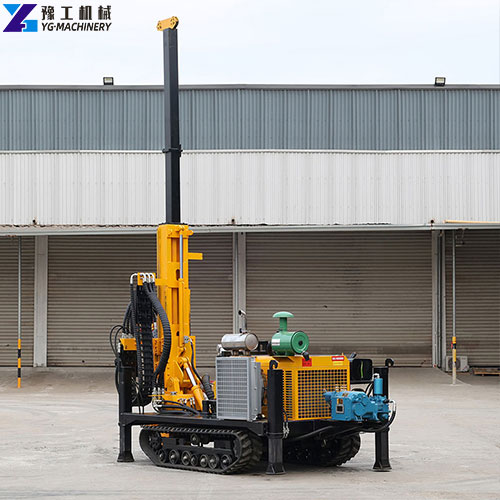
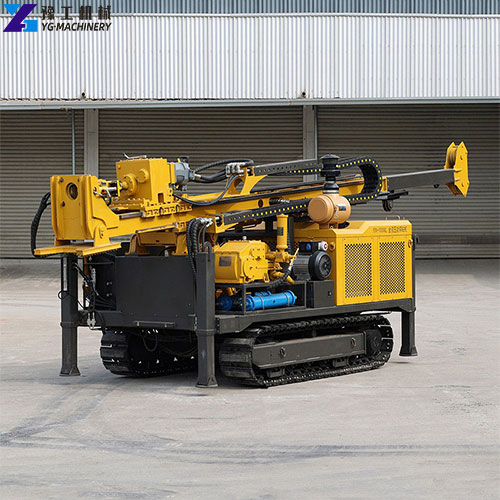
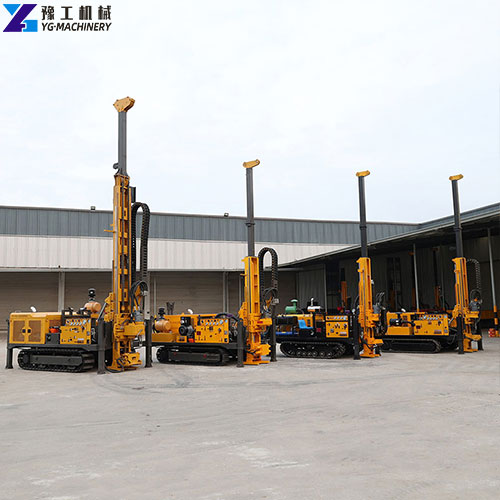
A hydraulic core drilling rig is a specialized piece of equipment that utilizes hydraulic transmission technology to achieve precise core drilling. It is widely used in core fields such as mineral exploration, hydrogeological surveys, and engineering construction, and is an important tool for exploring underground resources and the geological environment. From its core principle, it uses a diesel engine or electric motor to drive a hydraulic pump to generate high-pressure oil. The hydraulic circuit system then precisely distributes the power to the power head, drill tower, and other actuators, enabling the rotation and lifting of the drill rod. Compared to traditional mechanical transmission drilling rigs, the hydraulic system offers significant advantages such as stable power output, precise adjustment, and strong load capacity. In practical applications, it can be matched with different specifications of drill bits, such as NQ (Φ76mm), PQ (Φ122mm), and HQ (Φ96mm), to complete core sampling operations across all formations, from soft sand layers to high-strength hard rock, achieving a sampling rate of over 85%. This provides accurate geological samples for mineral resource assessment and groundwater exploration. As a core type of core drilling machine for mining, it helps achieve efficient mineral exploration. Contact us now for more product information.
Get Factory Direct Pricing Today
Full Hydraulic Core Drilling Rig Parameter
| Model | YGX-400 | YGX-600 | YGX-800 | YGX-1000 |
| Drilling Depth(M) | 180-400-500 | 200-600-650 | 400-800-1000 | 500-1000-1100 |
| Rated pressure(MPA) | 21 | 21 | 25 | 28 |
| Rated Flow(L/min) | 168 | 192 | 260 | 300 |
| Heat Dissipation Mode | Air cooling+water cooling | |||
| Engine Brand | Yuchai | Yuchai | Yuchai | Cummins |
| Rated power/speed | 78kW/ 2400r/min | 92kW/ 2400r/min | 92kW/ 2400r/min | 154kW/2400r/min |
| Drilling Angle(°) | 0-90 | 45-90 | 45-90 | 45-90 |
| Lifting Force(T) | 12 | 16 | 24 | 30 |
| Feed Force(T) | 6 | 8 | 12 | 15 |
| Hydraulic Mud pump flow | 30-90(L/min) | 30-90(L/min) | 90-180(L/min) | 90-180(L/min) |
| Hydraulic Mud pump power | 4-7(MPA) | 4-7(MPA) | 4-7(MPA) | 4-7(MPA) |
| Dimension | 4000*1900*1800mm | 4000*2000*1800mm | 5500*2100*2000mm | 6000*2200*2400mm |
| Weight | 4.3T | 4.5/5.5T | 6.5T | 7.5T |
Get Factory Direct Pricing Today
Working Principle of Full Hydraulic Core Drilling Rig
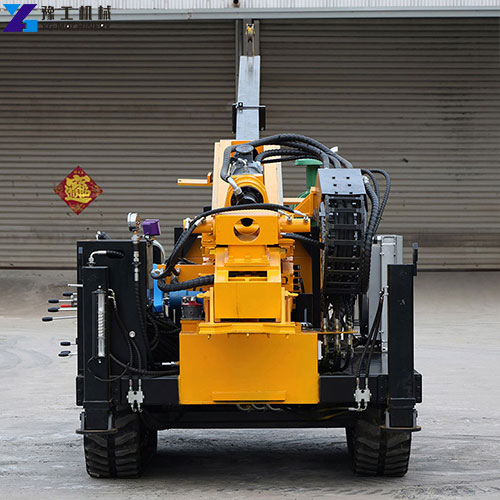
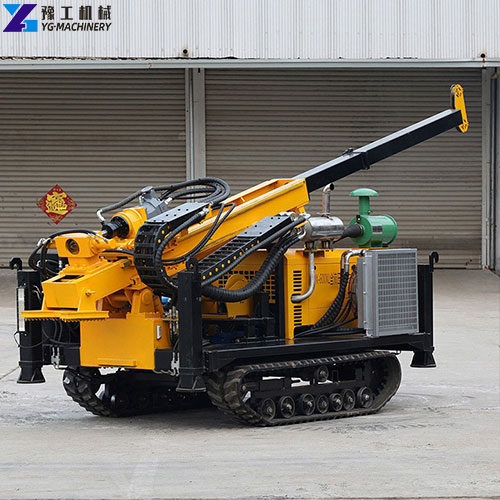
The core working principle of a full hydraulic core drilling rig relies on a closed hydraulic system to complete energy transfer and operation execution, achieving precise drilling and core sampling. The overall process can be divided into four coordinated links: First, power supply, driven by a 78-154kW diesel engine or electric motor, converts mechanical energy into high-pressure hydraulic energy efficiently, with a transmission efficiency of over 85%, providing a stable energy foundation for the entire machine’s operation. Second, hydraulic transmission, as the core hub, uses hydraulic valve groups to precisely control the flow direction, pressure, and flow rate of high-pressure oil according to operating commands, distributing energy to the power head, feed mechanism, and other actuators. Simultaneously, the circulating hydraulic oil carries away operating heat, ensuring stable system temperature. Furthermore, in terms of operation, the power head is driven by a hydraulic motor, achieving stepless speed regulation from 0-600 r/min, driving drill pipes of different specifications such as NQ, PQ, and HQ to cut through the formation; the feed mechanism provides 8-15 kN of axial feed force to ensure stable drill bit entry, and the lifting mechanism uses 12-20 kN of lifting force to complete drill pipe raising and lowering and core tube extraction. All components work together to achieve drilling and coring. Finally, in terms of control and adjustment, it supports manual or CAN bus automated control, can monitor parameters such as drilling pressure and rotation speed in real time, and adjust them dynamically, and automatically alarms and shuts down in case of abnormality. In addition, the system is equipped with safety valves such as overflow valves and pressure-reducing valves, as well as coolers and filters to prevent pressure overload and ensure oil cleanliness, further improving operational safety and stability.
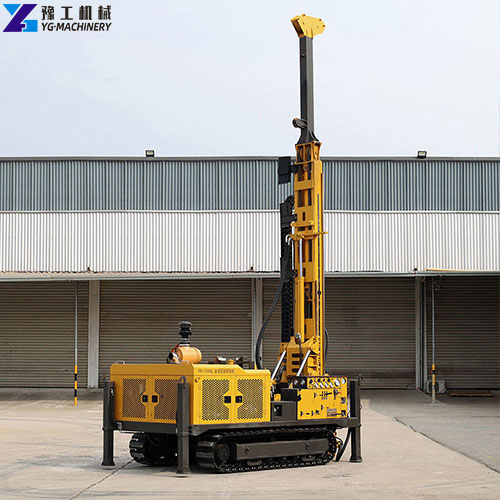
Features & Specifications About the YG Hydraulic Core Drilling Rig
- Fully Hydraulic Transmission System: Utilizes a variable displacement piston pump + load-sensing control, achieving a transmission efficiency of ≥85%, with a continuously adjustable drilling speed of 0-600 r/min, suitable for various working conditions, including soft strata and hard rock.
- Multi-Process Compatible Design: Supports air down-the-hole hammer drilling, flushing fluid core drilling, and non-circulating sampling drilling, with a sampling rate of ≥85%, meeting diverse needs such as mineral exploration and hydrological surveys.
- Automated Control Function: Integrated CAN bus control system allows for real-time data acquisition of drilling pressure, torque, and rotation speed, supporting remote control operation within 100 meters, ensuring safer unmanned operation at the borehole.
- High-Strength Structural Configuration: The drill pipe is made of 42CrMo alloy steel, with a fatigue strength of ≥900MPa, and the insulation layer has a thermal conductivity of ≤0.028W/(m·K), adapting to extreme climates from -30℃ to 60℃.
- Flexible Adaptation Modules: Optional modules include an SPT rig standard penetration test module, a solar power supply system, and a trailer-mounted mobile chassis, with a relocation and deployment time of ≤2 hours.
- Key Technical Parameters: Maximum drilling depth 50-1000 meters, drilling diameter 50-250mm, feed force 8-15kN, lifting force 12-20kN, engine power 78-154kW.
Get Factory Direct Pricing Today
Frequently Asked Questions about YG Fully Hydraulic Core Drilling Rigs
Yes. Its modular design allows for configuration as needed, the entry-level models are affordably priced, and automated operation reduces labor costs, making it suitable for the project scale and budget of small and medium-sized enterprises. It also supports later upgrades of functional modules.
It can adapt to loose sand layers, gravel layers, fractured rock layers, and high-strength hard rock. By switching drilling processes (air drilling, flushing fluid drilling), the sampling rate remains above 85%, meeting the core needs of mineral exploration.
Yes. The YG hydraulic core drilling rig supports the later addition of the SPT rig standard penetration test module without modifying the main machine structure, adapting to the bearing capacity testing needs in engineering geological exploration. The installation period is ≤3 days.
It is affected by drilling depth (200m/300m), core barrel diameter (50-150mm), and configuration (intelligent system/mast).
No. Core components have a 1-year warranty, and consumable parts (seals, filters, etc.) are affordably priced and easy to replace. Routine maintenance only requires checking the hydraulic oil level and drill rod wear weekly, and monthly maintenance takes ≤2 hours.
Get Factory Direct Pricing Today
Hydraulic Coring Drill Rig Standard Operating Guide
I. Pre-Operation Preparation
- Equipment Selection and Inspection: Determine the drilling depth and power configuration based on the work scenario (mineral exploration, water well drilling, etc.), and match drilling tools of specifications such as NQ (Φ76mm), PQ (Φ122mm), and HQ (Φ96mm); conduct a comprehensive inspection of all drilling rig components, focusing on checking the hydraulic oil level, drill rod wear, seal integrity, and circuit stability to ensure there are no loose parts or leaks.
- Site Planning and Deployment: Level the site, clear obstacles, and within 15 minutes of fixing the drilling rig base, complete the lifting of the drilling tower and calibrate its verticality (deviation ≤0.5%); connect the power source and test the hydraulic system pressure to ensure it is normal.
- Safety Protection Arrangements: Set up work warning signs, ensure operators wear personal protective equipment; check that fire-fighting and emergency equipment is complete and usable.
II. Core Operating Procedures
- Parameter Setting and Adjustment: Through the digital control center, preset parameters according to the formation type—drilling speed is infinitely adjustable from 0-600 r/min (high speed for soft formations, low speed for hard rock), feed force 8-15 kN, and lifting force 12-20 kN, adjusted as needed; match the drilling process, such as using air down-the-hole hammer drilling for loose sand layers and flushing fluid coring drilling for hard rock formations.
- Start-up and Trial Run: Start the power system and run it unloaded for 5-10 minutes to check if the power head rotation, drill rod lifting, and hydraulic system operation are stable, without abnormal noise or leakage; test the remote control operation function (if equipped), ensuring a stable signal and timely operation response within 100 meters.
- Formal Drilling Operation: Operate the feed mechanism to slowly bring the drill bit into contact with the ground and start drilling according to preset parameters. Throughout the process, monitor drilling pressure, torque, and rotational speed data in real time through the digital control center. If sudden changes in formation occur (such as a sudden increase in resistance), adjust parameters promptly or stop the machine for troubleshooting. Add drill rods in sections according to the drilling depth, using an automatic drill rod loading and unloading device to complete the connection, avoiding human error.
- Core Sampling and Recording: After reaching the preset sampling depth, reduce the drilling speed and then stop the machine. Start the hoisting mechanism to retrieve the drill rod and core tube, and place them stably in the designated area. Remove the core, clean surface impurities, number and seal it according to depth sequence, and record detailed information such as sampling depth and formation characteristics.
- Hole Closure Treatment: After sampling, if drilling needs to continue, repeat steps 3-4 above; if the work at this hole is finished, slowly lower the drill rod, clean the residue in the hole, and seal or protect the hole opening according to specifications to prevent debris from falling in.
III. Post-Operation Cleanup
- Equipment Shutdown: First, shut down the drilling actuators, then disconnect the hydraulic system power, and finally shut down the main power source; slowly lower the drill rig, organize drill rods, drill bits, and other accessories, and store them separately.
- Equipment Cleaning and Maintenance: Clean the surface of the drilling rig of dirt and oil, check vulnerable parts (seals, filters, etc.) for replacement; replenish hydraulic oil and lubricating oil, and tighten all connecting bolts; perform rust prevention treatment on the drill rods and store them in a dry and ventilated place.
- Operation Records and Organization: Complete the operation log, recording detailed equipment operating parameters, drilling depth, sampling status, equipment malfunctions, and handling measures; organize core samples and send them for testing or filing as required.
IV. Safety Precautions
- During drilling, no one is allowed to stand around the borehole opening to avoid injury from falling drill rods and core tubes; when operating remotely, the operator must be in a safe area and observe the operation in real time.
- Disassembling pipelines before the hydraulic system pressure is released is strictly prohibited to avoid injury from high-pressure oil spray. If hydraulic oil leaks, rig shaking, or other abnormalities are detected, immediately stop the machine and investigate. Operating with a malfunction is strictly prohibited.
- In extreme weather conditions (such as temperatures below -30℃, temperatures above 60℃, or heavy rain and strong winds), the equipment’s adaptability must be assessed, and operation must be stopped if necessary. In high-temperature environments, equipment cooling must be enhanced; in low-temperature environments, hydraulic oil antifreeze measures must be implemented.
- Operators must be professionally trained and qualified before starting work. Novice operators must be guided by experienced personnel on-site to avoid misoperation that could damage equipment or cause accidents.