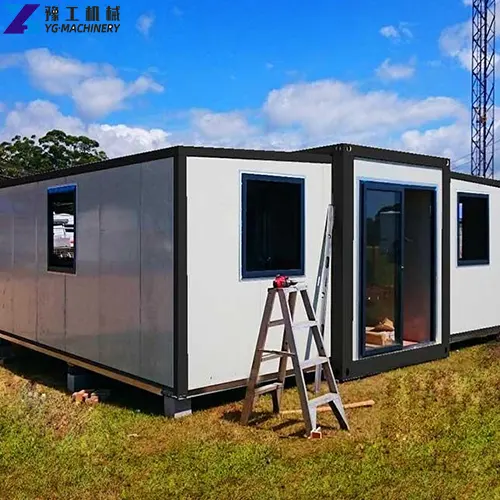
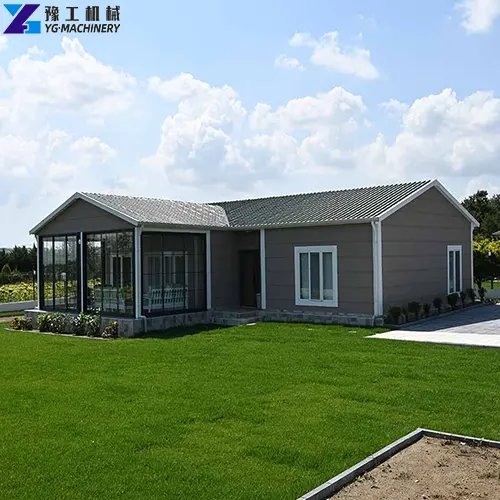
In Spain, whether it’s managing guesthouses in coastal areas, providing farm accommodations in remote regions, or setting up temporary offices and outdoor campsites near cities, the construction process often faces numerous challenges: traditional brick and concrete houses have long construction cycles, typically 3-6 months, making it difficult to respond quickly to business needs; some areas have complex terrain and inconvenient transportation, making it difficult to deliver large building materials; environmental regulations are strict, and traditional construction easily generates construction waste, leading to cumbersome approval processes; furthermore, many scenarios require flexible and reusable buildings, which traditional houses cannot provide. Portable shipping container houses, with their core advantages of mobility, easy assembly, environmental friendliness, durability, and controllable costs, along with derivative models such as 40ft expandable container houses and 20ft expandable container houses, perfectly adapt to various scenarios in Spain, becoming the preferred solution for local customers. They have already served hundreds of Spanish clients and have earned widespread praise for their stable quality.
Portable shipping container houses, also known as portable container homes, are characterized by their “mobility, assembly, and expandability.” Compared to traditional houses, the construction cycle is shortened by more than 70%, requiring no complex foundations, and can be assembled by 2-4 workers in 1-3 days; the modular design allows for compact folding, enabling transportation by ordinary trucks, making them suitable for mountainous and coastal areas in Spain where transportation is inconvenient; they also comply with Spanish environmental standards, using high-strength anti-corrosion steel and environmentally friendly decoration materials, which are recyclable and reusable, generating no construction waste, and easily passing environmental approvals. If you are interested, please contact us now for more product information.
Get Factory Direct Pricing Today
YG Portable Container Homes Parameter – Fully Customized
| 20FT Basic Characteristics | External dimension (mm) | W6320*L5900*H2480(Side 2270) |
| Internal dimension (mm) | W6160*L5560*H2240(Side 2150) | |
| Folded state (mm) | W2200*L5900*H2480 | |
| Total mass (kg) | 2500 | |
| 30FT Basic Characteristics | External dimension (mm) | W6360*L9000*H2480(Side 2180) |
| Internal dimension (mm) | W6200*L8660*H2240(Side 2060) | |
| Folded state (mm) | W2200*L9000*H2480 | |
| Total mass (kg) | 3750 | |
| 40FT Basic Characteristics | External dimension (mm) | W6240*L11800*H2480(Side2180) |
| Internal dimension (mm) | W6080*L11540*H2200(Side2060) | |
| Folded state (mm) | W2200*L11800*H2480 | |
| Total mass (kg) | 4400 | |
| Smaller Fold Size | External dimension (mm) | W4820*L5900*H2480(Side2270) |
| Internal dimension (mm) | W4660*L5560*H2240(Side2150) | |
| Folded state (mm) | W700*L5900*H2480 | |
| Total mass (kg) | 1850 |
Get Factory Direct Pricing Today
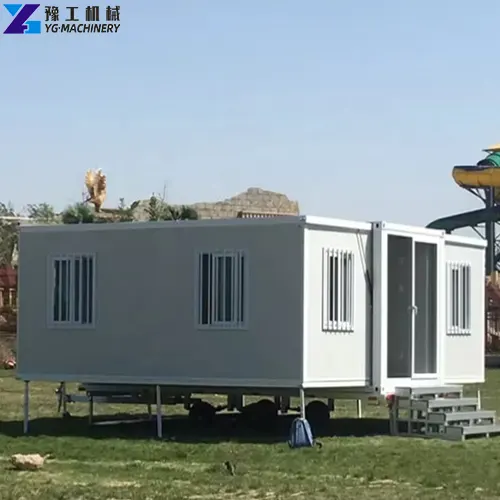
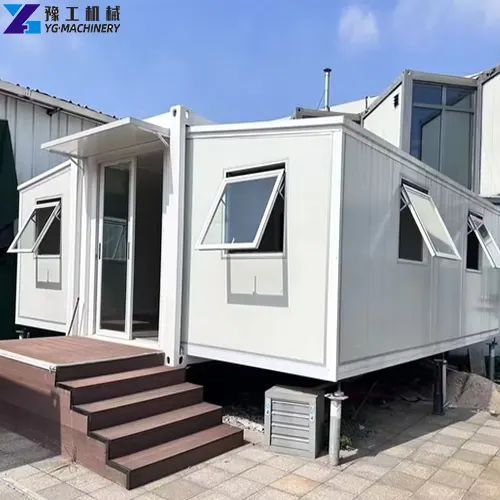
Case Study: YG 40ft Expandable Container House Used for a Seaside Guesthouse in Barcelona, Spain
Client Background: Ms. Elena is a seasoned guesthouse operator in Barcelona, Spain. She owns a plot of land near the local seaside resort area and plans to create a small cluster of luxury guesthouses targeting families and couples, emphasizing a “close to the sea, convenient and comfortable” accommodation experience. Previously, Ms. Elena considered building traditional brick-and-mortar guesthouses, but faced numerous challenges. Ultimately, she chose our 20ft and 40ft expandable container houses to build the guesthouse cluster, meeting the environmental requirements of the resort area and her business needs.
Problems Faced:
- The Barcelona seaside resort area has strict environmental regulations. Traditional brick and mortar construction generates a large amount of construction waste, making it difficult to obtain approval, and the construction period is long (at least 4 months), preventing her from catching the summer tourist season.
- The land area in the resort is limited, requiring maximum space utilization to create multiple independent guest rooms while also reserving public leisure areas. Traditional house layouts lack flexibility.
- The seaside area has high humidity and salinity, requiring the buildings to have good corrosion and moisture resistance to withstand sea breeze erosion.
- The guesthouses need a unique appearance that blends with the seaside landscape to attract tourists, while the interior decoration must be comfortable to meet the needs of different tourist groups.
- Later plans include adjusting the number of guest rooms based on occupancy rates, requiring a flexible and reusable building solution, which traditional houses cannot provide.
Solution: Based on Ms. Elena’s needs, we customized three 40ft expandable container houses and two 20ft expandable container houses (portable basic models) to create a small guesthouse cluster. The entire process adhered to Spanish environmental standards, ensuring smooth approval from the resort authorities. The 40ft expandable container houses serve as the core guest rooms, suitable for families. Each unit expands to 75㎡, divided into two bedrooms, a living room, a kitchen, and a bathroom. The interior features a seaside-style design with a white base and blue accents, visually expanding the space and concealing the industrial texture of the container. Large floor-to-ceiling windows offer stunning sea views, perfectly aligning with the luxury guesthouse concept. Considering the climate characteristics of the Barcelona coastline, we have specially optimized all the houses: the main structure uses high-strength anti-corrosion steel, the surface is coated with a special anti-corrosion and sun-proof coating, and the interior is equipped with a thickened moisture-proof and heat-insulating layer to resist sea breeze erosion, rust, and dampness effectively; the doors and windows are made of aluminum alloy with excellent sealing performance, paired with double-layered hollow glass, providing heat insulation in summer and warmth in winter, while also reducing sea breeze noise. Two 20ft expandable container houses serve as reception rooms and leisure tea rooms. Their compact size and mobility allow for flexible placement adjustments based on tourist flow. Combined with simple decoration, they create a staggered layout with the 40ft expandable container house, reserving a public leisure area equipped with sunshades and outdoor tables and chairs for tourists to rest and enjoy the view.
All houses are prefabricated in the factory and quickly assembled on-site. Four workers can complete the assembly and decoration of all houses in 7 days, ensuring they are ready for the summer tourist season. The design also supports flexible expansion; if tourist traffic increases, an additional 20ft expandable container house can be added as supplementary guest rooms without requiring large-scale modifications to the existing guesthouse cluster. We also provided Ms. Elena with daily maintenance tips to ensure the long-term stable use of the houses.
Usage results: After the guesthouse cluster was put into use, it quickly became a popular guesthouse in the Barcelona coastal area. The spacious space and comfortable decoration of the 40ft expandable container house, combined with the flexibility and convenience of the 20ft expandable container houses, met the needs of different tourist groups, and the tourist flow far exceeded expectations. The houses demonstrated outstanding anti-corrosion and moisture-proof effects. After a summer of use in the coastal environment, there was no rust or dampness, resulting in very low maintenance costs. The unique appearance perfectly blends with the coastal landscape, becoming a popular photo spot for tourists and significantly increasing the guesthouse’s visibility and guest traffic. Later, Ms. Elena added five more 20ft expandable container houses as couples’ rooms based on increased guest flow, completing the assembly and decoration in just one day, flexibly adapting to business needs.
Customer review: “The 20ft and 40ft expandable container houses completely solved all the problems I faced when building houses in a coastal tourist area. They meet environmental standards, are quick to assemble, and are ready just in time for the peak tourist season. The anti-corrosion and moisture-proof effects are excellent, the appearance is beautiful, and the interior is comfortable. Tourist feedback has been excellent. They not only saved me a lot of money but also enhanced the competitiveness of my guesthouse. I have already recommended them to other guesthouse operators in the area.”
Get Factory Direct Pricing Today
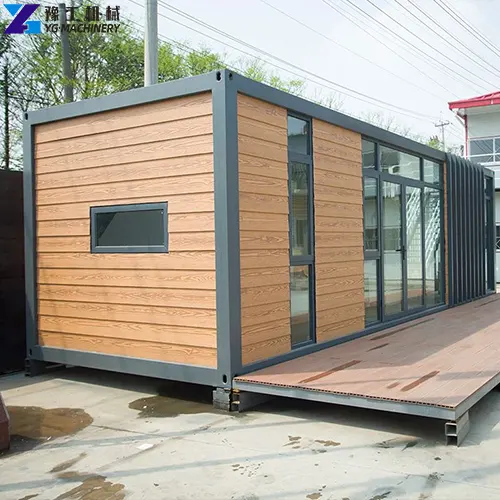
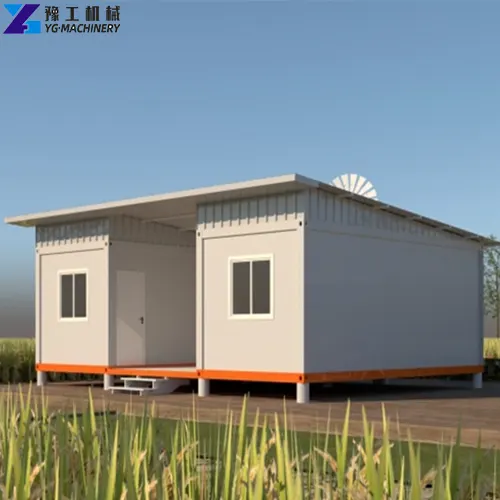
Why Are More and More Spanish Customers Choosing YG’s Portable Shipping Container Houses?
- Flexible and Portable, Adaptable to Multiple Scenarios: Portable shipping container houses are easily movable and quickly assembled, requiring no complex foundations. They are suitable for various complex scenarios in Spain, such as coastal areas, mountains, farms, and tourist attractions. They can easily adapt to narrow spaces or remote areas; 40ft and 20ft expandable container houses can be flexibly expanded according to needs, balancing portability and practicality. They can be easily moved and reused later, adapting to different usage requirements.
- Adapted to the Spanish Climate, Durable and Worry-Free: Optimized materials and structural design address the high humidity and salinity of Spanish coastal areas, and the cold winters, hot summers, and windy conditions of inland regions. The main structure uses high-strength anti-corrosion steel, with an anti-corrosion, sun-proof, and dust-proof coating on the surface. The interior is equipped with a thickened insulation layer, offering advantages such as corrosion resistance, moisture resistance, wind resistance, earthquake resistance, sun protection, and dust resistance. The service life can reach more than 15 years, with extremely low maintenance costs.
- Environmentally Friendly and Compliant, Convenient Approval: The entire process adheres to Spanish building environmental standards, using environmentally friendly materials for production and decoration. There is no construction waste during the construction process, and the materials are recyclable, easily passing environmental approvals; no complex foundation construction is required, simplifying the approval process and significantly shortening the construction preparation time. It can be put into use in as little as 3 days, meeting customers’ urgent needs.
- Controllable Costs, High Cost-Effectiveness: Compared to traditional brick and concrete houses, construction costs are reduced by 30%-50%, and transportation and labor costs are significantly reduced; factory prefabrication and rapid on-site assembly eliminate complex construction, further saving costs; outstanding energy efficiency reduces future water and electricity costs; direct supply from the manufacturer eliminates intermediaries, ensuring transparent pricing, and also supports customization, allowing for facilities to be configured according to needs, improving cost-effectiveness.
- Aesthetic and Practical: The decoration style can be customized according to customer needs. The exterior can be matched with different colors and designs, adapting to the aesthetic requirements of different scenarios in Spain, such as coastal areas, farms, and tourist attractions, perfectly blending with the surrounding environment; the interior can be flexibly divided into functional areas, with complete facilities, allowing for “move-in ready” convenience, balancing practicality and comfort. Whether for accommodation, office use, or guesthouse operation, it can meet various needs.
Get Factory Direct Pricing Today
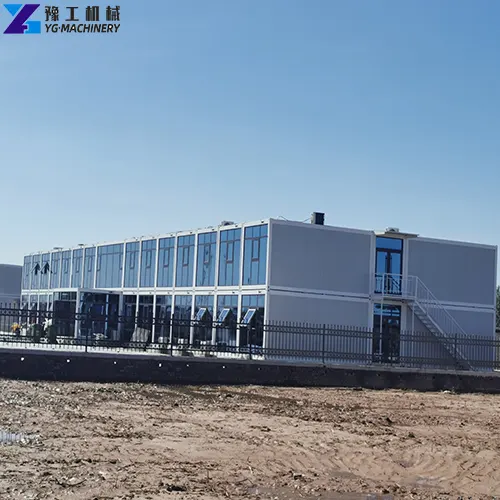
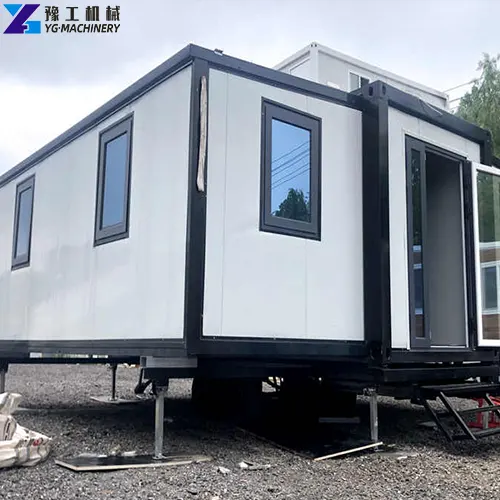
YG Movable Shipping Container Homes Assembly Techniques
- Precise Preliminary Planning and Site Survey
Ensure the site is solid, level, and capable of supporting the total weight of the house and its occupants. A simple soil bearing capacity test is recommended; for soft soil foundations, compaction or concrete foundation piers are necessary. Accurately measure and mark the positioning lines for the four corners of the house; this serves as the baseline for all subsequent work. Simultaneously, plan the access routes and working radius for heavy machinery (such as cranes) to avoid temporary obstructions.
- Foundation Construction: Stability is Paramount
The long-term stability and moisture resistance of the container house largely depend on the foundation. Common methods include:
- Concrete independent foundation piers: Poured at the four corners and in the middle of the long sides; this is the most flexible and economical method.
- Strip concrete foundation: Provides more even load bearing, suitable for longer or expandable models requiring higher stability.
- Adjustable steel column base feet: Ideal for uneven ground, facilitating later leveling.
- Key point: The top of all foundations must be perfectly level using a spirit level, with an error tolerance of ±5mm. Otherwise, it will lead to container distortion and door frame deformation.
- Safe Lifting and Positioning
- Special lifting equipment: Use dedicated container lifting frames or four adequately load-bearing synthetic fiber lifting slings (steel wire ropes are prohibited to avoid damaging the container’s paint and structure).
- Lifting point location: Strictly use the standard lifting holes on the container corner fittings. During lifting, ensure the lifting ropes are perpendicular to the top of the container to avoid diagonal pulling.
- Smooth positioning: Under the unified command of a supervisor, slowly and smoothly lower the container to the predetermined foundation position. After positioning, do not immediately release the lifting force; first, check the alignment and fit of the container with the foundation.
- Connection and Fixing Between Containers
- Alignment and temporary fixing: Use crowbars and other tools to fine-tune the container position, ensuring a tight fit. Then immediately use high-strength bolts to initially fix them together through the corner fittings to prevent displacement.
- Welding and sealing: For permanent connections, continuous welding is performed at the internal connection points of the containers to ensure structural integrity. High-quality polyurethane sealant must be applied to all external seams, and waterproofing membranes must be installed. This is crucial for preventing leaks.
- Operation of the Expandable Mechanism
- Strictly follow the manual: Before expanding or retracting, remove all internal fixing pins and safety latches.
- Synchronized and smooth operation: If using hydraulic expansion, ensure that all support points are subjected to synchronized and even force, and observe for any abnormal friction or noise. For manual mechanical systems, multiple people must operate simultaneously to avoid uneven force, causing the mechanism to jam.
- Final locking: After expansion is complete, all mechanical safety pins must be immediately inserted/locked. This provides double protection against accidental retraction during use. Finally, install and tighten the internal connecting parts between the expanded section and the main body.
- Professional Water and Electrical System Connection
- Pre-installation inspection of pipelines: Before closing the walls and ceilings, check that all pre-embedded electrical conduits and water pipes are unobstructed and that the joints are intact.
- External interface connection: Connect the prefabricated main electrical cables and water supply and drainage main pipes of the house to the on-site main power supply, water source, and septic tank/sewage network. Ensure proper waterproofing and insulation at the connection points.
- Systematic testing: After connecting the power and water, test the function of each socket, switch, light fixture, faucet, and toilet one by one. Conduct leakage protection testing and water pressure testing to ensure absolute safety and no leaks.
- Final reminder: Throughout the entire assembly process, always use the official installation manual provided by the manufacturer as the primary guide, and consult a professional if you encounter any uncertainties. Correct assembly is fundamental to ensuring the safety, durability, and living comfort of the house.