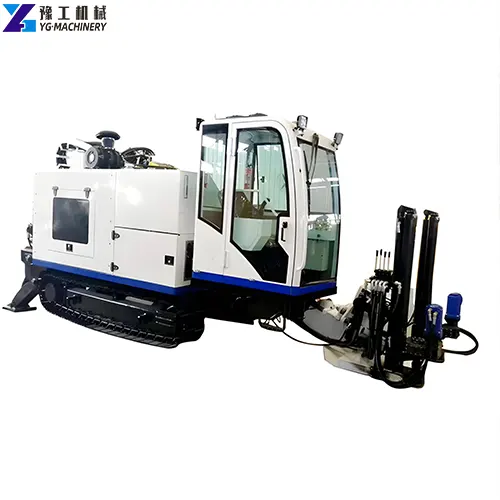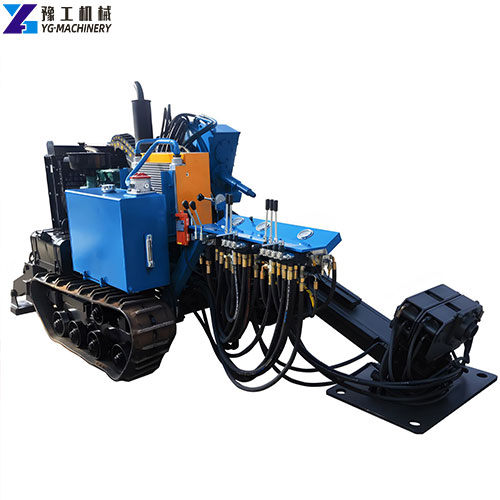
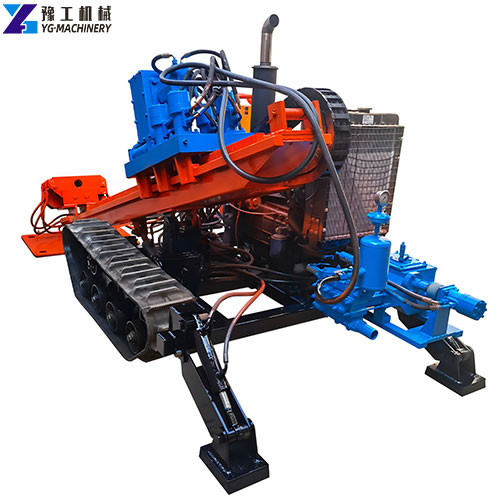
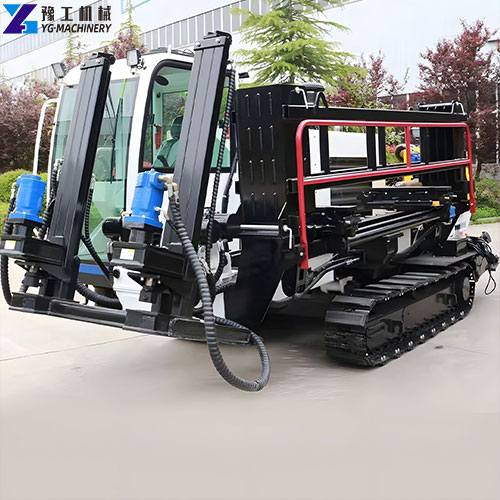
In underground engineering fields such as municipal pipeline laying, power and communication cable laying, and gas and oil pipeline crossing, the YG horizontal directional drilling rig, also known as an HDD drilling rig, plays a core role by using precise guidance technology to drill boreholes along a predetermined trajectory underground. This enables the trenchless installation of pipelines, fiber optic cables, and other facilities, minimizing damage to the surface environment and existing infrastructure. Whether it’s long-distance gas pipelines or complex urban fiber optic networks, YG’s HDD drilling rig ensures efficient and safe construction. It is adaptable to various geological conditions, including soft soil, sand layers, and medium-hard rock, and we provide a complete set of horizontal directional drilling equipment solutions. If your project requires a horizontal directional drilling rig, please get in touch with us today.
Get Factory Direct Pricing Today
YG Horizontal Directional Drilling Rig Parameter
| Model | YG-160A | YG-180 | YG-280 | YG-320 | YG-320A |
| Engine rated power | 100KW | 97KW | 160KW | 140KW/160KW | 160KW |
| Push and pull | Cylinder | Motor | Motor | Cylinder | Motor |
| Maximum drag/feed force | 160/100KN | 180/180KN | 280/280KN | 320/320KN | 320/320KN |
| The maximum torque of the powerhead | 5000N.n | 6000N.n | 10000N.n | 12000N.n | 12000N.n |
| Powerhead speed | 0-180r/min | 0-140r/min | 0-120r/min | 0-140r/min | 0-140r/min |
| Moving speed of powerhead | 30m/min | 20m/min | 20m/min | 20m/min | 20m/min |
| Maximum reaming hole diameter | Φ600mm | Φ600mm | Φ750mm | Φ800mm | Φ800mm |
| Drill rod length (single) | 3m | 3m | 3m | 3m | 3m |
| Drill pipe diameter | Φ60mm | Φ60mm | Φ73mm | Φ73mm | Φ73mm |
| Drill pipe diameter | 10-23° | 10-22° | 10-23° | 10-20° | 10-20° |
| Maximum mudflow | 160L/min | 250L/min | 320L/min | 320L/min | 320L/min |
| Maximum mud pressure | 100bar | 80bar | 80bar | 80bar | 80bar |
| Overall quality | 6700kg | 8500kg | 12500kg | 11500kg | 11200kg |
| Dimension(length*width*height) | 5700*1820*2400mm | 6400*2270*2340mm | 7100*2260*2450mm | 7100*2250*2450mm | 7100*2250*2550mm |
Get Factory Direct Pricing Today
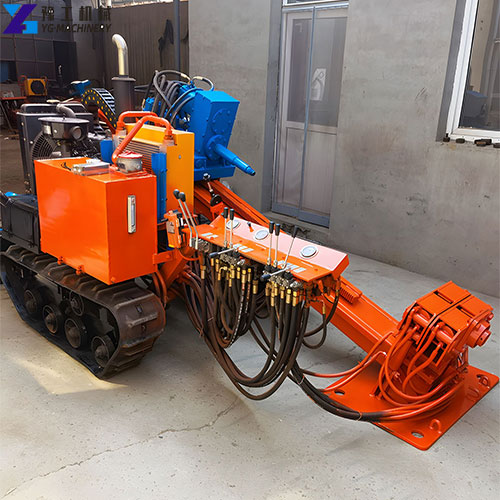
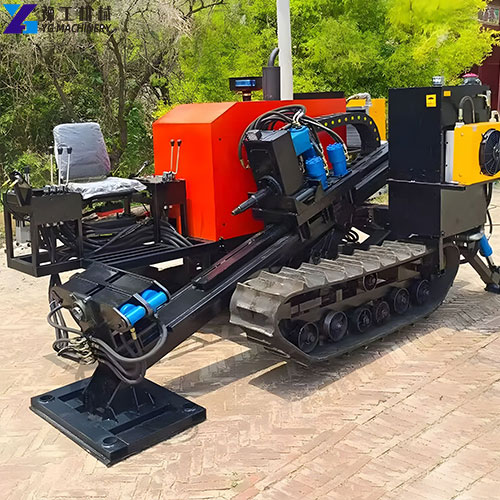
Working Principle of YG Horizontal Directional Drilling Equipment
- Pilot Hole Drilling: Before construction, the drilling trajectory is planned. After starting the equipment, the drill bit begins drilling under the thrust and torque of the horizontal directional drilling rig. Simultaneously, the horizontal directional drilling rig’s guiding instrument collects real-time data on the drilling position and angle, transmitting it to the control console. The operator adjusts the drilling direction based on this data to ensure the drill bit follows the preset trajectory, ultimately forming a small pilot hole.
- Stepwise Reaming: After the pilot hole is completed, the drill bit is removed, and a reamer is installed. The reamer is driven by the pulling force of the drilling rig to enlarge the borehole diameter. Depending on the specifications of the final pipeline, multiple stages of reaming can be performed to ensure the borehole diameter matches the pipeline laying requirements. Meanwhile, the mud circulation system continuously operates, carrying the excavated soil out of the hole and lubricating and stabilizing the borehole wall to prevent collapse.
- Pipeline Pullback: After reaming is completed, the pipeline to be laid is securely connected to the reamer. The drilling rig’s pullback system is activated, and the powerful pulling force smoothly pulls the pipeline back into the enlarged borehole until the pipeline is fully laid, completing the entire trenchless pipeline laying process.
Throughout the entire process, the intelligent control system coordinates the operation of each system in real time, ensuring precise matching of thrust, torque, and mud parameters, achieving efficient, accurate, and safe trenchless construction.
Get Factory Direct Pricing Today
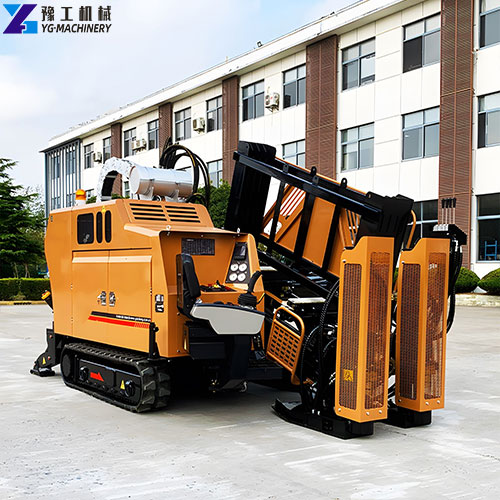
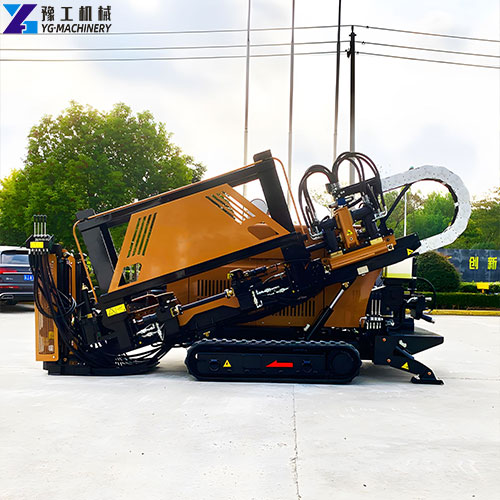
Features of the YG Horizontal Directional Drilling Equipment
- High-Precision Guidance Control: Equipped with an advanced horizontal directional drilling rig guiding instrument and integrated with an intelligent control system, it achieves real-time monitoring and precise adjustment of the drilling trajectory. The guidance accuracy error is ≤±2cm, effectively avoiding underground obstacles and ensuring the drilling trajectory meets design requirements, reducing rework risks.
- Powerful Thrust and Efficient Drilling: With a thrust/pull force ranging from 15 to 500 tons and strong torque output, it is suitable for various geological conditions, including soft soil, sand layers, and medium-hard rock. Drilling speed can reach 10-30m/h, improving construction efficiency by more than 40% compared to traditional equipment, significantly shortening construction time.
- Intelligent Mud Control: Equipped with an intelligent mud circulation system, it automatically adjusts mud specific gravity and flow rate according to geological conditions, ensuring the mud has good lubrication, cooling, and cuttings removal performance, effectively preventing borehole collapse and protecting drilling tools, extending their service life.
- Low Noise and Energy-Saving Operation: Utilizing a silent engine and optimized exhaust system, the equipment operates with noise levels ≤75dB, meeting urban construction noise standards. Intelligent variable frequency technology adjusts power output according to the construction load, saving more than 15% energy compared to similar equipment, reducing energy consumption costs.
- Modular and Flexible Adaptation: The equipment adopts a modular design, allowing for quick disassembly and assembly of each module, facilitating transportation and on-site deployment. Parameters such as thrust/pull force and drill pipe length can be customized, allowing for precise configuration matching based on project scale and geological conditions, adapting to a full range of needs from small-scale communication cabling to large-scale river crossings.
- Comprehensive Safety Protection: Equipped with multiple safety devices, including overload protection, over-temperature protection, hydraulic system pressure protection, and an emergency stop, the equipment automatically alarms and shuts down when approaching safety limits. It also features a drill pipe fracture warning function, providing comprehensive safety protection for construction personnel and equipment.
Get Factory Direct Pricing Today
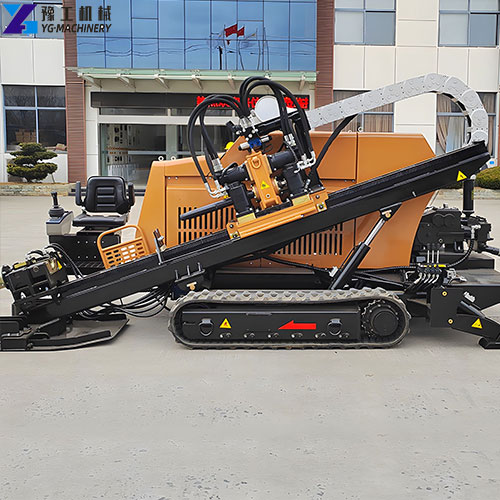
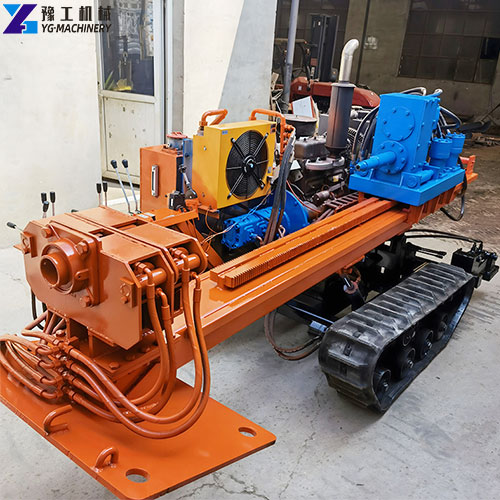
Why Are More and More Customers Switching from Renting Horizontal Directional Drilling Rigs to Purchasing?
- Technical Precision and Construction Quality: Equipment in the rental market is often operated by multiple users, and the calibration accuracy of the hydraulic system and horizontal directional drilling rig guiding instrument may be compromised. Owning your own equipment means you can configure the most precise guidance system, ensuring zero errors in complex underground pipeline construction, thereby building a strong industry reputation.
- Asset Leverage and Endorsement: For growing engineering companies, owning equipment is a symbol of strength. When participating in large municipal tenders, possessing advanced HDD rigs is a mandatory requirement for qualification. Furthermore, fixed assets can be used as collateral for bank loans, providing financial flexibility for future business expansion.
- Residual Value and Secondary Market: High-quality mechanical equipment retains its value exceptionally well. Even after 5-8 years of use, well-maintained horizontal directional drilling equipment still commands a considerable residual value in the second-hand market. This means your investment is not pure consumption, but rather a transformation of assets.
Engineer’s Professional Advice on Selecting Horizontal Directional Drilling Rigs
If you decide to switch from leasing to purchasing, we recommend a “staged” investment approach based on your business priorities:
- Startup Phase: Prioritize general-purpose drilling rigs in the 15-25 ton range. These machines have the highest rental demand, and even if your own usage is insufficient, you can easily sublease them to generate income.
- Advanced Phase: Focus on the stability of the power system and after-sales support. YG’s original factory technical support ensures that the probability of your equipment failing during critical work periods is minimized.
- Supporting Upgrades: Be sure to simultaneously configure a high-precision horizontal directional drilling rig guiding instrument. A craftsman must sharpen his tools before he can do his work well; precise guidance will save you high costs in mud and drill bit wear.
Get Factory Direct Pricing Today
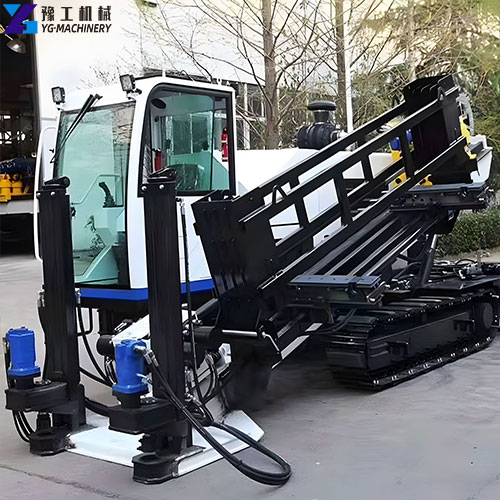
Frequently Asked Questions about YG Horizontal Directional Drilling Rigs
Answer: Choose based on project scale and geological conditions: For small communication/power cabling projects (thrust/pull force 30-60 tons, drilling distance ≤600 meters), choose the YG-160 model; for municipal pipelines/general crossing projects (60-200 tons, ≤1500 meters), choose the YG-280 model; for large river crossings (≥200 tons, >1500 meters), choose the YG-320 model.
Answer: It uses imported core components, and the guidance accuracy error is ≤±2cm. Regular calibration is recommended monthly, and on-site debugging should be performed before construction to ensure data accuracy; the manufacturer provides calibration technical guidance.
Answer: It is suitable for most geological conditions, such as soft soil, sand layers, clay, and medium-hard rock. Complex geological conditions (such as pebble layers and fractured rock) can be handled by replacing with special drill bits, configuring customized mud formulas, and staged reaming. The manufacturer provides targeted construction solutions.
Answer: Yes. The manufacturer provides equipment operation training and can provide customized construction solutions based on project geology and scale. They can also solve technical problems during construction to ensure the smooth progress of the project.
Answer: Maintenance is easy. Daily precautions include: cleaning the drill pipe, drill bit, and mud system after construction to avoid residue; regularly checking engine oil, hydraulic oil, and filters; checking the signal transmission status of the guiding instrument; and storing it in a dry and ventilated place, avoiding rain and direct sunlight.